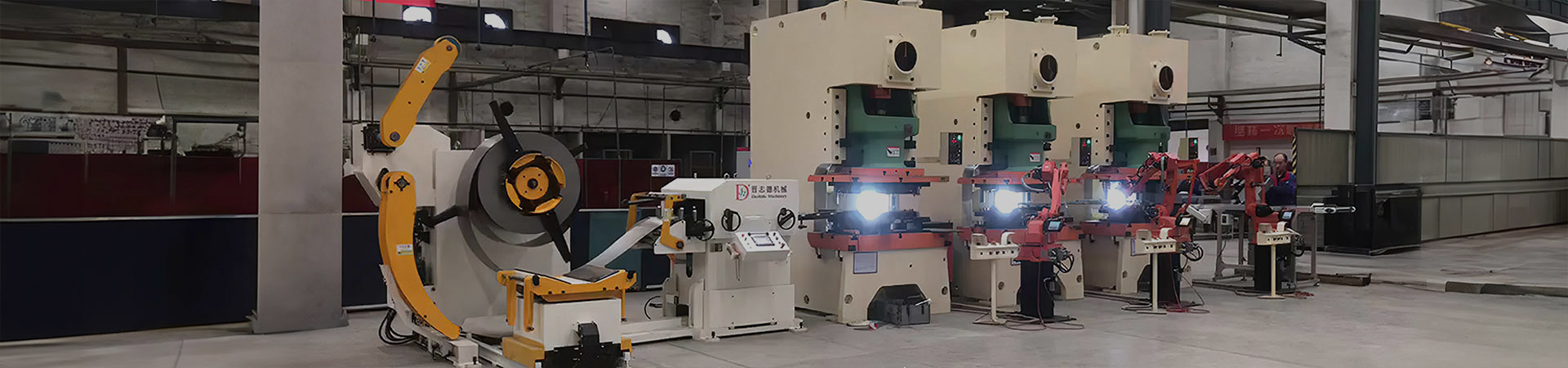
Decoiler Straightener Feeder

HomeDecoiler Straightener FeederLight Coil Decoiler Straightener Feeder

Light Coil Decoiler Straightener Feeder

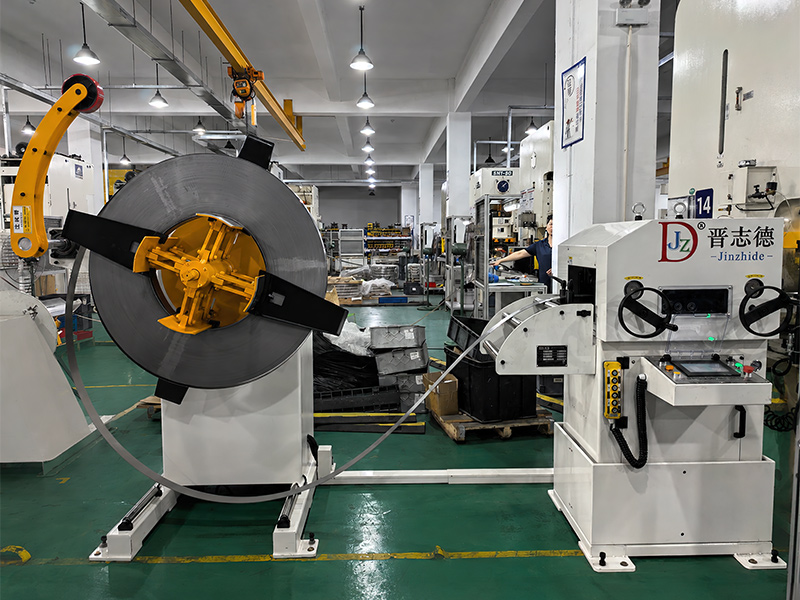
The light coil decoiler straightener feeder is an upgraded alternative to the traditional 2-in-1 decoiler straightener machine + servo feeder combination.
Inquire Now
Contact Us
  • Light Coil Decoiler Straightener Feeder NCSF2 (0.3-3.2mm)
  • Light Coil Decoiler Straightener Feeder NCSF2 (0.3-3.2mm)
  • Light Coil Decoiler Straightener Feeder NCSF2 (0.3-3.2mm)
Product Detail

Light Coil Decoiler Straightener Feeder NCSF2 (0.3-3.2mm)

Available in 300mm and 400mm width models, this compact uncoiling feeding and straightening unit is designed for thin metal coils with thicknesses from 0.3mm to 3.2mm. It is widely used in continuous stamping line applications for automotive parts, home appliances, electrical components, and general metal stamping.


Compact decoiler straightener feeder footprint

Compact 3-meter Footprint

Compared with a traditional setup using a separate servo feeder, this integrated decoiler straightener feeder saves 2-4 meters of production space.

Servo coil unwinding system

Servo Coil Unwinding

As a highly efficient uncoiler straightener feeder, the servo-driven unwinding system automatically matches the feeding speed, improving running stability while reducing energy consumption.

Worm gear straightening adjustment

Worm Gear Straightening Adjustment

The worm gear adjustment structure provides quick and stable straightening gap adjustment, helping operators adapt to different material thicknesses.


Electric feeding height adjustment

Electric Feeding Height Adjustment

The electric height adjustment system simplifies material replacement and machine setup, reducing manual adjustment work.

One-time material threading

One-Time Material Threading

The integrated structure allows coil material to pass through the machine in one operation, reducing setup steps compared with separated equipment.

Professional appearance design

Professional Appearance Design

The compact and integrated machine design improves the overall appearance of the production line and factory environment.


Applicable Material

✓ Material Types: Cold rolled steel, copper strip, galvanized sheet, stainless steel, aluminum alloy, and other thin metal coils
✓ Coil Width: 50mm–300mm / 50mm–400mm (two models available)
✓ Material Thickness: 0.3-3.2mm
✓ Yield Strength: ≤245N/mm²
✓ Tensile Strength: ≤392N/mm²
✓ Feeding Speed: 0-16m/min


Optional Devices for Light Coil Decoiler Straightener Feeder

Optional devices for light coil decoiler straightener feeder

According to different production requirements, multiple automation options are available:
Hydraulic Expansion Coil Mandrel: Replacing traditional manual expansion methods, the hydraulic expansion mandrel can automatically tighten the inner diameter of the coil, making coil loading easier.
Loading Cart: The coil loading cart helps move coils smoothly onto the main shaft, reducing downtime during coil replacement. One operator can complete the loading operation.
Lubrication System: The automatic oiling system applies stamping oil to both sides of the material surface, reducing friction during stamping, extending die service life, and collecting excess oil.
Film Rewinding Device: Designed for coils with protective film or paper layers. The device automatically removes and collects the film during production to prevent protective material from entering the stamping die.


Specification of Light Coil Decoiler Straightener Feeder

ModelNCSF2-300NCSF2-400
Model50~30050~400
Thickness0.3~3.2
Load Capacity2
Coil ID¢508
Coil OD¢1200
Discharge Speed16
Infeed Rollers2 Rollers (Top¢60 Bottom¢66)
Leveling Rollers¢48×9 Rollers (Top 5/Bottom 4)
Feeding Rollers¢66×2Rollers
Accuracy±0.2mm at 500mm Feed
Air Pressure0.5~0.7
Coil ExpansionManual expansion
Servo MotorAC2.9
Decoiler Motor1.5


Application of Light Coil Decoiler Straightener Feeder

Automotive Industry

Used for producing stamped parts such as: Small body connecting parts, Instrument panel brackets, Seat rails, Chassis brackets, Exhaust pipe flanges, Brake pad backing plates, Electrical Industry.

Suitable for:

Electrical hardware parts, Computer metal components, Motor stator and rotor parts, Electronic equipment housings, Precision fasteners, Heat sinks, Home Appliance Industry

Applied in continuous stamping production of:

Washing machine components, Air conditioner brackets, Microwave oven housings, Kitchen and bathroom hardware parts, Refrigerator brackets, TV back panels, Construction Hardware Industry

Suitable for:

Rack punching parts, Door and window hardware, Metal ceiling panels, Keel accessories, Fasteners, Decorative metal parts


Automotive stamping line application


Electrical hardware stamping parts


Home appliance stamping components


Construction hardware stamping parts


Light Coil Decoiler Straightener Feeder FAQ

Q: How many width models are available, and what coil widths can they handle?
A: Currently, two standard models are available: 300mm and 400mm width models.
The 300mm model supports coil widths from 50-300mm, while the 400mm model supports coil widths from 50-400mm. Customers can select the suitable model according to their material width.
Q: What are the main advantages compared with a traditional 2-in-1 decoiler straightener + servo feeder?
A: The main advantages include: Smaller installation space, Lower energy consumption, Easier adjustment, Simpler operation
The complete machine requires only about 3 meters of space, saving 2-4 meters compared with separated equipment. The servo-driven system reduces energy consumption and eliminates alignment adjustment between multiple machines.
Q: What materials can this machine process?
A: It is suitable for various metal coils, including: Cold rolled steel, Stainless steel, Galvanized sheet, Copper strip, Aluminum alloy sheet.
Q: Why use servo coil unwinding?
A: Servo unwinding automatically matches the feeding speed and coil release speed, improving production stability and reducing energy consumption.
Q: What are the advantages of the worm gear straightening structure?
A: The worm gear structure features a self-locking function, allowing stable straightening gap adjustment without position shifting.
It provides faster adjustment, better adaptability to different materials, and helps solve problems such as thin sheet bending, warping, and wrinkles.
Q: What is the difference between electric height adjustment and manual adjustment?
A: Electric height adjustment eliminates manual handwheel operation. Operators can adjust feeding height through a button, making material replacement and die changeover easier.
It is especially suitable for production lines requiring frequent material changes.
Q: Is the hydraulic expansion mandrel necessary?
A: For production conditions involving heavy coils around 2 tons or frequent coil replacement, the hydraulic expansion mandrel is recommended.
It can automatically expand and contract the coil mandrel, reducing manual loading work and preventing coil movement.
For light-duty applications with fewer coil changes, the standard manual mandrel can also meet production requirements.
Q: What does "one-time material threading" mean?
A: Traditional systems require material to pass through the straightener first and then enter the feeder.
Because this machine integrates decoiling, straightening, and feeding functions, the coil material only needs to be threaded once, simplifying operation procedures.
Q: What is the function of the lubrication system? Can oil quantity be adjusted?
A: The lubrication system automatically applies stamping oil to the material surface, reducing friction between material and die, preventing scratches and burr problems, and extending die service life.
Oil amount and spraying frequency can be adjusted according to production requirements.
Q: What materials are suitable for the film rewinding device?
A: It is mainly used for stainless steel sheets, galvanized sheets, aluminum alloy sheets, and other precision materials with protective film.
The device automatically separates and collects protective film during production, reducing manual operation and preventing surface scratches.
Q: Is the machine easy for new operators to use?
A: Yes. The machine features simplified operation, electric adjustment functions, and easy start/stop control.
After basic training, new operators can operate the equipment independently.
Q: What types of stamping presses can it work with?
A: It can match various stamping presses, including: Mechanical presses, Pneumatic presses, High-speed presses.
It can also connect directly with automatic stamping production lines.
Q: What daily maintenance is required?
A: Daily maintenance mainly includes:
Adding lubricant to worm gears and bearings
Cleaning roller surfaces
Checking servo system wiring
Tightening screws
Regularly checking straightening performance
The maintenance process is simple and requires low maintenance cost.
Q: What is the feeding speed?
A: The standard feeding speed is 0-16m/min.
The actual speed depends on material thickness, width, and stamping press cycle requirements.
Q: Is material replacement convenient?
A: Yes.The machine adopts a one-time threading design and electric feeding height adjustment, allowing faster material replacement and setup.
Q: How many operators are required?
A: Under normal production conditions, one operator can manage the machine operation.
Q: What is the delivery time?
A: Standard machine: 7-20 days
Installation and commissioning: about 1 day
Customized machine: about 20-30 days
Installation and commissioning for customized machines: about 2 days.
Q: What should be done if the straightened material bends upward or downward?
A: This is usually caused by incorrect straightening pressure adjustment.
If the material bends upward, reduce the straightening pressure.
If the material bends downward, increase the straightening pressure.
The worm gear adjustment mechanism allows quick correction.
Q: Can the machine process different materials?
A: Yes. When changing materials, operators need to adjust feeding parameters and straightening gap according to different material thicknesses.
Q: What should be considered when purchasing a light coil decoiler straightener feeder?
A: Selection should be based on: Material width, Material thickness, Press tonnage, Feeding length, Production speed.
Choosing the correct specification helps ensure the machine matches actual production requirements.
Inquire Now
Consulting Products*
Your Name*
Your E-mail*
Your Mobile
Your Message*
Get a Custom Stamping Solution Within 12 Hours

Share your production requirements and material specifications. Our engineers will provide a tailored press automation solution with fast quotations and professional technical support.

WHAT ARE YOU LOOKING FOR?
*
This field is required
Total quantity you need
*
This field is required
*
This field is required
Email format error
Due to email instability, you might miss our correspondence. Please provide your phone number for alternative contact.
This field is required
Telephone information is wrong!
Send Message
Contact

Whatsapp: +86-18932396111

Address:

No. 138, Machigou, Qinxin Village, Wujin District, Changzhou, Jiangsu Province, China.

Phone:0086-18932396111

Useful Links

Home

Products

Solutions

Case

Support

About

Contact

Products

Decoiler Straightener Feeder

Decoiler Straightener

Feeder

Straightener

Decoiler

Stamping Press

Resource

Company Profile

R&D

Manufacture

Quality

Application

Copyright © 2026 Changzhou Jinzhide Machinery Technology Co., Ltd. All rights reserved

Talk to Our Stamping Experts
Looking for a complete coil feeding or press automation solution? Leave your requirements, and our engineering team will provide a tailored proposal and technical support within 24 hours.
Company Name
*
This field is required
Email
*
This field is required
Email format error
Phone
This field is required
Telephone information is wrong!
Message
*
This field is required
Send Message