




Punch Press Auto-Feeding Upgrade: 5 Practical Setup Options
 Jul 17, 2026|
 View:256
In punch press operations, matching the right auto-feeding equipment with your machine is an important consideration. Choosing the right combination based on material type and thickness can make production smoother and more efficient. Changzhou Jinzhide has outlined five practical punch press auto-feeding setups to help manufacturers quickly find the right match.
A punch press automatic feeding upgrade usually follows one of two paths. If a press already runs with manual loading or basic roll feeding, the fastest route is to add a servo feeder in front of the die. If the press is older and the goal is to retrofit an old punch press, the same question applies: how to add a feeder to a punch press without rebuilding the whole line. Both paths come down to matching the feeder to the material, and the five setups below cover that range of automatic feeding setup options.
For thin sheet metal, a heavy-duty decoiler combined with a servo feeder and punch press allows continuous feeding and easier operation.

For medium-thickness sheets, a 2-in-1 Decoiler & Straightener paired with a servo feeder and the punch press keeps the material flat and ensures stable feeding throughout production.

Thicker sheets are simpler to handle. A 3-in-1 Uncoiler-Straightener-Feeder with a punch press can complete both feeding and flattening in a single pass, reducing the need for extra equipment and saving space.
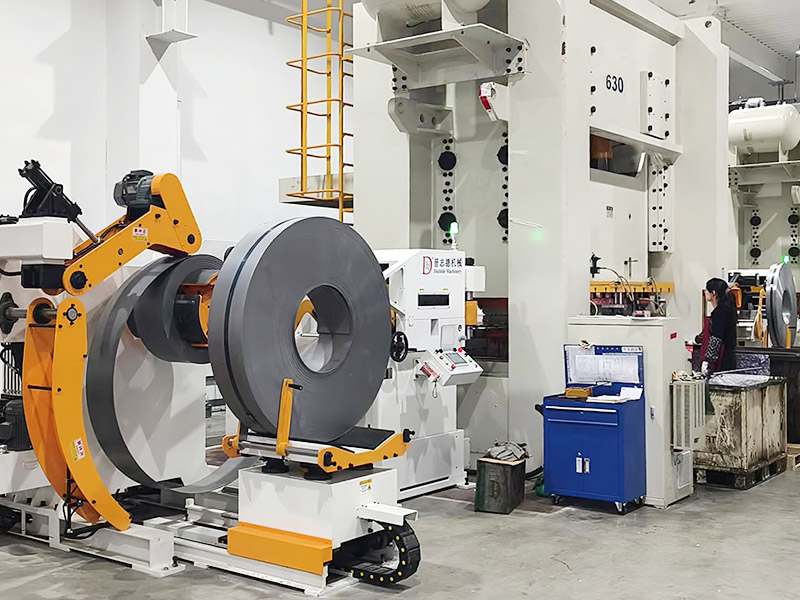
For mirror-finish sheets, a hydraulic decoiler, straightener, and servo clamp feeder together with a punch press protect the surface while keeping feeding precise.

For special components like stators, rotors, or EI laminations, a dual-head decoiler, S-type straightener, and gear feeder paired with the punch press meet precise feeding requirements for small batches or detailed parts.
A roll feeder is the simpler alternative for high-speed, low-precision work. When the part tolerances are loose and the material is uniform, a roll feeder costs less than a servo feeder and still removes most manual handling from the press.
Across all five setups, the gains follow the same pattern. Feeding consistency improves once the material is paid off, flattened, and advanced by machine rather than by hand. Productivity rises because the press is no longer waiting on an operator between strokes. Operator safety improves as well, since hands stay outside the die area during the cycle.
If you're unsure how to match your punch press with feeding equipment, Changzhou Jinzhide can provide recommendations based on material type, width, thickness, and punch press model. The right combination can streamline your workflow, reduce operational challenges, and maintain stable production.
Whether for routine batch production or specialized sheet processing, selecting the proper auto-feeding setup makes punch press operation more flexible, easier to manage, and consistent. Changzhou Jinzhide provides practical guidance to ensure punch press auto-feeding works efficiently for every scenario. For presses that are still running manually, start with the feeder upgrade solution and work outward from the material you run.