




Choosing the Best Metal Punch Press Manual vs Hydraulic vs CNC
 Aug 17, 2026|
 View:282
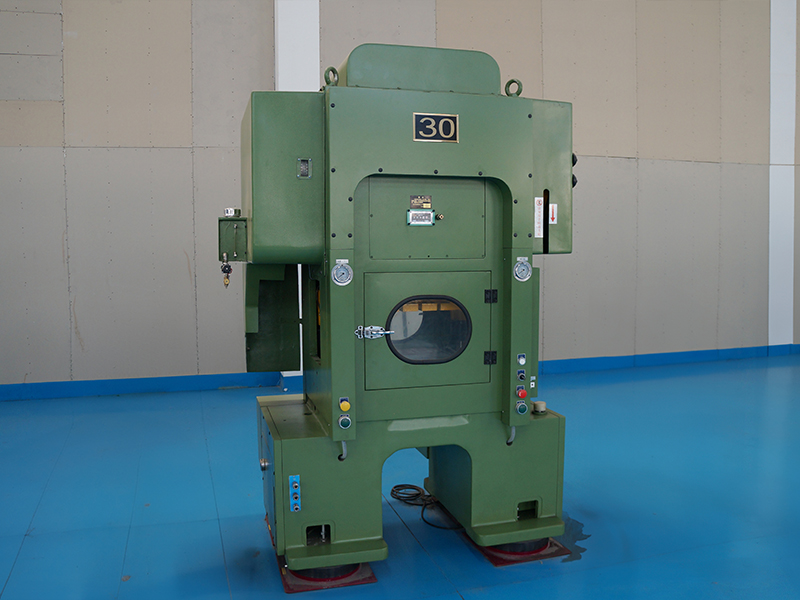
In today’s highly competitive metal stamping industry, factory managers are fighting a three-front war: rising labor costs, strict workplace safety regulations, and the relentless demand for tighter tolerances. Selecting the right machinery is no longer just about tonnage; it’s about survival and maximizing ROI. Plant engineers must carefully evaluate production volume, material thickness, and automation compatibility before investing in a new metal punch press. If you are wondering how to choose a metal punch press, this guide breaks down the core differences between Manual Feeding, Hydraulic, and CNC/Servo stamping systems to help you build a highly profitable, hands-off production line.
Machine Category | Target Application | Key Capability |
|---|---|---|
Manual Systems (Hand-Feeding) | Low volume prototyping & short runs | Minimal setup time & low initial cost |
Hydraulic Presses | Heavy tonnage forming & deep drawing | Full tonnage at any point in the stroke |
CNC / Servo Equipment | High-speed automated continuous stamping | Exceptional part precision & high SPM |
Facility managers must select the proper press configuration to maximize throughput. Every industrial press delivers distinct force profiles. While a standalone press handles specific cuts, integrating it with an automated coil feeding line transforms it into a continuous production powerhouse.
Key Takeaways
Manual punch presses (hand-feeding) cost less initially but carry high safety risks and labor costs for mass production.
Hydraulic punch presses provide constant, adjustable force, making them ideal for shaping thick metal sheets safely.
CNC and Servo punch presses make complex metal parts quickly with extreme accuracy using progressive dies.
Automated coil feeders boost factory speed, eliminate manual handling, and keep workers safe from severe hand injuries.
Upgrading legacy presses with Jinzhide automation is a highly cost-effective way to achieve CNC-level ROI without buying new machinery.
Overview of Metal Punch Press Types
Manual Mechanical Press Basics (Hand-Feeding)
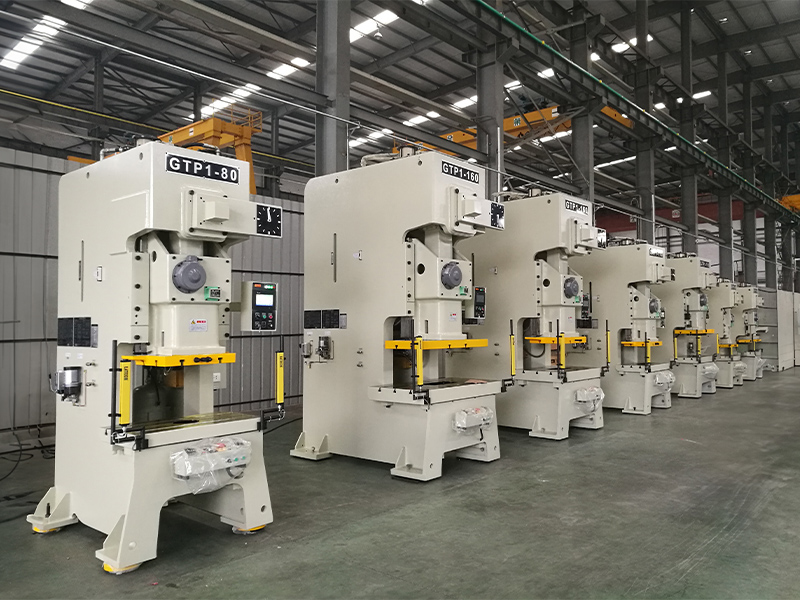
Traditional mechanical presses rely on motorized flywheels and crankshafts to drive the internal ram mechanism. In a "manual" setup, the term refers to the manual feeding process rather than the power source. Operators must physically hand-feed sheet metal into the die and manually remove the stamped part for every single stroke. Fabricators often select a mechanical punch press for basic prototyping tasks because it requires minimal tooling complexity. Maintenance stays relatively simple as these stand-alone units rely on basic mechanical clutches and brakes.
However, manual hand-feeding presents severe operational bottlenecks. Production speed is strictly limited by human endurance and reaction times. More importantly, operators' hands are constantly in the "danger zone" near the die area, leading to a high risk of workplace injuries. Small metal shops often use manual feeding only for short manufacturing runs, as scaling up production with this method is economically and safely unviable.
Hydraulic and CNC Press Principles
Hydraulic machinery utilizes fluid pressure to deliver consistent force throughout the entire stroke length. Plant operators easily adjust fluid pressure, bottom dead center positions, and overall press stroke length. Standard hydraulic systems deliver smooth, full-tonnage pressure ideal for thick sheet metal forming and deep drawing. Modern plants often integrate an automatic hydraulic press with specialized feeding mechanisms to automate continuous stamping sequences without stalling under heavy loads.
Computer numerical controlled (CNC) and Servo stamping lines introduce complete automation into coil processing operations. Unlike manual setups, a CNC system moves continuous coil stock through precision straighteners and high-speed servo press assemblies. The material is advanced into progressive dies with automated indexing. Advanced servo motors drive the ram with programmable speed and torque profiles, maximizing part precision across complex nested layouts and eliminating the need for manual sheet positioning.
Direct Comparison Matrix
Selecting proper fabrication machinery requires comparing key physical traits and automation compatibility across drive designs. Understanding the advantages and disadvantages of each system is crucial. When evaluating a manual vs hydraulic vs CNC punch press, engineering leads analyze structural force generation alongside stroke rate capabilities and operator safety.
Tonnage, Speed, and Safety Capabilities
Drive mechanics determine total ram output force and stroke cycle frequency. Furthermore, the level of automation dictates the safety profile of the machine.
Press Architecture | Mechanical Force Output | Cycle Speed & Automation | Operator Safety Level |
|---|---|---|---|
Manual Feeding (Mechanical) | Fixed tonnage at bottom dead center | Slow, dependent on human loading speed | Very Low (High risk of hand injuries) |
Hydraulic Presses | Adjustable maximum force full-stroke | Moderate, controlled motion | Medium (Requires safety light curtains) |
CNC / Servo Presses | Consistent dynamic programmable force | High rapid strokes (High SPM) | High (Hands-off automated coil feeding) |
A manual hand-feeding setup limits production to the physical speed of the operator loading and unloading parts. Production speed remains tied directly to human endurance, and the risk of accidents remains high. Low volume prototype operations utilize basic manual tools effectively without requiring expensive automated tooling.
A hydraulic press generates substantial force through fluid cylinder pressure. Operators adjust stroke depth easily for specialized deep drawing tasks. While it provides excellent force control for thick plates, standard hydraulic presses operate at lower overall cycle speeds compared to mechanical or servo presses.
Computerized CNC machinery yields unmatched throughput rates on continuous coil stock. Servo motors drive rapid punch actuation routines synchronized with automated coil feeders. Modern CNC software coordinates the ram stroke with the servo feeder to advance the strip precisely. This digital setup maximizes structural performance during long manufacturing runs, keeping operators entirely away from the moving dies.
Operational Costs and Complexity
Financial investment extends beyond initial machinery purchase prices. Shop managers evaluate labor expenditure, setup time, maintenance requirements, and potential worker compensation claims due to injuries.
Basic manual press operations require negligible capital cost and simple operator instruction. However, labor cost per finished unit remains exceptionally high due to slow cycle times. More critically, the high risk of hand injuries in manual feeding setups can lead to devastating financial and legal consequences for factory owners.
Heavy hydraulic systems increase initial equipment outlay while reducing operator exertion. Technicians require specialized training to adjust hydraulic valves and fluid pressure gauges. Hydraulic fluid lines require periodic inspection to prevent systemic leaks. These robust units balance moderate capital expenditure with consistent manufacturing output capacity for thick materials.
A CNC stamping line represents a major capital commitment. Computerized controls require skilled programming personnel and structured maintenance routines. However, modern punch equipment optimizes material yield and drastically lowers per-part production costs over time by eliminating manual labor. Plant engineers carefully audit operational expenditures, often realizing that the savings in labor and scrap quickly pay for the automated machinery.
Manual vs Hydraulic Press Operations
Manual Force for Low Volume
Small manufacturing shops choose a manual punch setup to execute low volume fabrication tasks. Operators manually load blanks into the die for basic piercing jobs. This simple method requires no complex progressive dies or automated coil lines. Production teams rely on manual tooling to complete quick single-item modifications efficiently. Fabricators execute manual forming duties to maintain high control over one-off prototypes.
Operators maintain direct physical control over the press via dual-palm buttons or foot pedals. Basic mechanical slide systems utilize manual screws for die height adjustment. Dedicated manual machinery protects workers through physical barriers and light curtains, but the necessity of reaching into the die area keeps the baseline risk elevated.
Hydraulic Stroke and Tonnage Control
A hydraulic press delivers constant force throughout the cylinder stroke. This steady hydraulic pressure allows operators to perform deep drawing without cracking raw sheet metal. Dynamic hydraulic systems provide flexible tonnage control, unlike fixed mechanical crank assemblies. Operators adjust hydraulic valves through control interfaces to ensure precise punch repeatability across continuous production cycles.
System Feature | Hydraulic Press | Manual Mechanical System |
|---|---|---|
Stroke Flexibility | Long stroke with flexible limits | Fixed stroke length |
Force Control | Constant force through stroke | Full tonnage only at bottom dead center |
Die-Height Range | Large die-height adjustment | Limited die-height range |
An automatic hydraulic press automates heavy plate punch routines efficiently when paired with specialized blanking feeders. Plant managers run an automatic hydraulic press continuously to maximize output on thick structural components. Meanwhile, a stand-alone manual hydraulic press handles versatile short-run forming jobs in toolrooms.
Evaluating CNC Punch Press Efficiency
Automated High-Speed Production
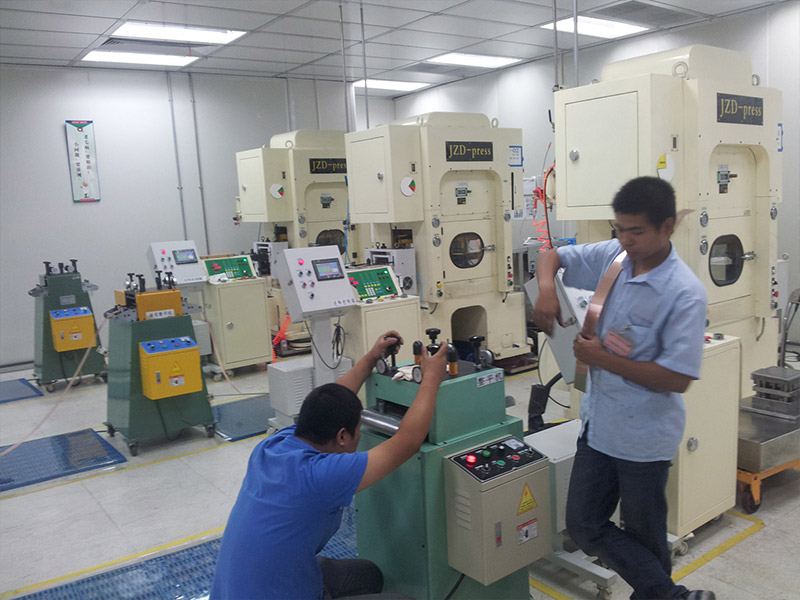
Modern automated machinery transforms output capacity across stamping facilities. Advanced servo-electric drives reach rapid speed settings up to 1,000 SPM (Strokes Per Minute) on thin metal coil stock. Automated coil feeders advance the strip material at speeds up to 120 m/min to sustain rapid cycle times during mass production runs. Optimized software tool paths and progressive die designs reduce station positioning to milliseconds. Automated mechanisms keep manufacturing lines moving continuously without bottleneck delays.
Servo-electric drive mechanisms dramatically enhance overall press performance compared to traditional mechanical or fluid systems. A servo motor draws power only when firing the ram, maintaining a low peak power consumption. This design uses significantly less energy than a traditional hydraulic punch unit which requires continuous pump operation. Computerized machinery significantly lowers long-term operating costs while sustaining high punch cycle rates.
Evaluating Precision and Part Complexity
Computerized control delivers extreme accuracy across complex progressive die layouts. A modern CNC punching machine maintains strict structural performance, achieving feature-to-feature accuracy of ±0.01 mm. Pierced hole dimensions hold tight tolerances across varied coil stock. Automated coil feeding mechanisms prevent manual positioning errors and material buckling during rapid movement routines. Fabricators depend on consistent physical precision to satisfy demanding automotive and electronics quality control standards.
Creating complex geometric features requires dedicated progressive tooling and precise servo feeding. The press executes continuous stamping routines to process intricate contours cleanly. Programmable ram stroke control enables delicate forming tasks without damaging raw stock. Plant managers select an automated press assembly to minimize scrap while securing continuous part repeatability across demanding manufacturing environments.
Cost and Long-Term ROI Analysis
Capital Expense vs Labor Savings
A manual punch press requires low initial equipment outlay, but high manual intervention limits overall production output. Operators spend significant time measuring raw stock, positioning sheets, and executing single hits. High labor costs and the looming threat of workplace injuries quickly offset initial machinery savings during high-volume jobs. Simple mechanical leverage units fit short prototype runs where setup speed outweighs labor cost concerns.
Upgrading to an automated system increases machinery costs while offering vastly superior operating efficiency. Plant engineers deploy automated lines to complete heavy plate piercing or high-speed electronics stamping without extra human physical effort. Controlled automated feeding reduces scrap rates and lowers finished part expense.
The Retrofitting Advantage: Upgrading Legacy Presses
You do not always need to purchase a brand-new CNC press to achieve automation. One of the most cost-effective strategies in modern stamping is retrofitting existing mechanical or hydraulic presses. Jinzhide automated feeders can be seamlessly retrofitted to almost any existing punch press ranging from 3 to 2000 tons. By adding an NC Servo Feeder and a Straightener to an older manual press, factories can instantly transform a dangerous, labor-intensive workstation into a safe, highly efficient automated line at a fraction of the cost of new machinery. The payback period for such retrofits is typically measured in months, not years.
Automation and Coil Feeding ROI
Modern fabricators integrate specialized coil processing machinery to maximize CNC line efficiency and speed. Deploying a JINZHIDE 3-in-1 Decoiler Straightener Feeder system streamlines raw material preparation before entering the press area. This compact equipment combines uncoiling, precision leveling, and continuous servo feeding in a single unit.
Coil Uncoiling -> Roller Leveling -> Servo Feeding -> Press Punching
Integrating JINZHIDE automated coil equipment transforms raw material handling across busy press shops:
The system uses a hydraulic loading trolley to automate coil loading and uncoiling under steady tension.
Precision leveling rollers remove coil curvature, while an integrated servo feeder advances raw metal to exact programmed lengths.
Integrated PLC controls synchronize material feeding directly with press cycles to sustain automated production.
Aspect | 3-in-1 Integrated System | Traditional 2-in-1 System |
|---|---|---|
Automation Level | High; uncoiling, leveling and feeding are integrated and continuous | Low; manual loop control and threading assistance required |
Material Handling | Hydraulic loading trolley and automatic feeding reduce manual coil handling | More manual intervention and overhead crane time needed |
Floor Space | Compact footprint (Approx. 4m) | Larger footprint (Approx. 7m including separate feeder) |
Automated coil systems improve shop floor safety by reducing manual material handling. Workers avoid direct physical contact with heavy metal coils and the dangerous die area during high-speed production sequences. Continuous material flow increases machine uptime, helping fabricators achieve rapid return on investment.
Matching Equipment to Shop Applications
Fabrication shops must align machine selection directly with operational goals, raw material specifications, and output targets. Determining which press is right for stamping requires that facilities verify total punching force matches specific sheet metal thickness before installing equipment on the factory floor.
Prototype and Low-Volume Scenarios
Small job shops and prototype facilities prioritize operational flexibility over raw speed. These environments process varied sheet dimensions, small batch sizes, and simple part geometries. Machine operators frequently perform manual tool changes to execute unique short manufacturing runs. A manual feeding design provides a lower initial capital cost, though labor requirements per part remain higher.
Job shops select a manual punch setup for custom prototype fabrication due to minimal tooling complexity.
Operators rely on a hydraulic press when thicker material stock demands extra mechanical force for deep drawing.
Facility leads maintain a wide selection of manual die sets to accommodate custom geometric shapes.
Industrial OEM Mass Production
Industrial original equipment manufacturers operate under vastly different operational constraints. High-volume manufacturing lines demand automated high-rate output, continuous coil feeding, and software-driven tool transitions. OEM facilities select an advanced stamping press line to deliver consistent structural performance across millions of identical parts.
Automated systems transform large-scale output capabilities through continuous material movement. Modern CNC stamping equipment drives high-speed automated routines with extreme accuracy. Automated coil feeding cells move raw strip stock through rapid execution cycles without stopping.
Operational Parameter | Low-Volume Job Shop Setup | Industrial OEM Assembly Line |
|---|---|---|
System Architecture | Standalone press with manual hand-feeding | Integrated coil-fed automated line with progressive dies |
Part Accuracy | Human-dependent positioning control | Maintains tight tolerances across million-part runs |
Material Handling | Manual sheet loading and physical positioning | Continuous automated decoiling, leveling, and feeding |
An integrated press cell synchronizes material feeding, stamping, and unloading to maintain strict tolerances across a million-part run. Automated part orientation removes human error entirely from continuous stamping workflows. High-speed routines manage complex programmable patterns without requiring manual operator intervention. Plant managers successfully achieve maximum production volume and rapid operational return by matching driving mechanics with automated feeding systems.
Selecting the right setup requires evaluating production volume, machinery cost, and required precision. Facilities running short prototype jobs rely on manual tools to maintain operational flexibility. Plant engineers choosing a standalone punch press evaluate long-term shop demands and safety requirements.
Integrating advanced automated coil feeding machinery boosts total manufacturing output while enhancing overall operational safety. Compact systems like the JINZHIDE 3-in-1 Decoiler Straightener Feeder streamline material preparation before every press cycle. Modern automated lines eliminate risky manual handling and provide essential safety features to protect operators during continuous punch operations.
Ready to Upgrade Your Stamping Line?
Whether you need a high-precision CNC punch press or a complete 3-in-1 coil feeding automation line to retrofit your existing presses, JINZHIDE has the turnkey solution to maximize your ROI and ensure operator safety.
Get a Free Quote TodayFAQ
What material thickness suits a manual punch press best?
Manual feeding setups on mechanical presses generally process thin to medium sheet metal blanks efficiently. Operators apply physical effort to load and unload parts. These units suit prototype jobs and short custom runs best, as manual operation limits output speed and carries higher safety risks for long production runs.
How does a hydraulic punch press control force during operations?
A hydraulic press utilizes dynamic fluid pressure to generate force. The system delivers constant, adjustable tonnage throughout the full stroke cylinder path. Operators easily adjust valve controls to maintain pressure control, making it ideal for deep drawing and heavy plate forming tasks where mechanical presses might stall.
What speed and precision level can a CNC stamping line achieve?
Modern CNC and servo stamping equipment paired with automated coil feeders can reach speeds over 1,000 SPM (Strokes Per Minute) on thin stock. Integrated servo drives maintain feature accuracy within ±0.01 mm. Programmable controls execute rapid stamping sequences using progressive dies to complete complex parts accurately and continuously.
Can I automate my existing manual punch press with Jinzhide equipment?
Absolutely. You do not need to buy a brand-new CNC line. Jinzhide's NC Servo Feeders, Straighteners, and Decoilers can be seamlessly retrofitted to your existing mechanical or hydraulic presses (ranging from 3 to 2000 tons). This instantly upgrades them from dangerous manual feeding to safe, automated, hands-off operation with a very rapid ROI.
How does continuous coil automation improve CNC press ROI?
Integrated systems like the JINZHIDE 3-in-1 Decoiler Straightener Feeder automate material loading, leveling, and servo feeding. Continuous material preparation maximizes total machine uptime. Automated feeding eliminates manual handling, drastically lowers labor costs, and significantly improves operator safety by keeping hands away from the dies.