



Mechanical vs Thermal Steel Straightening
 Aug 19, 2026|
 View:209
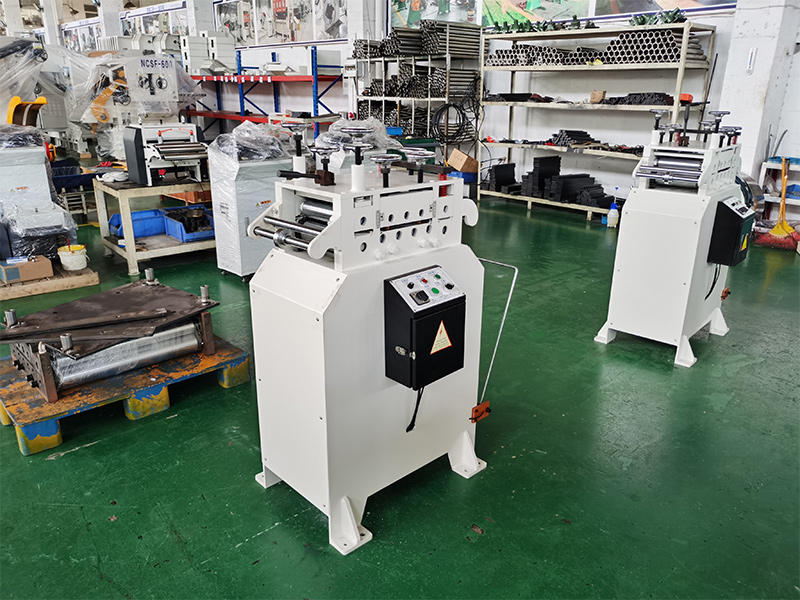
Mechanical vs thermal steel straightening is a choice every fabricator faces, and the right answer depends on the workpiece in front of you. To straighten steel effectively, manufacturers apply physical mechanical force or controlled thermal heating based on specific structural demands. Mechanical straightening, such as precision roller leveling, excels in high-volume production, coil-fed stamping, and processing uniform sheet profiles. Thermal flame straightening works better for heavy structural components, large girders, and localized distortion corrections.
Key processing trade-offs involve operational speed, material thickness limits, required operator skills, equipment investment, and structural integrity impacts. Industrial facilities select specialized machinery based on operational needs and project scales. The growing demand for precision flatness in automated manufacturing is reflected in rapid market expansion:
Metric | Value |
|---|---|
Global Coil Straightener Market (2024) | US$ 1.24 billion |
Global Coil Straightener Market (2033) | US$ 2.09 billion |
CAGR (2025-2033) | 5.8% |
Key Takeaways
Mechanical straightening uses rollers to flatten thin steel sheets and coil stock quickly, and it is the standard approach for sheet metal straightening.
Thermal straightening uses controlled heat to reshape large structural steel components.
Mechanical leveling fits high-speed factory lines without changing the internal structure.
Thermal heating requires skilled operators to prevent metal damage from overheating.
Core Differences: Mechanical vs Thermal Steel Straightening
Operational Mechanics
Mechanical straightening relies on direct physical force to reshape deformed metal stock. Industrial facilities feed workpieces into specialized multi-roller systems or hydraulic power presses. In mechanical roller leveling, entry rollers are set with a deep intermesh. This deep setting bends the metal aggressively past its yield point, causing plastic deformation across the workpiece. Alternating upper and lower rollers flex the metal repeatedly to neutralize residual stress. This structural process changes the physical shape of the steel permanently.
As the sheet progresses through the machine, the roller intermesh gradually decreases. The bends become slight and fall back into the elastic range. This sequence of descending bends breaks internal stresses and resets the material memory. Conversely, thermal straightening works through localized temperature manipulation. Technicians apply localized heat using flame torches or electrical induction heating equipment. Focused heating expands targeted surface regions while cooler surrounding material resists expansion. Subsequent controlled cooling induces internal thermal shrinkage, pulling warped sections back into proper alignment. This targeted thermal contraction reshapes distorted sections efficiently.
Comparison Overview
Metric | Mechanical Straightening | Thermal Straightening |
|---|---|---|
Throughput | High (Continuous in-line processing) | Low (Manual, batch/one-off) |
Repeatability | Highly consistent across long runs | Operator-dependent |
Metallurgical Impact | None (Cold work preserves strength) | High risk of HAZ and grain alteration |
Operator Skill | Moderate (Setup-driven machinery) | Very high (Experienced technicians) |
Automation Potential | Fully integrable with feeders & presses | Nearly impossible |
Advantages and Limitations of Each Method
Mechanical straightening techniques target uniform profiles and continuous high-volume production operations. Stamping plants, coil processing lines, and steel service centers utilize continuous roller leveling machinery to prepare flat sheet metal, coiled strips, and standardized tubing profiles. Integrated mechanical straighteners handle continuous coil feeding without stopping production lines. Automated machinery maintains consistent flat surface quality across long manufacturing runs. High-speed continuous feed operations increase overall plant productivity.
Thermal straightening methods target heavy structural blocks, thick plate girders, and irregular fabrications. Massive structural steel beams and thick bridge components cannot pass through mechanical roller leveling machines because of physical size constraints and extreme material thickness. Skilled technicians manually apply targeted heating patterns to precise regions on these heavy frameworks. Controlled thermal contraction corrects severe angular distortion across complex weldments without requiring massive industrial press machinery. On-site field repair teams often prefer thermal flame methods for large structural corrections.
Mechanical Methods to Straighten Steel
Roller and Press Leveling
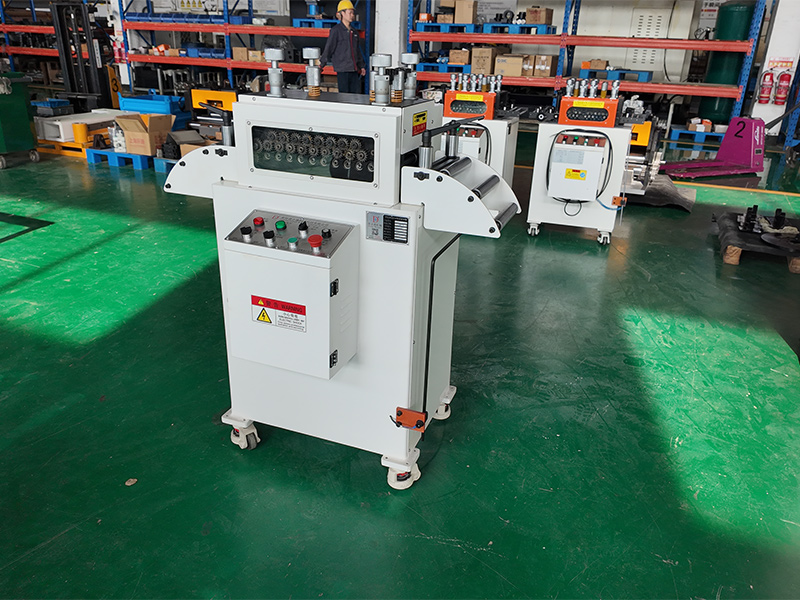
Mechanical leveling machines process deformed metal through alternating sets of upper and lower rollers. These precision-engineered systems apply controlled bending forces to alternate sides of raw material. This physical movement repeatedly flexes coil stock past its yield point. Consequently, the process eliminates internal stresses, coil set, surface bends, and warps across various metals. Stamping operations utilize this method for cold-rolled steel, stainless steel, aluminum, and copper strips.
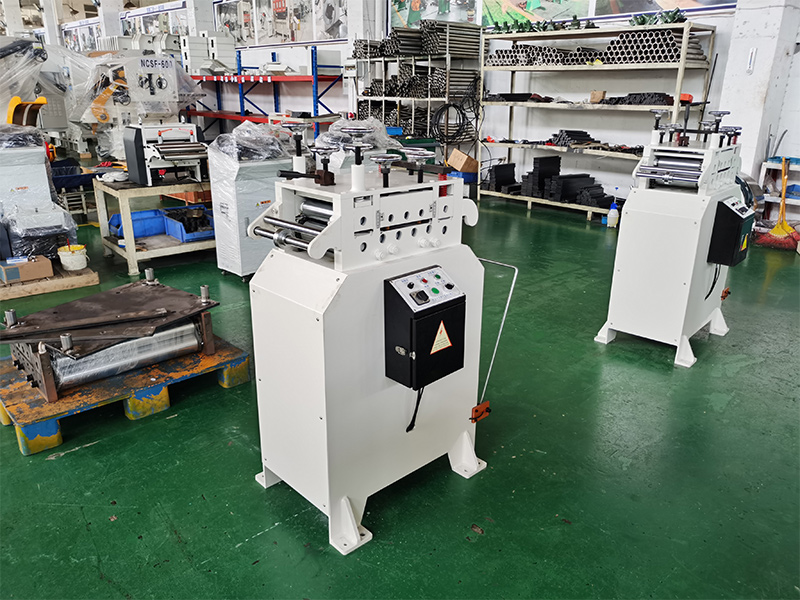
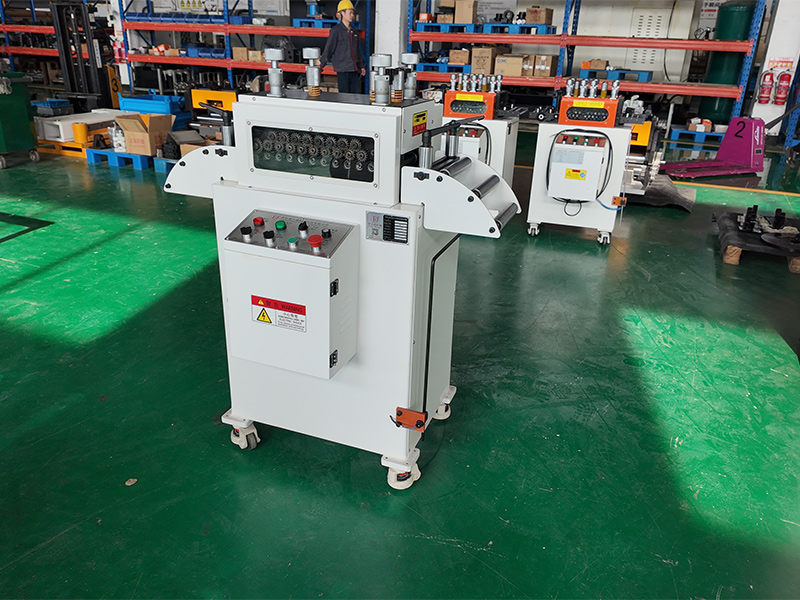
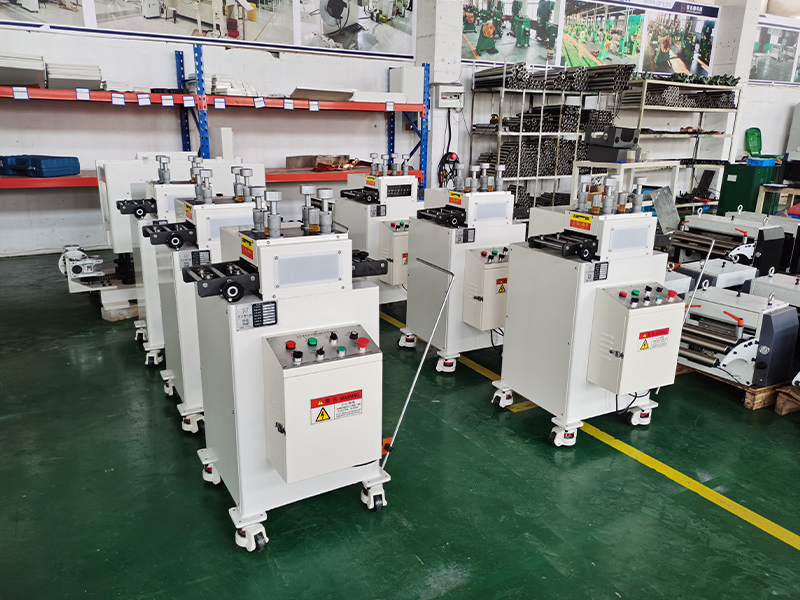
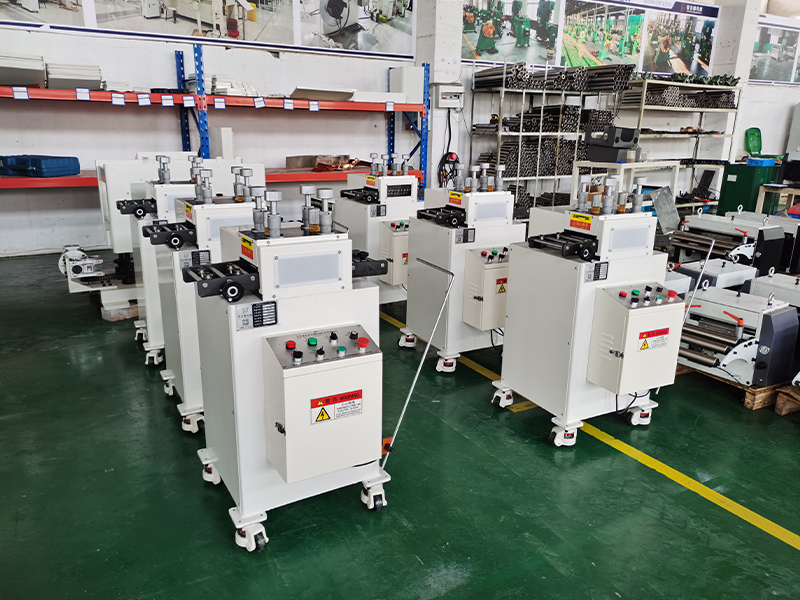
Machinery like the JINZHIDE straightener series incorporates precision gear drives and intuitive handwheels or worm-gear systems for fine roller adjustments. These mechanisms maintain rigid structural stability during continuous high-speed production. Precision roller leveling yields exceptional surface flatness on thin sheet stock. Standard modern levelers achieve flatness tolerances of ±0.5mm per meter or better on 0.5mm sheets, ensuring exceptional surface quality for demanding stamping applications.
Industrial Sheet and Coil Processing
Industrial coil-fed stamping operations require robust material leveling solutions to prepare smooth stock for downstream tools. Facilities integrate these machines directly with conventional presses, high-speed servo presses, laser cutting tables, and roll forming equipment. Equipment lineups accommodate distinct thickness ranges. The JINZHIDE GJ series processes ultra-thin strips from 0.1–0.6mm. The JM3 model targets 0.3–1.5mm sheets, while the S-Loop JM3S serves high-speed lines handling 0.35–1.0mm stock. Versatile CLH levelers process 0.5–3.0mm profiles. For heavy plate applications, the HCL Type Heavy Duty Coil Straightener features a thickness range of 1.0-4.5mm, providing robust capacity for heavy plate processing.
Engineers select mechanical equipment to straighten steel because continuous roller processing provides high operational speed, reliable continuous feeding, and minimal downtime. Operators set mechanical adjustments easily, creating a low skill barrier compared to manual torch operations. Low energy consumption further improves total stamping efficiency. However, mechanical straightening has strict application limits. Roller systems work exclusively on uniform geometric profiles, flat strips, and workpieces within specified thickness boundaries.
Thermal Techniques to Straighten Steel
Heating Patterns and Shrinkage
Thermal straightening techniques utilize localized heat sources to reshape heavy structural steel components. Operators apply oxy-fuel torches or electrical induction heating equipment in specific geometric arrangements. Common thermal application patterns include line heating, spot heating, and wedge heating. Line heating directs thermal energy along a straight path to bend flat plates. Spot heating concentrates energy on localized bulges to flatten surface pockets. Wedge heating targets triangular sections on thick structural beams to correct wide angular weldment distortions. Technicians choose specific patterns based on plate thickness and distortion severity.
These specialized heating patterns manipulate the natural thermal conductivity of the material to alter physical geometry. Concentrated heat rapidly raises the localized surface temperature. The surrounding cool metal restricts the natural thermal expansion of the heated zone. This physical restriction forces the expanding hot metal to yield into compressive plastic deformation. Subsequent controlled air or water cooling causes the heated region to shrink below its original dimensions. This localized shrinkage pulls the warped structural section into proper alignment. The thermal process relies entirely on internal material shrinkage rather than external mechanical force.
Metallurgical Impacts and Risks
Excessive heat exposure introduces significant metallurgical risks to structural metals. Heating structural steel past critical transformation temperatures alters internal material properties, often creating a compromised heat-affected zone (HAZ). Exceeding critical temperature thresholds transforms local grain structures into soft austenite states. Rapid cooling can then form hard, brittle microstructures like martensite. Uncontrolled thermal processing reduces localized yield strength and creates uneven material hardness.
Exceeding critical temperature thresholds transforms local grain structures, risking brittle microstructures upon rapid cooling and degrading localized load-bearing strength.
Thermal methods present distinct operational limitations during heavy metal fabrication. Technicians require extensive manual skill and practical experience to straighten steel safely without damaging microstructures. Flame operations require continuous temperature monitoring using optical pyrometers or thermal crayons. Thermal processing operates slowly due to necessary heating and cooling phases. In contrast to automated mechanical roll leveling, manual flame application lacks high-speed repeatability. High labor demands and slow operational speeds make thermal methods impractical for continuous mass production.
Selection Guide to Straighten Steel
Engineers select the optimal process to straighten steel by analyzing component geometry, material properties, and manufacturing targets. Matching the correct process to specific operational constraints prevents premature component failure and avoids unnecessary production delays.
Geometry and Material Requirements
Material thickness and section geometry serve as the primary criteria for selecting a straightening method. Continuous multi-roller levelers require uniform cross-sections and flat stock geometries to function correctly. Conversely, structural weldments with varying web thicknesses require targeted thermal operations. Metallurgical sensitivity also dictates process selection because heat-sensitive alloys may lose temper under torch flames.
Thickness parameters establish strict boundary lines for machine capability. High-precision mechanical straighteners handle ultra-thin strips down to 0.1mm thickness without causing surface distortion or wrinkling. Heavy-duty levelers process thick plates up to 4.5mm by exerting continuous hydraulic and gear-driven pressure. When workpieces exceed these thickness boundaries or feature irregular cross-sections, mechanical rollers cannot flex the material beyond its elastic yield point. Facilities must then transition to thermal techniques, using controlled heating patterns to induce compressive plastic deformation in localized heavy sections.
Selecting the correct method involves a systematic decision sequence:
Evaluate material thickness: Measure component dimensions against equipment capacities. Standard sheets from 0.1mm up to 4.5mm align with mechanical roller machinery, whereas heavy plate fabrications exceeding these boundaries require thermal intervention.
Assess yield strength and alloy composition: High-strength steels and non-ferrous metals like aluminum respond predictably to mechanical stress reversal without undergoing microstructural changes.
Analyze profile geometry: Identify structural uniformity. Uniform coils, flat strips, and standardized tubing suit multi-roller contact. Asymmetrical weldments, variable girders, and curved frames mandate localized heat shrinkage.
Determine line integration needs: Evaluate whether the process must feed downstream machinery directly, such as punch presses or automated laser cutters.
Calculate total operating budget: Compare capital expenditure for automated machinery against ongoing labor costs for manual torch operations.
When to Use Each Method: Production Volume and Cost Factors
Production volume and operational budget establish the financial feasibility of each technique. Mechanical roller systems involve higher initial capital investments but deliver low per-unit labor costs and exceptional operational speeds. Automated lines process miles of material continuously with minimal human intervention. Thermal flame straightening requires minimal initial equipment investment. However, flame processing demands highly skilled labor and extended processing times, raising long-term labor expenses.
Operational Scenario | Recommended Method | Key Operational Benefit |
|---|---|---|
Automated press lines and continuous coil feeding | Mechanical roller straighteners | Delivers continuous high-speed feed with zero thermal material damage |
Laser cutting sheet preparation | Precision mechanical levelers | Prevents sheet warping during laser cutting |
High-volume strip production (0.1mm to 4.5mm) | JINZHIDE straightener series | Integrates seamlessly with presses while lowering operator skill barriers |
Thick bridge girders and heavy structural blocks | Thermal flame straightening | Reshapes massive sections beyond mechanical roller physical capacity |
On-site field repair of distorted fabrications | Portable flame torch heating | Allows localized structural corrections without removing components |
Automated manufacturing facilities choose mechanical solutions like the JINZHIDE straightener series for high-speed press feeds. Modern plants utilize precision series like the GJ or heavy-duty HCL models to ensure flat stock delivery directly into stamping tools. Conversely, industrial plants select thermal methods exclusively for low-volume fabrications, heavy structural beams, or field repairs where mechanical roller physical limits prevent direct machine processing.
Selecting the correct method to straighten steel ultimately depends on component geometry, required tolerance strictness, and metallurgical safety limits. To maximize throughput and protect expensive dies, automated press operations and thin strip production demand mechanical roller leveling. For massive girders and complex weldments, controlled thermal contraction remains the only viable option.
FAQ
What material thickness can mechanical roller levelers process?
Mechanical roller levelers process thin metal strips and heavy plates. Precision machinery like the JINZHIDE straightener series handles ultra-thin materials from 0.1mm up to heavy steel plates reaching 4.5mm thickness. Structural components exceeding these physical boundaries require localized thermal straightening techniques.
How does mechanical leveling straighten steel without heat?
Mechanical levelers feed metal stock through alternating upper and lower rollers. Deep entry roller settings bend the workpiece past its elastic yield point. This repeated physical flexing neutralizes internal residual stresses, eliminating surface warps and bends cleanly without thermal exposure.
Why does flame thermal straightening risk structural metal damage?
Exceeding critical transformation temperatures transforms local steel grain structures into soft austenite states. Subsequent rapid cooling can create hard, brittle martensite microstructures. Uncontrolled heating reduces localized yield strength and creates uneven hardness across the affected region.
Which method best suits automated coil-fed stamping lines?
Continuous coil-fed stamping operations require mechanical roller straighteners. Systems like the JINZHIDE straightener series integrate directly with punch presses, servo lines, and laser cutters. These automated levelers deliver high-speed continuous feeding, maintaining flat sheet surfaces with low energy consumption.