



2026 Top High-Speed Feeder Manufacturers in China
 Aug 26, 2026|
 View:138
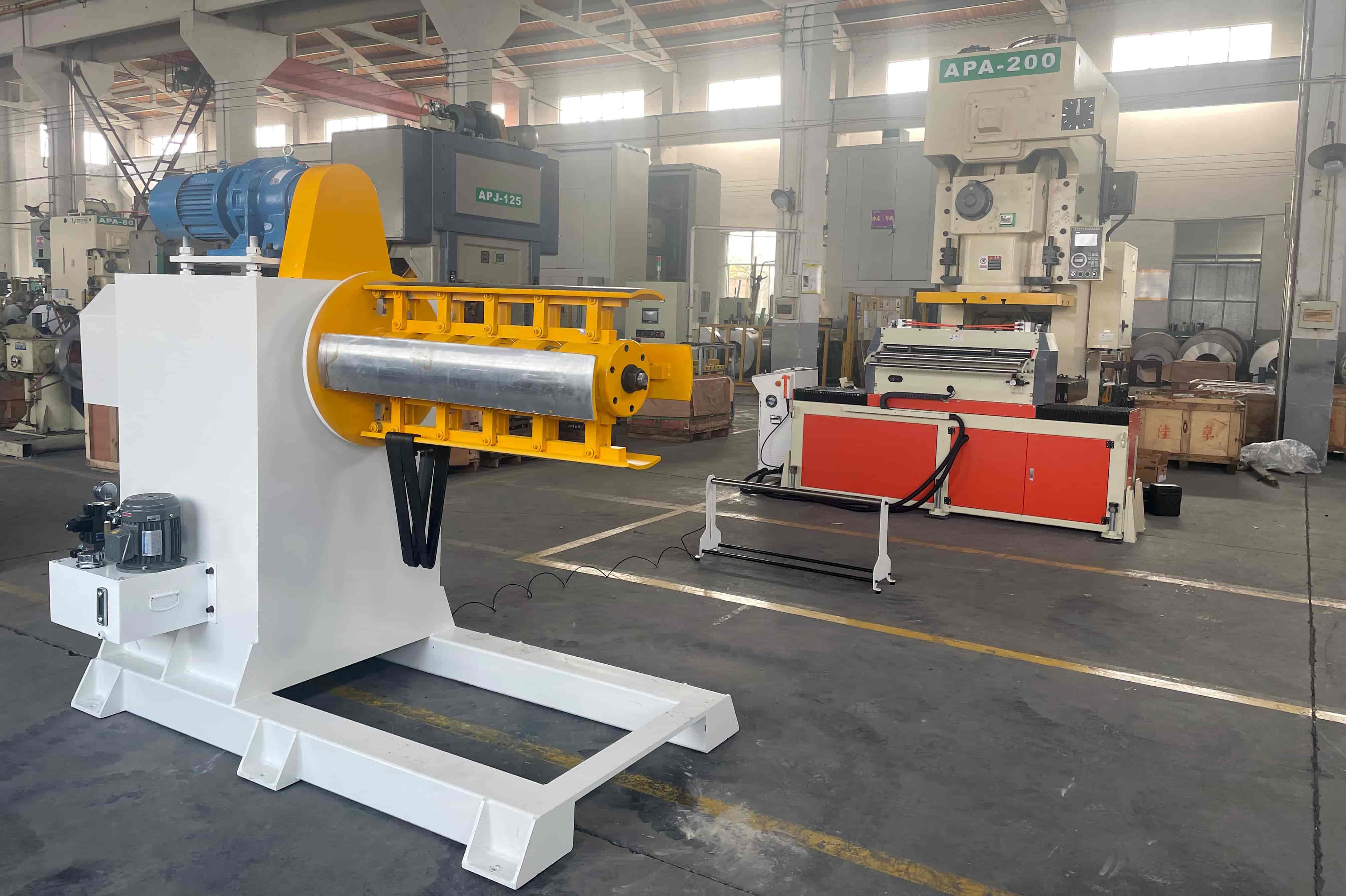
Finding a dependable China high-speed feeder partner for 2026 requires careful research. The global market for high-speed feeders reached approximately $1.2 billion in 2022 and is projected to grow to $1.8 billion by 2026, reflecting an 8% annual growth rate.
Top high-speed feeder manufacturers in China (2026 ranking):
These manufacturers are ranked by technical innovation, production capacity, global reach, and customer feedback. This guide provides detailed company profiles, a comparative ranking table, a purchasing checklist, and the full evaluation methodology. High-speed feeders include coil feeders, servo feeders, and vibrating feeders; this article focuses on the most impactful players across these segments, with each profile highlighting core strengths and featured models to support your decision.
Key Takeaways
The top five high-speed feeder manufacturers in China are JINZHIDE, Dongguan Youyi Precision, Henan Fote, Qufu Ruibo Machinery, and Hunan Lihao Machinery.
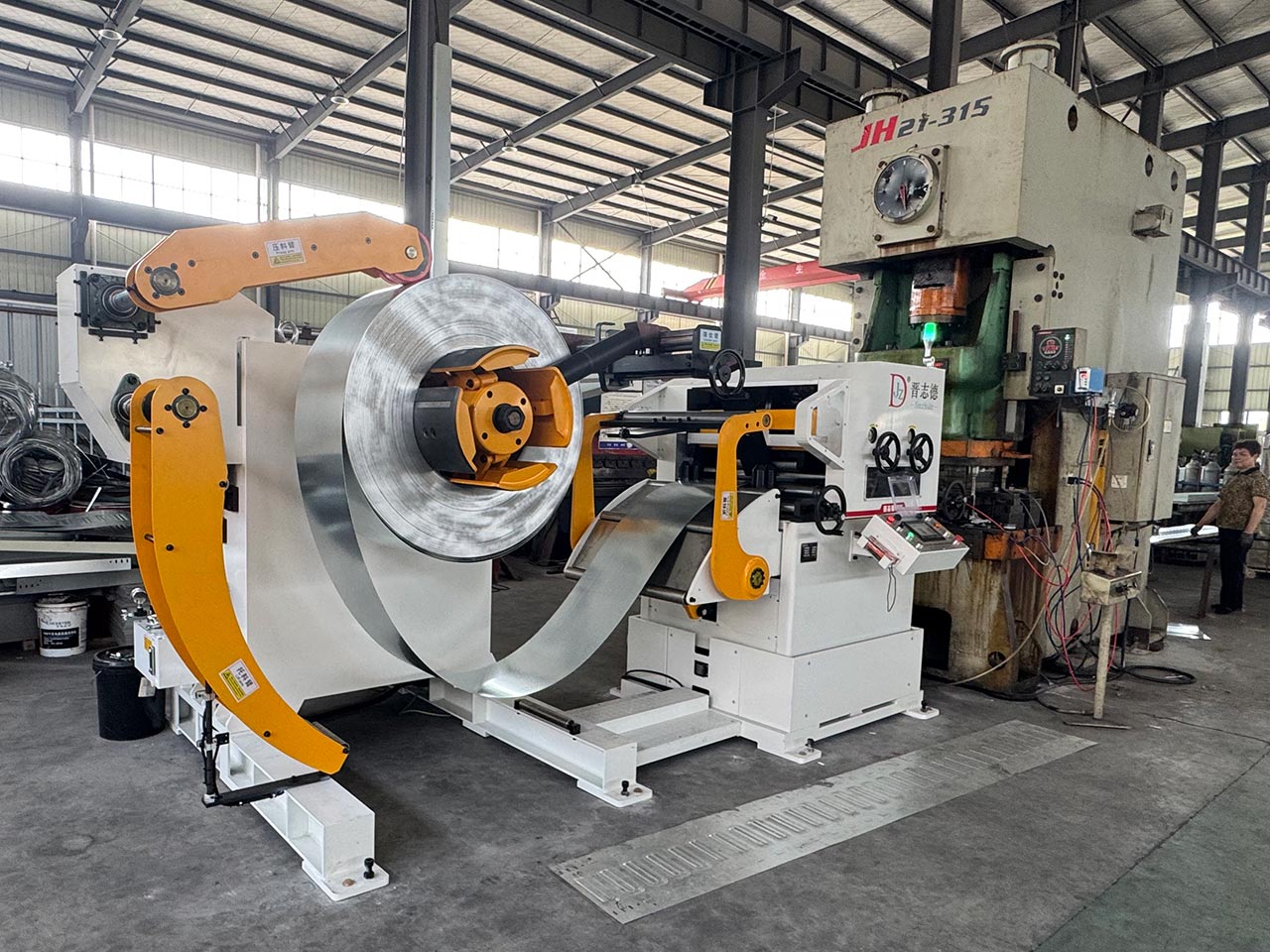
JINZHIDE offers integrated coil processing lines that save space and improve efficiency for stamping operations.
Dongguan Youyi Precision specializes in servo feeders with high accuracy, ideal for precision stamping.
Henan Fote provides heavy-duty vibrating feeders for bulk materials, handling up to 1,500 tons per hour.
Qufu Ruibo Machinery offers custom light industrial feeders at competitive prices for mid-sized buyers.
Hunan Lihao Machinery delivers turnkey stamping lines with integrated control systems for automation.
Match the feeder type to your application: servo feeders for precision, vibrating feeders for bulk, and air feeders for light-duty coil stock.
Evaluate technical parameters like strokes per minute, feed accuracy, and MTBF, and consider total cost of ownership when choosing a supplier.
Top 5 China High-Speed Feeder Manufacturers at a Glance
Selecting the right partner from the crowded field of China high-speed feeder producers demands a structured approach. The evaluation process for this ranking examined twelve distinct criteria, including enterprise activity, business qualifications, product matching, industry performance, certifications, experience, quality control, communication, customization, pricing, support services, and after-sales support. Each manufacturer received a composite score based on these factors, weighted toward technical innovation, production capacity, global reach, and customer feedback.
This rising demand underscores the importance of selecting manufacturers that invest in automation, precision, and advanced technologies such as sensors and IoT-enabled control systems to remain competitive. The five companies profiled below represent the strongest performers across these dimensions.
Comparative Ranking Table
This detailed feeder manufacturer comparison provides a snapshot of each company's standing. Scores reflect a weighted average across all twelve evaluation criteria (scale 0–100), with technical innovation and customer feedback carrying the highest weight.
Manufacturer | Score /100 | Est. | Key Product Lines | Target Applications | Global Reach & Certifications |
|---|---|---|---|---|---|
96 | 2004 | Decoiler straightener feeder, stamping presses, integrated coil lines | Automotive stamping, home appliances, electronics, construction | 60+ countries; ISO 9001 | |
Dongguan Youyi Precision | 94 | 1999 | Servo feeders, uncoiler, leveling machine | Precision stamping, metal forming | Global; ISO 9001, CE |
Henan Fote | 88 | 1998 | Vibrating feeders, heavy-duty bulk handlers | Mining, aggregate processing | Export to 80+ countries; ISO 9001 |
Qufu Ruibo Machinery | 82 | 2005 | Air feeders, custom light industrial feeders | Punch press, labeling systems | Domestic + SEA; ISO 9001 |
Hunan Lihao Machinery | 85 | 2001 | Roller feeders, turnkey stamping lines | Progressive die stamping, coil stock processing | Domestic + South America; ISO 9001, CE |
Key Product Lines and Target Applications
Each manufacturer brings distinct strengths to the market. JINZHIDE focuses on integrated coil processing solutions, combining decoiling, straightening, and feeding into a single unit—ideal for manufacturers seeking compact footprints without sacrificing speed. Dongguan Youyi Precision specializes in servo-driven automation, delivering precise feeding for progressive die stamping. Henan Fote dominates heavy-duty applications with vibrating feeders built for continuous operation in demanding environments. Qufu Ruibo Machinery excels in customization, providing air feeders and precision feeding systems for niche applications. Hunan Lihao Machinery integrates feeders with stamping presses and reeling systems for turnkey progressive-die operations.
Global Reach and Key Certifications
Global presence varies significantly among these manufacturers. JINZHIDE serves customers in over 60 countries, supported by ISO 9001 certification that ensures consistent quality control. Dongguan Youyi Precision serves a global customer base of 10,000+ companies—including Foxconn and Hettich—and holds ISO 9001 and CE certifications. Henan Fote exports to more than 80 countries under ISO 9001, with products deployed across Southeast Asia, Africa, and the Middle East. Qufu Ruibo Machinery focuses on domestic and Southeast Asian markets, also under ISO 9001. Hunan Lihao Machinery maintains a strong domestic footprint and expanding South American exports, with both ISO 9001 and CE certifications.
The ranking methodology also considered each company's investment in research and development. Manufacturers demonstrating advanced manufacturing equipment, strategic partnerships, and continuous innovation received higher scores. Customer feedback played a critical role, with particular attention to responsiveness, technical support, and after-sales service. Companies that offered customization options and maintained transparent communication throughout the purchasing process earned additional points.
The following sections provide in-depth profiles of each manufacturer, highlighting featured products and explaining why each earned a place on this list.
1. JINZHIDE: Integrated Coil Processing Solutions
Company Overview and Core Competencies
History and Market Position in Stamping Equipment
JINZHIDE operates from a 5,300 m² high-tech manufacturing facility in Changzhou, China. The company has established itself as a prominent feeder manufacturer within the stamping equipment sector, on a simple premise: deliver integrated coil processing lines that reduce manual intervention and increase throughput. The portfolio spans uncoilers, straighteners, feeders, and complete stamping lines, allowing JINZHIDE to serve as a single-source partner for metal forming operations. Its approach emphasizes modular design: customers can select individual components or request fully integrated systems tailored to their production floor.
Production Capacity and Quality Control (ISO 9001)
JINZHIDE operates under the ISO 9001 Quality Management System, ensuring every machine meets rigorous international standards. The company maintains strict quality control protocols throughout manufacturing—from raw material inspection to final assembly and testing. With over 100,000 equipment installations worldwide, the production capacity supports both standard configurations and custom-engineered solutions. Parallel production lines allow the company to handle multiple orders simultaneously without compromising quality, maintaining consistent lead times while adapting to varying customer requirements.
Featured Product: Decoiler Straightener Feeder
Integrated Decoiling, Straightening, and Feeding Capabilities
The Decoiler Straightener Feeder is JINZHIDE's flagship 3-in-1 system. The decoiler automatically unfolds coils to maintain continuous production flow. The straightener flattens metal sheets and reduces internal stress, preparing material for precise stamping. The feeder then advances material at controlled speeds, minimizing manual work and maximizing consistency. The NCSF3 series handles material thickness from 0.3 to 3.2 mm and widths from 70 to 1,000 mm. For heavier applications, the NCSF8 series accommodates stock up to 1,800 mm wide and approximately 8 mm thick, with coil loading capacity reaching 20 tons. These specifications cover a broad range of stamping operations, from small electronic components to large automotive panels.
Space-Saving Design and Customization Options
The integrated design delivers a significant advantage in floor space utilization. A 3-in-1 system occupies roughly 4 meters, compared to approximately 7 meters for a 2-in-1 configuration requiring manual loading—valuable for manufacturers with limited production areas. JINZHIDE offers customization across multiple dimensions: material type, coil weight, inner/outer diameters, and feeding speed. The system handles carbon steel, cold-rolled steel, stainless steel, aluminum, and high-strength steel. Standard features include a hydraulic loading trolley, servo leveling adjustment with touch-screen control, hydraulic shear for cutting coil heads and tails, and a double-sided lubrication unit.
Why JINZHIDE Made the Top 5
Strengths in High-Speed Stamping Line Efficiency
JINZHIDE's integrated approach directly addresses production efficiency challenges. By combining decoiling, straightening, and feeding into one synchronized system, the equipment eliminates transfer points where misalignment and material damage typically occur. The servo-driven leveling adjustment ensures consistent material flatness, translating to fewer rejected parts and longer die life. The double-sided lubrication unit further extends die operational lifespan. The system suits presses from 25 to 2,000 tons; older standard presses can be retrofitted without modifying the main press structure.
Global Customer Base and After-Sales Support
Serving customers in over 60 countries, JINZHIDE has built a reputation for reliability in stamping press and coil feeder systems. Customer sentiment reflects this trust: "When the press runs, gold pours"—a phrase that captures the value of dependable equipment that ensures durability, precision, and high-speed production while reducing downtime. The company backs its products with a dedicated support team: more than 12 after-sales engineers handle installation, commissioning, and training. A 72-hour global response time for on-site service reduces the risk associated with purchasing high-speed feeder equipment from overseas suppliers.
Need an Integrated Coil Processing Solution?
JINZHIDE engineers can design a custom 3-in-1 decoiler straightener feeder tailored to your press, material, and throughput requirements.
Get a Free Quote →2. Dongguan Youyi Precision: Leading Servo Feeder Manufacturer in China
Company Overview and Core Competencies
Focus on Servo-Driven Automation
Dongguan Youyi Precision Automation Equipment Co., Ltd. was established in 1999 and has spent over 25 years refining servo-driven automation for metal stamping. Its core product line includes servo feeders, uncoilers, material racks, and leveling machines. The company ranks #1 in China's Top 10 Servo Feeder Manufacturers for 2026, with an overall score of 94/100. This ranking reflects consistent investment in automation technology and a clear focus on precision feeding systems.
The company expanded its manufacturing footprint with new factories in 2015 and 2024; these facilities now cover 30,000 m². This growth supports a customer base of 10,000+ companies, including global partners such as Foxconn and Hettich. Registered capital stands at RMB 5.1 million, providing financial stability for long-term supply agreements.
Precision Engineering and R&D Capabilities
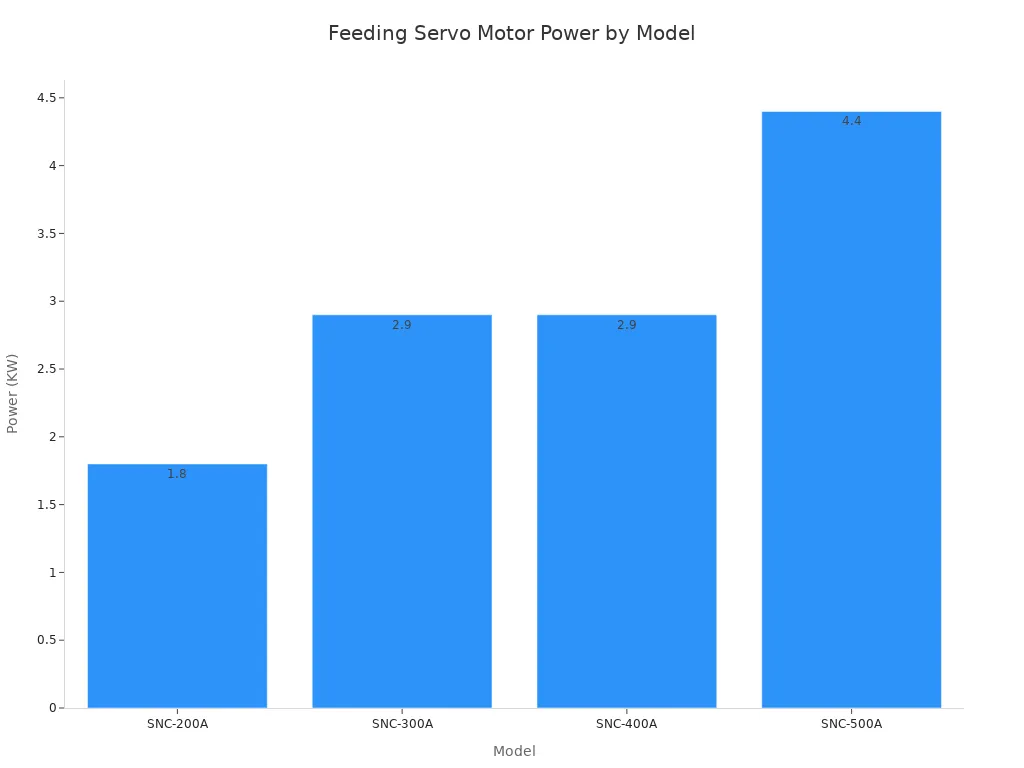
Research and development drive the company's technical advantage. A dedicated team of 15+ R&D staff continuously develops new servo feeder machines, achieving ±0.05 mm precision in standard configurations. The NC servo roll feeder reaches approximately ±0.02 mm feeding accuracy under optimal conditions. Servo motor control, encoder feedback, and PLC systems work together to deliver high-precision stamping performance.
The engineering team focuses on practical improvements: space-saving designs integrate leveling and feeding into one unit, reducing floor space while maintaining full functionality. Equipment operates from decoiling to shearing and stacking with minimal manual intervention. Material compatibility spans stainless steel, aluminum, cold-rolled steel, and other common stamping materials.
Featured High-Speed Servo Feeder Models
GNC High-Speed Servo Feeder: Precision Feeding for Stamping Lines
The GNC High-speed Servo Feeder supports high-speed punching machines with a feeding speed of 300 strokes per minute and accuracy within ±0.02 mm. The feeding direction can be configured left-to-right or right-to-left to match press layout.
Dual-Axis Zigzag Servo Feeder: Multi-Task Feeding for Complex Layouts
The two-axis zigzag feeding system handles complex stamping layouts through synchronized longitudinal and lateral movement, maximizing material utilization and reducing waste significantly. The system uses a Mitsubishi PLC and dual Yaskawa servo motors for precise control. The touchscreen interface simplifies operation—operators input material width, blank diameter, and feeding step; the system automatically computes the optimal discharge method and motion parameters.
Why Dongguan Youyi Made the Top 5
Strengths in Speed and Accuracy Metrics
The equipment achieves feeding accuracy within ±0.02 mm through computer closed-circuit feedback control. Both the Dual Servo Feeder and GNC High-speed Servo Feeder support high-speed punching machines at 300 strokes per minute—making the company a strong choice among servo feeder suppliers.
Setup time reductions add operational value: feeding step length, feeding angle, and loosening angle are configured directly via touchscreen when switching dies. This eliminates complex mechanical settings and reduces training time—operators learn the system quickly.
Integration with Smart Factory Systems
The electric benchtop precision high-speed punch press integrates with an NC servo feeder, enabling fully automated stamping production. The servo system provides precise control of feeding length and timing, improving stamping efficiency and product consistency across production runs.
The equipment suits high-speed press applications with rapid feeding speeds and long feeding pitches. Motor stator/rotor and transformer core laminations benefit from this capability, while electrical steel coils and silicon steel sheets feed reliably through the system.
3. Henan Fote: Heavy-Duty Vibrating Feeder Specialist
Company Overview and Core Competencies
Background in Mining and Bulk Material Handling
Henan Fote Heavy Machinery Co., Ltd. has built its reputation in the mining and bulk material handling sectors. Its equipment processes materials like limestone, iron ore, coal, granite, and construction waste, serving industries such as cement, aggregates, mineral processing, and construction waste recycling. Decades of experience give the company deep knowledge of material behavior under heavy loads. The industrial equipment supports crushing and screening combination equipment in steel plants, coal plants, and foundries.
Diversification into High-Speed Industrial Feeders
The company extended its expertise into high-speed feeding systems, where vibrating feeders became a natural product extension. These machines use controlled vibration to move bulk materials efficiently and serve crushing and screening combination equipment across multiple industries. Experience with heavy-duty applications translates directly into feeder designs that withstand continuous operation.
Featured Vibrating Feeder Models
GZD Series: High-Throughput Feeding for Bulk Components
The GZD series vibrating feeders handle high-throughput requirements across a broad range of models:
Model | Max. Feeding Size (mm) | Processing Capacity (t/h) | Motor Power (kW) |
|---|---|---|---|
GZD-650×2300 | 300 | 80–100 | 2×1.1 |
GZD-1000×3600 | 500 | 150–200 | 2×3.7 |
GZD-1500×3600 | 1050 | 450–1000 | 2×7.5 |
GZD-2500×5000 | 1500 | 650–1500 | 2×18 |
The GZD-2500×5000 represents the top end of the series, processing up to 1,500 tons per hour with a maximum feeding size of 1,500 mm. The dual-motor design uses 2×18 kW motors, and the trough obliquity stays between 10–20° across all models.
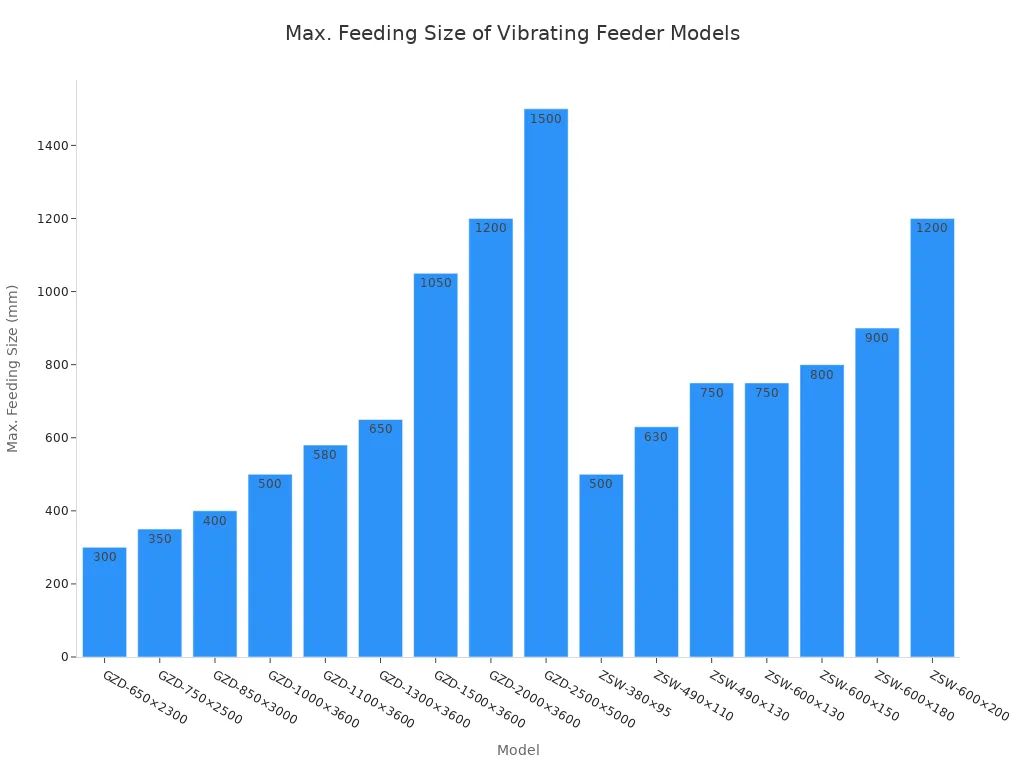
The ZSW series offers a different design approach. The ZSW-380×95 processes 100–280 tons per hour with a maximum feeding size of 500 mm, while the ZSW-600×200 reaches 800–1,500 tons per hour with a maximum feeding size of 1,200 mm. Trough obliquity for ZSW models ranges from 0–15°.
ZSW Series: Durable Design for Continuous Operation
The ZSW series uses a single motor with power ratings from 11 kW to 55 kW, with trough sizes ranging from 3,800×280 mm to 6,000×2,000 mm. The larger trough accommodates bigger material loads while maintaining consistent feeding rates. The ZSW-600×200 handles up to 1,500 tons per hour, making it suitable for primary crushing applications where material flow must remain constant. The single-motor design simplifies maintenance while delivering reliable performance.
Why Henan Fote Made the Top 5
Strengths in Robustness and Cost-Effectiveness
Henan Fote's equipment stands out for its robust construction. The vibrating feeders use heavy-duty frames and vibration motors rated for continuous service. The dual-motor design on GZD models provides balanced vibration while reducing stress on individual components, operating reliably with minimal maintenance and lowering total cost of ownership.
Scalability for Large-Scale Operations
The product range spans from 80 to 1,500 tons per hour, allowing buyers to match equipment capacity to production requirements. A small quarry can start with a GZD-650×2300, while a large mining operation can deploy multiple GZD-2500×5000 units. For buyers evaluating a China high-speed feeder for bulk material handling, Henan Fote's vibrating feeder delivers reliable performance, distinct from the precision servo feeders used in stamping applications.
4. Qufu Ruibo Machinery: Niche and Custom Feeder Solutions
Company Overview and Core Competencies
Specialization in Agricultural and Light Industrial Feeders
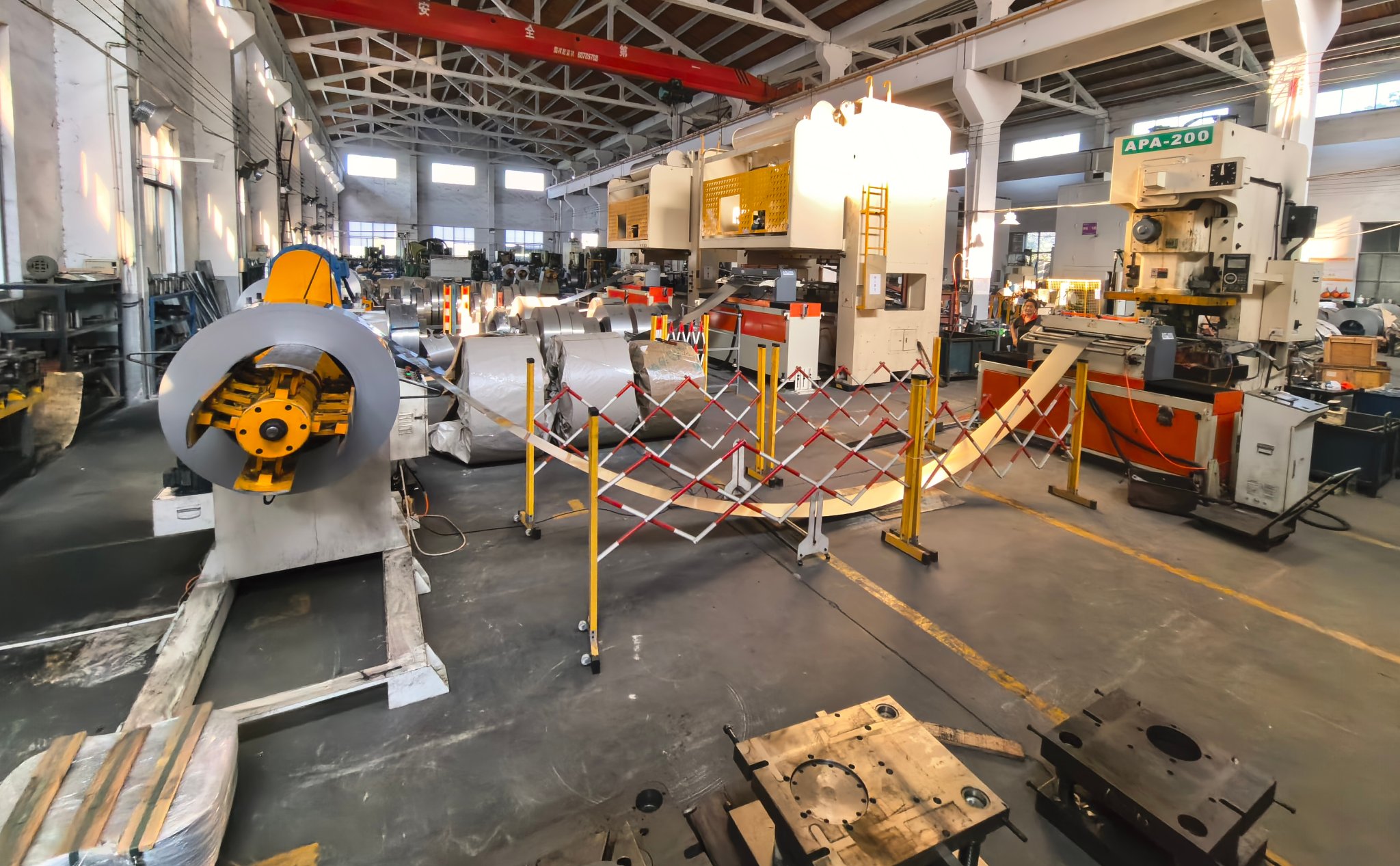
Qufu Ruibo Machinery operates from Shandong Province and focuses on a distinct market segment. Its core expertise lies in agricultural equipment and light industrial feeding systems, serving buyers who need reliable feeding solutions for less demanding environments. The product range includes air feeders, labeling system feeders, and custom light industrial equipment. These machines handle lighter materials and operate at moderate speeds. The engineering team understands the specific challenges of agricultural processing lines: dust exposure, variable material quality, and seasonal operation patterns.
Instead of building massive vibrating feeders for mining operations, Qufu Ruibo builds compact systems for packaging lines and punch presses. This focus creates a clear value proposition for mid-sized manufacturers who often struggle to find appropriately sized equipment at reasonable prices.
Customization Capabilities for Unique Applications
Custom engineering represents the company's primary competitive advantage. The design team works directly with customers to adapt standard models, starting with a detailed application review that examines material specifications, cycle times, and integration requirements. The team then modifies existing designs or creates entirely new configurations. This flexibility proves valuable for unusual applications: a labeling line requiring a feeder for oddly shaped containers, or a punch press operation needing non-standard coil widths.
The company maintains a responsive engineering process: customers receive design proposals within days, and prototype development follows quickly for complex modifications. This speed matters for buyers with urgent production deadlines.
Featured Feeder Models
Precision Labeling Feeder: Consistent Placement for Packaging Lines
The precision labeling feeder handles containers and packaging components with consistent accuracy. The system uses servo-driven rollers to advance materials at controlled speeds, ensuring labels apply at the correct position on every cycle. The feeder integrates directly with existing labeling machinery. Standard models accommodate container widths from 20 mm to 200 mm, and feeding speed adjusts through a simple control interface without stopping the production line. The compact footprint suits facilities with limited floor space, and the company provides mounting brackets and connection kits for common labeling machine brands for a plug-and-play installation.
High-Speed Air Feeder for Punch Presses
The high-speed air feeder serves punch press operations processing coil stock. This model uses pneumatic cylinders to advance material in precise increments, delivering rapid cycling rates suitable for high-volume stamping. Standard models handle material widths up to 300 mm with thickness ranging from 0.2 mm to 2.0 mm. The feeder mounts directly to the press frame, eliminating the need for separate floor stands.
Air pressure requirements remain modest, typically 5–6 kg/cm², so the feeder operates reliably with standard shop air supplies. Maintenance involves routine cleaning and seal replacement, keeping downtime minimal. Optional accessories include coil cradles and straighteners, creating a complete feeding system from a single supplier.
Why Qufu Ruibo Made the Top 5
Strengths in Flexibility and Custom Engineering
Qufu Ruibo's willingness to customize sets it apart from larger competitors. Each order is treated as a unique engineering project, delivering equipment that matches the exact production requirements. Engineers communicate directly with customers throughout the design process, building confidence and reducing the risk of specification errors. For buyers with unusual applications, this flexibility proves invaluable.
Competitive Pricing for Mid-Sized Buyers
Standard models carry lower price points than comparable equipment from larger brands, and custom engineering services add modest fees rather than premium charges. This pricing structure makes advanced feeding technology accessible to smaller operations, with attractive total cost of ownership due to simple maintenance requirements and reliable operation.
5. Hunan Lihao Machinery: Automation and Integration Experts
Company Overview and Core Competencies
Focus on Turnkey Stamping and Assembly Lines
Hunan Lihao Machinery builds complete stamping and assembly lines as a system integrator rather than a single-machine supplier. It designs automated production lines from coil loading to finished part output, reducing the number of suppliers a buyer must manage and shortening commissioning timelines. The company's industrial equipment serves automotive and appliance manufacturers, industries that demand high throughput and consistent quality.
Expertise in Feeder-Straightener-Reeler Integration
The company's core expertise lies in connecting feeders, straighteners, and reeling systems into a single control framework. A programmable logic controller (PLC) acts as the central brain, coordinating feeding sequences with press strokes and straightener speeds for smooth material flow across the entire line. The feeder-straightener-reeler combination handles material thickness from thin sheets to heavy gauge stock. Customers can modify drawings to match specific automation requirements, and the company also offers vacuum feeder options for applications requiring gentle handling of delicate materials.
Featured Feeder Models
Synchronized Servo Feeder for Progressive Dies
This model uses a brushless servo motor with high-resolution encoder feedback, providing precise positioning for progressive die stamping. The feeder achieves speeds up to 20 meters per minute, supporting high-speed production lines without sacrificing accuracy. PLC integration enables automated coordination with the stamping press, while pneumatic relaxation control reduces tension during feeding cycles. Synchronous belt transmission lowers noise and reduces maintenance frequency. Operators set parameters from a touchscreen interface, simplifying changeovers.
High-Speed Roller Feeder for Coil Stock
This roller feeder handles coil stock for large-scale stamping operations, advancing material in controlled increments. The system integrates into sheet metal cabinet-making lines and works with metal straightening machinery to maintain material flatness. Controls are driven by a branded PLC. The feeder supports high-speed and long-distance feeding, suitable for applications requiring consistent material positioning over extended strokes. Automatic operation delivers high productivity, and vacuum feeder options are available for low-tension applications.
Why Hunan Lihao Made the Top 5
Strengths in System Integration and Software Control
Hunan Lihao's strength is its ability to integrate multiple machines into a coherent system. The PLC control software allows operators to adjust parameters from a single interface, reducing setup time and minimizing human error. Engineers design control logic that synchronizes all line components, so the production line runs with minimal manual intervention. Servo motor technology ensures precise positioning, while encoder feedback maintains accuracy over long runs, improving overall equipment effectiveness.
Strong Domestic and Export Market Presence
The company maintains a strong presence in the domestic Chinese market and exports to South America and other regions. Customers value the reliability of the automated systems, and the company's focus on integration and software control sets it apart from competitors who offer standalone machines. Total cost of ownership remains competitive due to efficient operation and reduced downtime.
Evaluating a China High-Speed Feeder: Key Technical Parameters
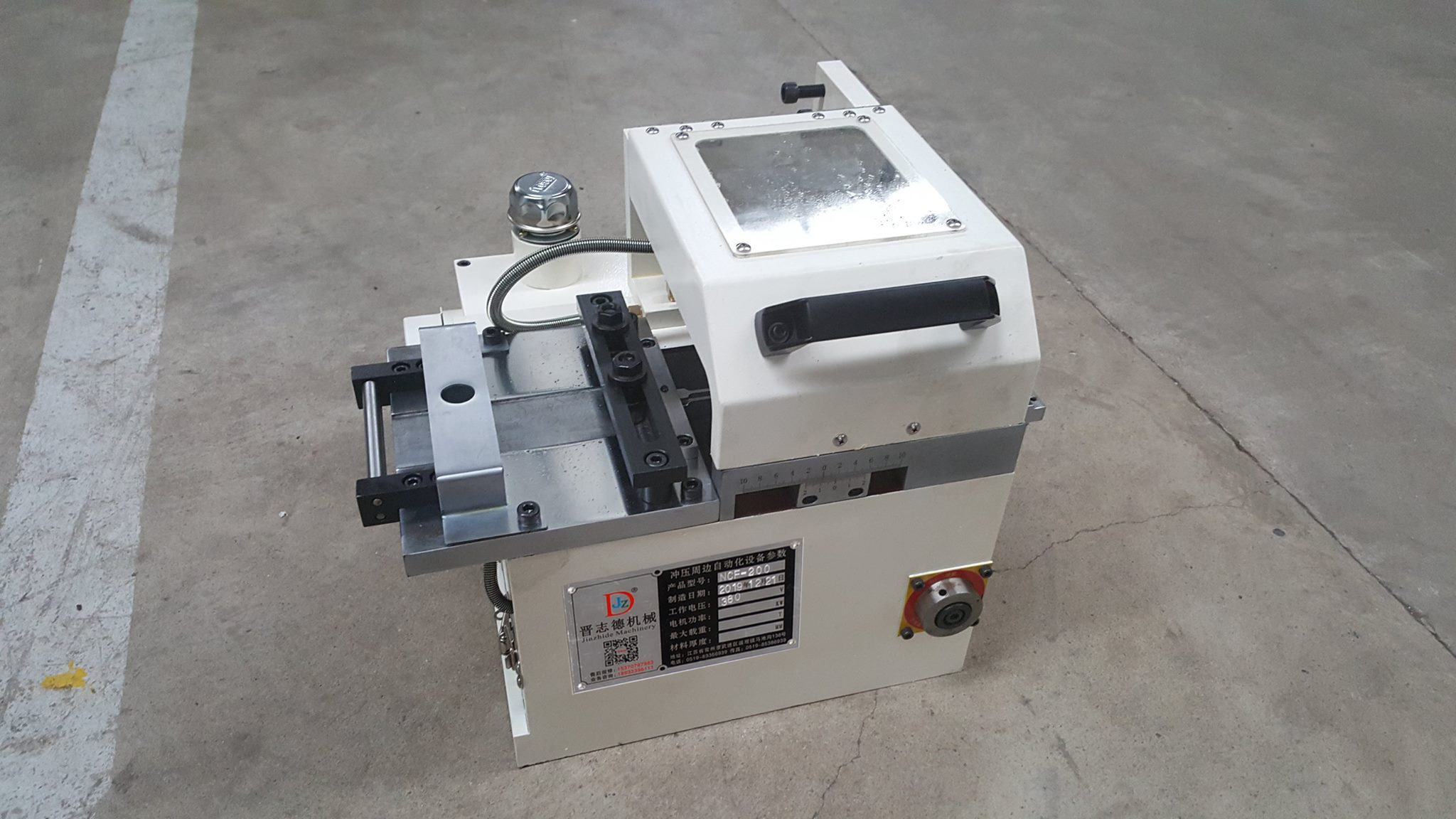
Understanding how to choose a high-speed feeder requires more than comparing brand names. Buyers must evaluate technical specifications against their specific production demands. This section breaks down the critical parameters that separate adequate equipment from exceptional machinery.
Performance Metrics to Compare
Strokes Per Minute (SPM) and Feed Accuracy
Strokes per minute measures how many feeding operations a machine completes in one minute. Higher SPM values translate directly to faster production lines. For stamping applications, a feeder that achieves 300 strokes per minute outperforms a unit rated at 200—the difference becomes significant over an eight-hour shift.
Feed accuracy works alongside SPM as a complementary metric. Accuracy determines whether material lands in the correct position every cycle. Servo-driven systems typically achieve ±0.02 mm accuracy under standard conditions, and some premium models maintain ±0.02 mm with optimal setup. This precision matters for fine-pitch stamping where misalignment causes die damage or defective parts. Buyers should request accuracy data measured under production conditions, not laboratory settings—real-world accuracy often differs from manufacturer claims due to vibration, temperature variation, and material inconsistencies.
The relationship between speed and accuracy deserves careful attention. Pushing a feeder to maximum SPM often degrades placement precision; a machine rated at 300 SPM with ±0.02 mm accuracy may only maintain ±0.05 mm at peak speed. Evaluate both metrics together and request performance curves showing accuracy across the full speed range.
Mean Time Between Failures (MTBF) and Durability
MTBF represents the average operating time between equipment failures. A higher MTBF indicates more reliable machinery and fewer unplanned stoppages. For continuous production environments, MTBF directly impacts output volume: a feeder with 10,000 hours MTBF outperforms a comparable unit rated at 5,000 hours, and the difference compounds over multi-year equipment lifespans.
Durability extends beyond MTBF to component wear and maintenance requirements. Vibrating feeders from heavy-duty manufacturers withstand abrasive materials that would damage precision servo systems. Conversely, servo feeders handle delicate components that vibrating equipment would damage. Match the feeder type to the material characteristics.
Compatibility and Integration Considerations
Feeder Types: Coil, Servo, Vibrating, and Air
Different production processes require different feeder configurations. Coil feeders process continuous metal strip for stamping operations and integrate with decoilers and straighteners for complete stamping lines. Servo feeders deliver high-precision feed control for progressive-die applications. Vibrating feeders handle bulk materials in mining and aggregate industries. Air feeders serve light-duty coil stock for punch presses. While less common in standard high-speed stamping, specialized applications may also require a cam drive feeder or a gripper feeder. Each type serves a distinct purpose with unique mechanical requirements.
The choice of feeder type affects floor space, maintenance complexity, and changeover time. Coil feeders integrate with decoilers and straighteners for complete stamping lines. Servo feeders offer compact footprints with high flexibility. Vibrating feeders require heavy-duty foundations but handle bulk materials at massive throughput. Evaluate your material type and production process before selecting equipment.
Interface with Existing Stamping Machines
Integration capability determines how smoothly new equipment works with existing production lines. Stamping equipment typically uses PLC-based control systems with specific signal requirements. Verify compatibility before purchase to avoid expensive adapter solutions.
Physical dimensions matter as much as electronic compatibility. A feeder that fits mechanically but extends beyond the machine envelope creates safety hazards. Measure available space carefully, including clearance for material loading and operator access. Request dimensional drawings from suppliers and compare them against your floor layout. Some manufacturers offer customization services to match non-standard mounting configurations—valuable when retrofitting older equipment.
Business and Supply Chain Factors
Minimum Order Quantities and Lead Times
Minimum order quantities (MOQs) vary significantly among manufacturers. Large producers often require substantial orders to justify production runs, while smaller specialists may accept single-unit purchases with custom specifications. Understand your volume requirements before negotiating—a buyer needing five feeders faces different constraints than one ordering fifty.
Lead times range from weeks to months depending on complexity and supplier capacity. Standard models with available inventory ship fastest; custom configurations require engineering time and extended production schedules. Request written lead time commitments during quotation, and include buffer time for shipping, customs clearance, and installation.
Total Cost of Ownership and Warranty Terms
Purchase price represents only a fraction of total equipment cost. Maintenance, spare parts, energy consumption, and downtime expenses accumulate over the equipment lifetime. A cheaper feeder with frequent breakdowns costs more than a premium unit with reliable operation. Calculate total cost of ownership using a five-year horizon, including estimated maintenance labor, replacement parts, and lost production time.
Warranty terms vary widely among China high-speed feeder suppliers. Standard warranties cover parts and labor for twelve months; extended warranties add coverage for critical components such as servo motors and control boards. Pay attention to exclusions and claim procedures—some manufacturers require certified technicians for repairs, while others offer remote diagnostics and direct-shipped replacement parts. Choose a supplier whose warranty structure matches your maintenance capabilities.
Our Evaluation Methodology for the 2026 Ranking
The ranking of these five manufacturers followed a structured process designed to produce objective, verifiable results. The methodology covered data collection, verification, and scoring across multiple dimensions, ensuring transparency for buyers using the rankings as a decision-making tool.
Data Collection and Verification Process
Primary Sources: Company Profiles and Facility Verification
We gathered primary data from company profiles, product documentation, and publicly available technical specifications. These sources covered production capabilities, R&D investment, quality control procedures, and customer support structures. We asked specific questions about manufacturing equipment, testing protocols, and workforce training to gain insight into each company's operational maturity.
We also reviewed facility information from public records, trade show participation, and verified business registrations. Audits verified claims about equipment, testing procedures, and workforce expertise, confirming production capacity figures and quality management system implementation.
Secondary Sources: Industry Reports and Customer Reviews
We cross-referenced primary data against industry reports and published market analyses. These sources provided context about market share and competitive positioning, with reports from industry associations and trade publications offering independent validation of market presence.
Customer reviews collected from independent platforms and direct references offered real-world performance data. We contacted existing customers to verify claims about after-sales support and equipment reliability. This triangulation of data sources reduced bias and improved accuracy; discrepancies between primary and secondary sources triggered additional investigation and were resolved before finalizing scores.
Scoring and Weighting Criteria
Technical Innovation and R&D Investment
We evaluated technical innovation through patent portfolios, new product introductions, and R&D spending as a percentage of revenue. Manufacturers with dedicated R&D teams and documented design improvements scored higher. The presence of advanced manufacturing equipment and proprietary technologies added points. We also assessed the ability to customize solutions for unique applications; companies that demonstrated continuous improvement in speed, accuracy, and reliability earned higher scores.
Production Capacity and Quality Control Systems
Production capacity was measured by facility size, equipment count, and output volume. Quality control systems were evaluated through certification status, testing procedures, and defect rates. ISO 9001 certification served as a baseline requirement. We also examined quality management practices beyond certification; companies with documented traceability systems and statistical process control methods scored higher. The consistency of output quality across different product lines indicated strong process control.
Global Market Share and Customer Satisfaction Scores
Global market share was determined through export volume, geographic distribution, and customer count. Customer satisfaction was measured through repeat purchase rates, reference feedback, and response time data. We weighted these factors equally to balance quantitative market presence with qualitative customer experience. The final composite score reflected performance across all twelve evaluation criteria.
This methodology produced a defensible ranking that follows standard industry practices for supplier evaluation. Buyers can apply similar criteria when conducting their own assessments of equipment from China.
Table of Contents
The five manufacturers profiled represent distinct approaches to high-speed feeding. JINZHIDE excels in integrated coil processing, Dongguan Youyi leads in servo precision, Henan Fote dominates heavy-duty bulk handling, Qufu Ruibo offers custom light industrial solutions, and Hunan Lihao delivers turnkey automation. Each serves different production environments, from precision stamping to heavy mining.
Match the manufacturer's strengths to your specific application: a servo feeder suits precision stamping; a vibrating feeder handles bulk materials; an air feeder handles light-duty coil stock. Use the technical parameters and evaluation methodology as your checklist when contacting suppliers. Request detailed specifications, performance data, and customer references before committing. This diligence ensures your China high-speed feeder investment delivers reliable, long-term value.
Ready to Upgrade Your Stamping Line?
JINZHIDE engineers will respond within 24 hours with a tailored coil processing solution, competitive quote, and delivery plan.
Request a Quote →Frequently Asked Questions
How do I choose between a servo feeder and a vibrating feeder?
Match the feeder type to your material. Servo feeders deliver precision placement for coil stamping and progressive die operations, achieving ±0.02 mm accuracy. Vibrating feeders handle bulk materials like ore and aggregate. Consider your production environment first.
What certifications should a reliable Chinese feeder manufacturer hold?
ISO 9001 certification serves as the baseline quality standard, ensuring consistent manufacturing processes and quality control protocols. Some manufacturers also hold CE certification for European markets. RoHS certification matters for electronics applications. Request copies of current certificates during supplier evaluation and verify them through independent registries when possible.
How long does shipping and installation typically take?
Lead times vary by manufacturer and configuration. Standard models with available inventory ship within weeks; custom configurations require additional engineering and production time. JINZHIDE guarantees a 72-hour global response time for on-site service. Request written lead time commitments during quotation, and include buffer time for customs clearance and installation.
Can I request custom specifications for my production line?
Most manufacturers on this list offer customization services. JINZHIDE adjusts material thickness, width, and speed requirements. Qufu Ruibo treats each order as a unique engineering project. Hunan Lihao allows customers to modify drawings. Dongguan Youyi configures feeding direction and motor power. Discuss your requirements during the initial consultation.
What after-sales support should I expect from a Chinese manufacturer?
Support structures vary significantly when selecting a high-speed feeder supplier. A reliable partner like JINZHIDE employs more than 12 after-sales engineers for installation and training. Always ask about warranty terms, spare parts availability, and response times before purchasing.
How do I verify a manufacturer's claimed production capacity?
Request factory audit reports and customer references. Independent audits verify equipment counts and output volumes. Contact existing customers to confirm reliability claims. Ask about defect rates and quality control procedures. Compare stated capacity against actual delivery performance. A manufacturer with 100,000 installations demonstrates proven production capability.
What total cost should I budget beyond the purchase price?
Calculate total cost of ownership over a five-year horizon. Include maintenance labor, replacement parts, energy consumption, and downtime expenses. A cheaper feeder with frequent breakdowns costs more than a premium unit. Consider installation, training, and shipping costs. Request warranty terms that match your maintenance capabilities.