



Why Use a Hydraulic Coil Loading Car for a Decoiler Straightener Feeder?
 Oct 30, 2026|
 View:37
Why Use a Hydraulic Coil Loading Car for a Decoiler Straightener Feeder?
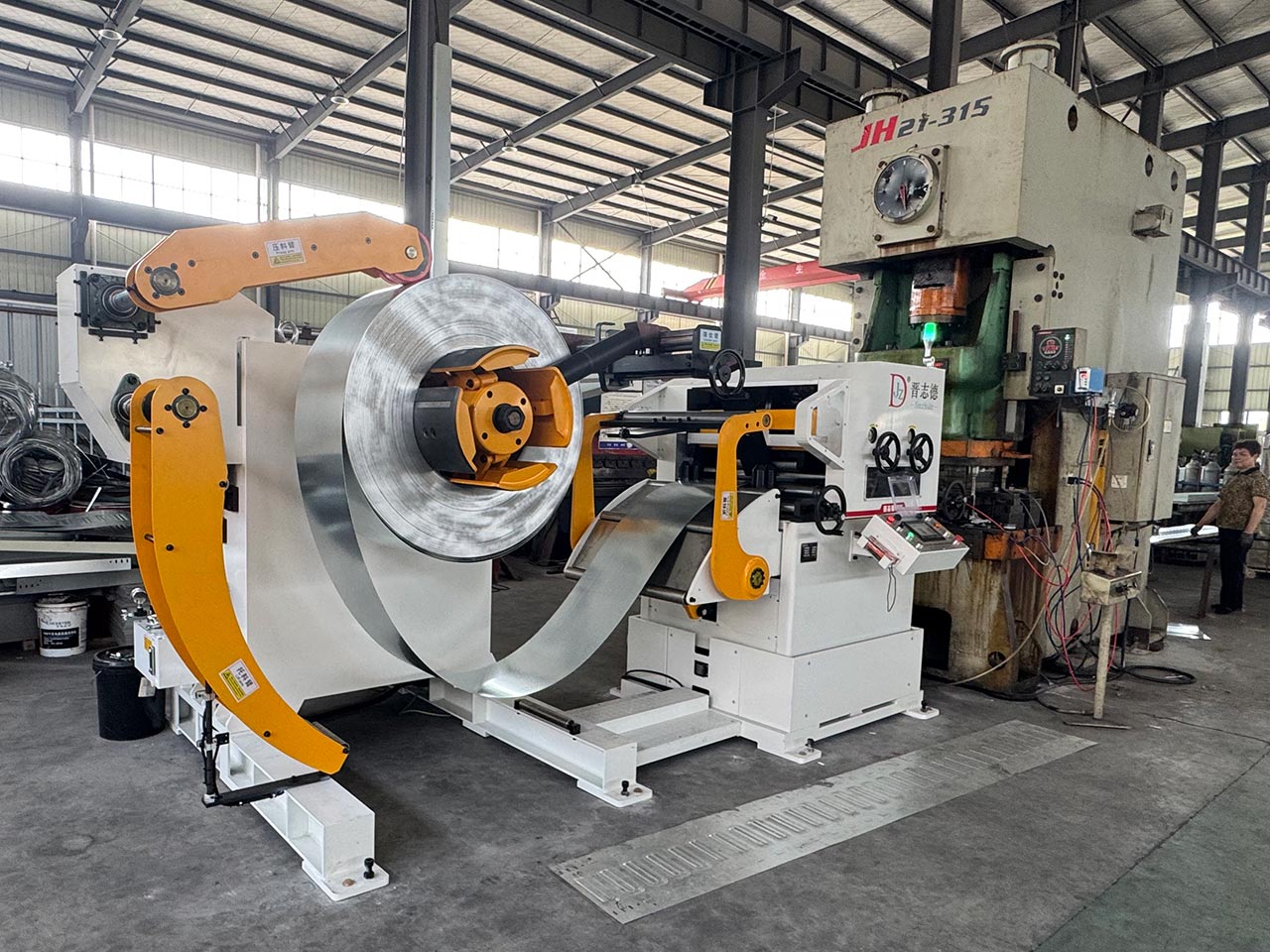
Loading a steel coil onto a decoiler becomes more difficult as the coil gets heavier. When a coil weighs several tons, operators need to position it carefully so that the coil center aligns with the decoiler mandrel. Using an overhead crane alone may require repeated adjustments, particularly when there is limited space around the stamping line.
This is why many decoiler straightener feeders are equipped with a hydraulic coil loading car. The loading car supports the coil, adjusts its height, and moves it toward the decoiler mandrel. It allows operators to complete the final positioning process through hydraulic controls rather than relying entirely on crane movements.
At JINZHIDE, we configure hydraulic coil loading cars according to the customer's coil weight, material dimensions, and production requirements. For stamping lines handling heavy coils or requiring frequent material changes, this equipment can make daily loading operations easier to manage.
What Is a Hydraulic Coil Loading Car?
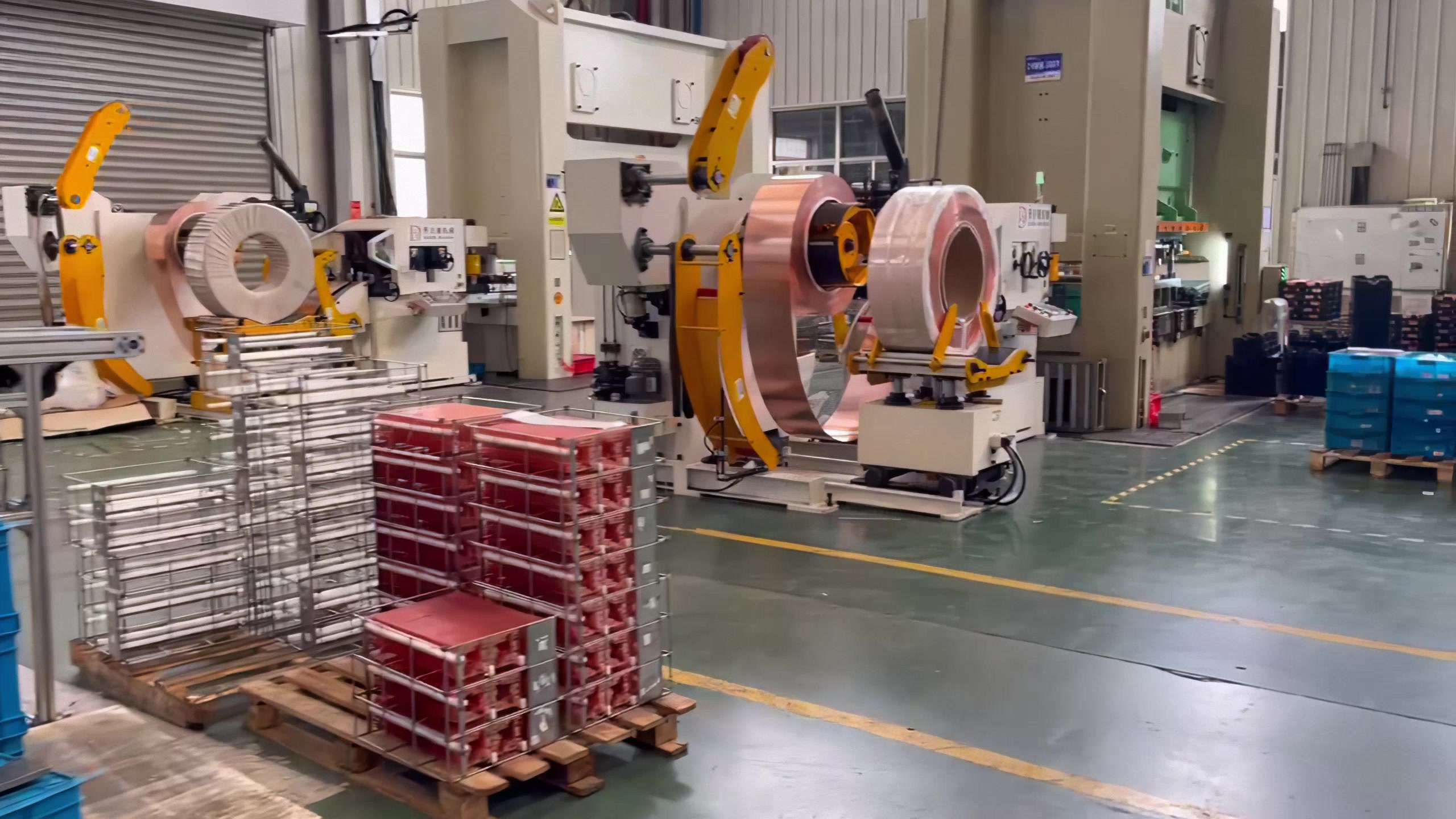
A hydraulic coil loading car is an auxiliary device used to transfer metal coils onto the decoiler mandrel. It is commonly installed on guide rails at the loading position of a decoiler straightener feeder.
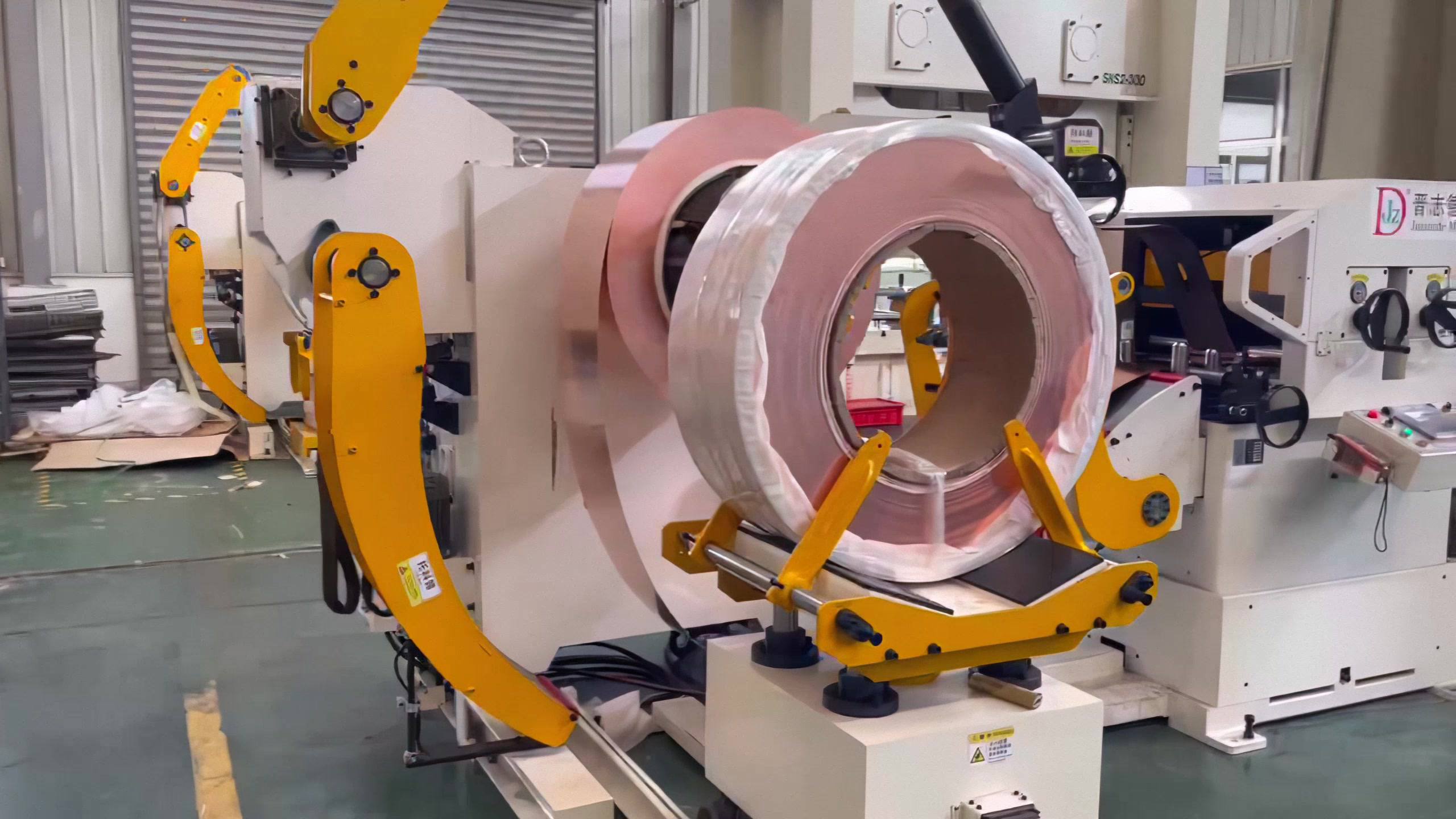
The loading car consists of a supporting frame, coil cradle, hydraulic lifting mechanism, traveling system, and control components. The hydraulic system raises or lowers the coil, while the traveling mechanism moves it forward and backward along the rails.
The coil cradle supports the material during loading. Its dimensions are selected according to the coil width, outside diameter, and weight. For heavier coils, the supporting structure and hydraulic capacity must be matched to the actual loading requirements.
Unlike the straightening and feeding sections, the loading car does not process or advance the strip during stamping. Its job is to position the coil on the decoiler before material threading begins.
How Does the Hydraulic Coil Loading Process Work?
The operator first places a steel coil onto the loading car using an overhead crane or forklift with sufficient lifting capacity. Before moving the coil, the operator checks its position on the cradle and confirms that the loading car is ready for operation.
Once the coil is properly supported, the operator raises the loading car until the coil center aligns with the decoiler mandrel. The car then moves forward along the guide rails, allowing the mandrel to enter the coil's inner diameter.
After the coil reaches the required position, the hydraulic expansion mandrel expands to grip the inner surface of the coil. The operator checks that the coil is correctly positioned and secured before lowering and retracting the loading car.
The decoiler pressure arm can then hold the outer layer of the coil to help control the strip during the initial unwinding process. Depending on the equipment configuration, supporting arms and other coil handling devices may also assist with material threading.
The strip is guided into the straightening section, where the rollers reduce coil curvature. After straightening, the servo feeder advances the material into the stamping press according to the programmed feeding length. The production sequence follows a straightforward process: coil loading, decoiling, straightening, servo feeding, and stamping.
Why Is a Hydraulic Loading Car Useful for Heavy Coils?
When a steel coil weighs several tons, positioning it directly onto the decoiler mandrel requires careful handling. Even with an overhead crane, the operator may need to adjust the lifting position several times before the coil is aligned.
A hydraulic loading car makes this final positioning process more manageable. After the coil is placed on the cradle, the operator can adjust its height and horizontal position through the loading car controls.
This arrangement is particularly useful for stamping lines processing wide or thick steel coils. It can also be helpful when other equipment is installed close to the decoiler, leaving limited room for crane positioning.
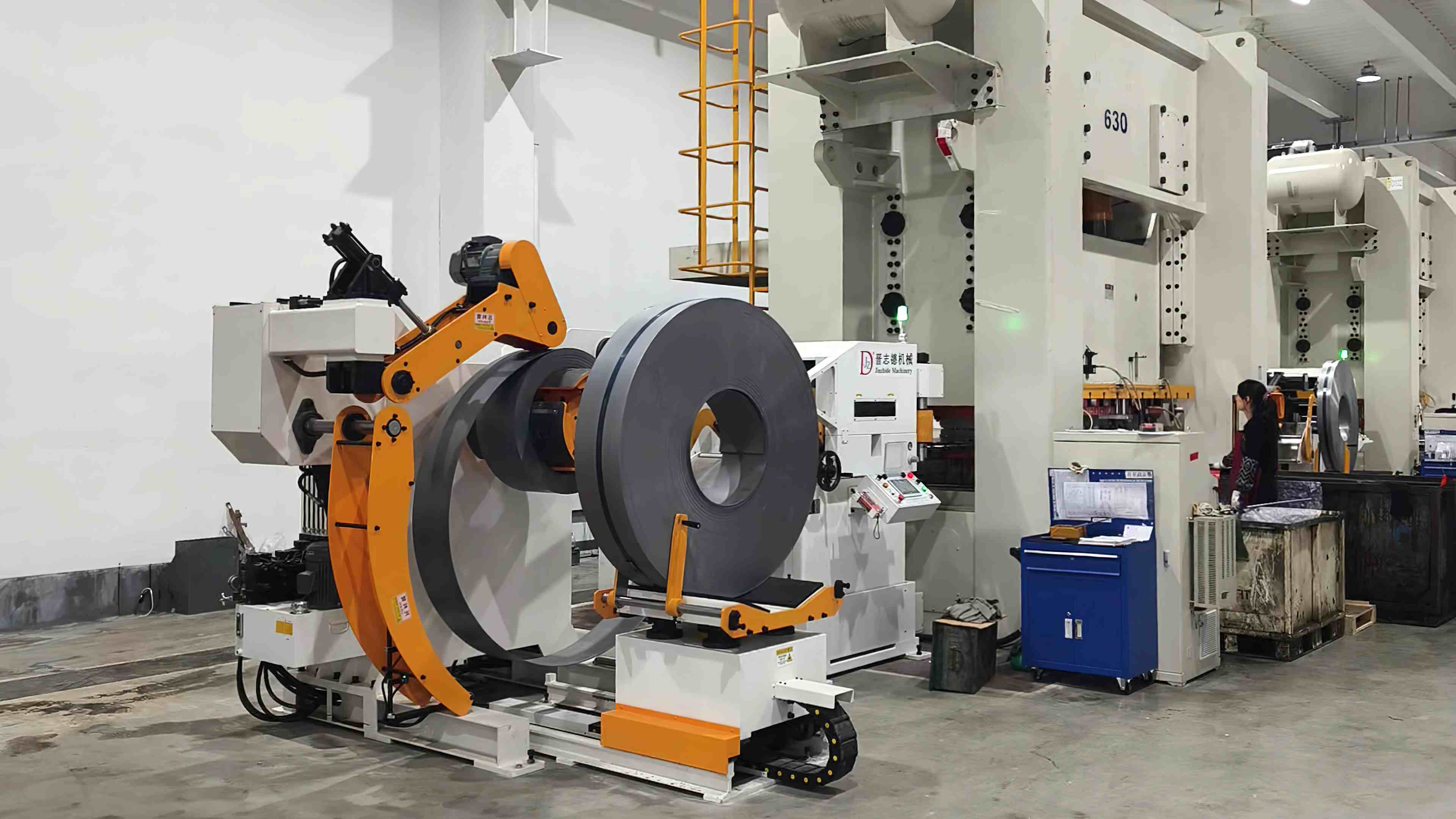
For heavy-duty decoiler straightener feeders, JINZHIDE can combine the hydraulic loading car with a hydraulic expansion mandrel, coil pressure arm, and mandrel support device. These components perform different functions during loading and decoiling. The loading car supports and positions the coil. The expansion mandrel holds the coil through its inner diameter, while the pressure arm helps control the outer layers during unwinding. A mandrel support device can provide additional support where required by the coil weight and machine design.
Although the loading car reduces the need for manual positioning, operators must still follow the equipment's loading procedures and maintain safe distances during coil handling.
Reducing Coil Changeover Time in Stamping Production
Coil replacement can take up a considerable amount of time on stamping lines that process multiple coils during a production shift. When the existing coil is nearly finished, the operator needs to prepare the next coil, remove the remaining material as required, load the replacement coil, and thread the new strip into the feeding equipment.
Without a loading car, aligning a heavy coil may require repeated crane movements. This adds handling steps before the decoiler can begin unwinding the new material. With a hydraulic coil loading car, the operator can place the replacement coil on the cradle and use the lifting and traveling controls to complete the final alignment.
For production lines with frequent material changes, this can reduce the time spent positioning each new coil. The operator can also follow a more consistent loading procedure from one coil to the next. However, the hydraulic loading car does not eliminate all changeover operations. The actual time required still depends on coil dimensions, material threading, machine settings, and the operator's experience. Its main contribution is simplifying the loading stage rather than changing the stamping speed itself.
Applications in Metal Stamping Production
Hydraulic coil loading cars can be used with decoiler straightener feeders processing carbon steel, stainless steel, galvanized steel, aluminum, and other metal coils. The choice of loading car depends mainly on coil weight and dimensions. Material type also needs to be considered when selecting the complete feeding system, particularly for high-strength steel and other materials that require greater straightening force.
For thin sheet metal stamping, a compact decoiler straightener feeder may be used to supply material for electrical components, appliance parts, brackets, and general hardware products. For medium and thick steel stamping, heavier coils may require a loading car with greater carrying capacity, together with a hydraulic expansion mandrel and additional coil supporting devices.
Automotive stamping lines are another common application. High-strength steel coils used for chassis components can be wide and heavy, making hydraulic loading equipment useful during coil preparation. JINZHIDE manufactures different decoiler straightener feeder configurations for thin, medium, and thick materials. Our heavy-duty and high-tension models can be equipped with hydraulic loading cars according to the coil specifications and workshop layout.
Working with a Stamping Press and Progressive Die
A decoiler straightener feeder combines three functions in one system: decoiling, straightening, and servo feeding. After the hydraulic loading car places the coil onto the mandrel, the decoiler releases the strip into the straightening section. The straightening rollers reduce coil curvature before the material reaches the servo feeding mechanism.
The servo feeder advances the strip by the programmed feeding length. Its operation is coordinated with the stamping press through the appropriate control signals. For progressive die stamping, the material advances during the designated feeding portion of the press cycle. The press then performs punching, bending, cutting, or forming operations according to the die design.
The hydraulic loading car does not directly control feeding accuracy or press operation. Its role is to support material preparation so that the feeding system can begin production after loading and threading are completed. Depending on the stamping process, JINZHIDE can also configure the line with a hydraulic shear, lubrication device, coil loop control system, and other auxiliary equipment.
What Should Buyers Check Before Selecting a Loading Car?
When purchasing a decoiler straightener feeder, customers should provide the actual coil specifications rather than selecting the loading car based only on the feeder model. Coil weight determines the required carrying capacity. Coil width and outside diameter affect the cradle dimensions and available loading space, while the inner diameter must match the expansion range of the decoiler mandrel.
For example, a stamping line processing 10-ton steel coils requires a different loading car structure and hydraulic capacity from a line handling 2-ton coils. The available workshop space also matters. The loading car needs sufficient traveling distance, lifting stroke, and clearance for coil placement. Customers should confirm the loading direction and whether an overhead crane or forklift will be used.
For the complete decoiler straightener feeder, additional information is required, including material type, thickness, tensile strength, feeding length, and stamping press speed. These parameters help determine the straightening capacity, feeding configuration, and other machine requirements, even though they do not all directly affect the loading car capacity. Providing this information during the quotation stage allows the manufacturer to review the complete stamping line arrangement rather than treating the loading car as a separate accessory.
Hydraulic Coil Loading Car Configurations from JINZHIDE
Changzhou JINZHIDE Machinery Technology Co., Ltd. manufactures decoiler straightener feeders, decoilers, straighteners, servo feeders, and related stamping automation equipment. Our decoiler straightener feeders are available in different configurations for thin sheet metal, medium-thickness materials, and heavy steel coils.
Depending on the application, the equipment can be fitted with a hydraulic coil loading car, hydraulic expansion mandrel, coil pressure arm, supporting arms, and other material handling devices. For heavy-duty stamping applications, these components work together during coil loading and material preparation. The loading car positions the coil, the mandrel holds it in place, and the pressure arm assists with controlled unwinding.
During machine selection, our engineering team reviews the customer's coil weight, material width, thickness, coil diameter, stamping press parameters, and workshop layout. Before shipment, the equipment can be tested according to the agreed inspection requirements, including loading car movement, hydraulic lifting, decoiling, straightening, and servo feeding functions.
If you are planning a new stamping production line or replacing an existing feeder, you can send JINZHIDE your coil specifications and press parameters for equipment selection. A hydraulic coil loading car is not required for every decoiler straightener feeder. However, when a stamping line handles heavy coils or requires frequent material changes, it can simplify coil positioning and reduce the handling work involved in preparing the next coil.