




2-in-1 Decoiler-Straightener vs 3-in-1 Feeder: Which One Wins?
 Oct 08, 2026|
 View:94
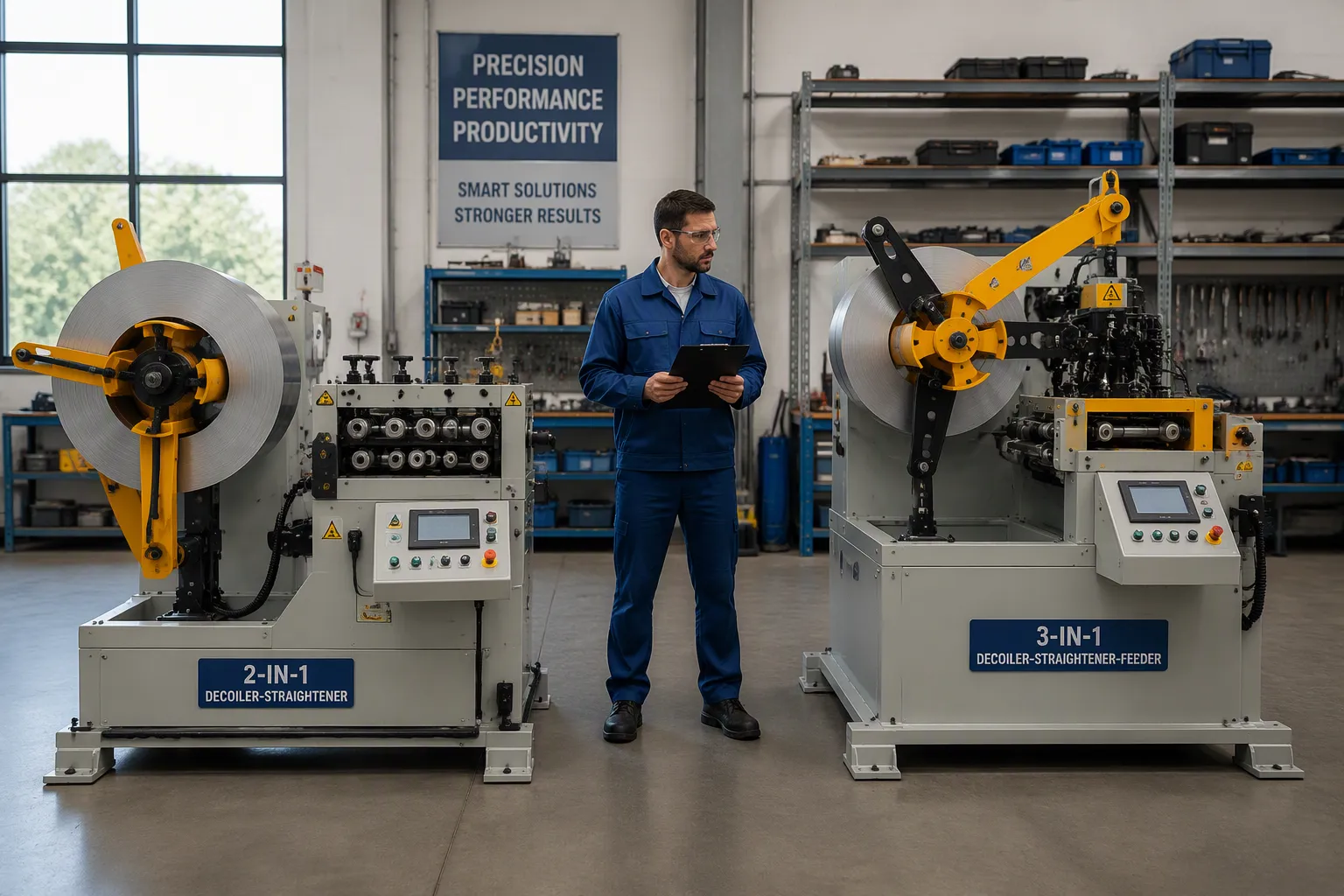
Are you losing valuable floor space to a massive material loop that constantly risks scratching your pre-painted coils? Or perhaps you are struggling with long changeover times that eat into your daily production targets?
The 3-in-1 feeder wins for high-volume, high-precision, automated press lines where space and surface quality are critical. The two-in-one decoiler-straightener wins for budget-limited, space-flexible, or low-to-medium volume operations where modular upgrades are preferred. Each system fits a different production reality.
Which system is right for your specific press line? The answer depends on volume, accuracy needs, floor space, material type, and budget. This comprehensive comparison breaks down the differences so you can decide with confidence.
Key Takeaways
The integrated 3-in-1 decoiler straightener feeder excels in high-volume, high-precision automated press lines.
The 2-in-1 decoiler-straightener suits budget-conscious, space-flexible, or low-to-medium volume operations.
A 2-in-1 system requires a standalone NC servo feeder to push material into the press.
A 3-in-1 system combines decoiling, straightening, and feeding into one compact unit.
The 3-in-1 design reduces line length by up to 50% and drastically improves material stability.
The 2-in-1 plus separate feeder offers modular flexibility and lower initial capital expenditure.
The 3-in-1 feeder typically pays back within 12 to 24 months through labor savings, reduced scrap, and minimized downtime.
Choose based on production volume, material sensitivity (e.g., high-strength steel vs. aluminum), floor space, and automation goals.
What Is a Two-in-One Decoiler-Straightener?
A two-in-one decoiler-straightener is a combined machine that performs decoiling and straightening on one base. It requires a standalone press-side feeder to push material into the die. This design merges two functions into a single frame but leaves the feeding function as a separate entity.
Core Components
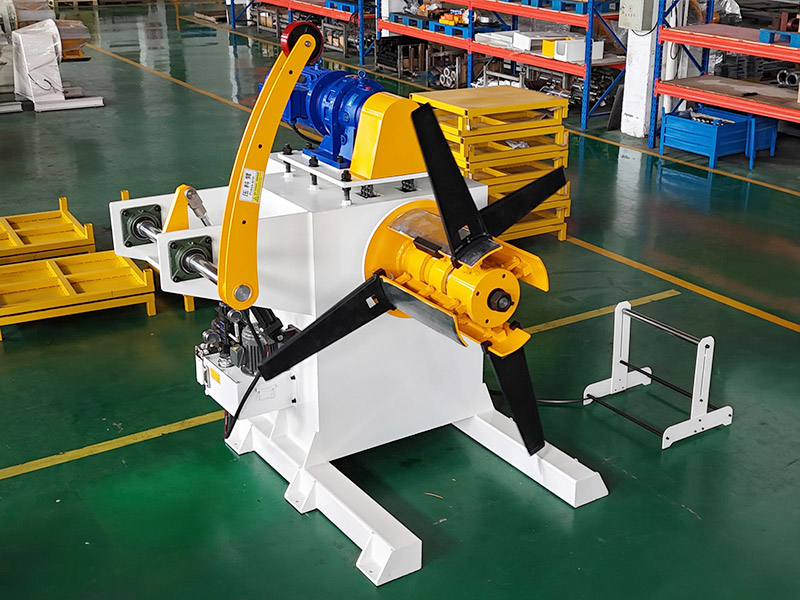
The machine centers on a mandrel that holds and grips the coil. This main shaft expands either mechanically or hydraulically. A drive system with a motor and gearbox powers the unwinding action. Tension control units, such as pressure arms or loop arms, keep proper strip tension. Photoelectric sensors and limit switches handle start/stop logic. A manual or PLC-based control system sets speed, sequence, and interlock logic. Safety systems include emergency stops, protective covers, and anti-pinch features.
JINZHIDE offers decoilers in manual, hydraulic, light-duty, and double-head configurations. Straighteners come in precision leveling and conventional types for different sheet thicknesses. The standard UL range covers 0.35 to 2.2 mm material thickness. The reinforced UL-A range handles 0.35 to 3.2 mm with higher motor power. Five model sizes cover nominal widths of 200, 300, 400, 500, and 600 mm. Maximum width decreases as material thickness increases.
How It Works
A steel coil is loaded onto the expanding mandrel of the decoiler section. The strip is pulled through a multi-roll straightener that flattens the material. Here, the material passes through straightening rollers that remove coil set. The separate feeder then advances the strip an exact pitch into the punch press. One control system synchronizes all functions.
The stamping press completes one cycle. The control system sends a feeding signal. The feeder starts feeding. Material moves forward according to the programmed feeding length. The feeder stops, and the press begins its next cycle. An outlet loop buffers continuous material preparation against intermittent press feeding.
Typical Users and Budget
Job shops and manufacturers often choose this system when they already own a separate feeder. The compact 2-in-1 design suits operations that need flexibility for varying production needs. A 2-in-1 system fits automotive stamping lines, precision roll forming, appliance manufacturing, and high-quality production lines.
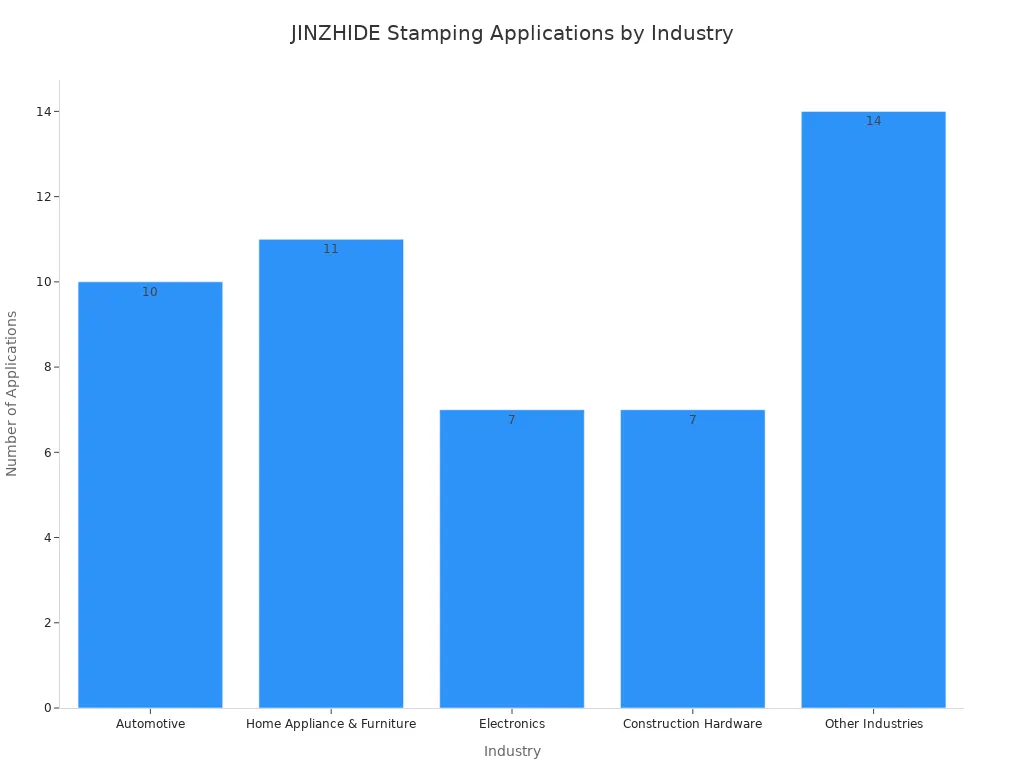
Typical users include automotive parts, home appliances, electronics, metal furniture, hardware products, construction components, and solar energy parts. Example uses cover automotive brackets, appliance chassis, electronics connectors, and construction shelving components. The 2-in-1 machine budget ranges from $8,000 to $60,000 or more. A standard decoiler alone costs $1,000 to $20,000. JINZHIDE decoiler straightener models include the UL Series for general stamping, PUL Series for thin precision strip, UL-C Series for heavy-duty work, and SHL Series for thick plate requirements.
What Is a 3-in-1 Feeder?
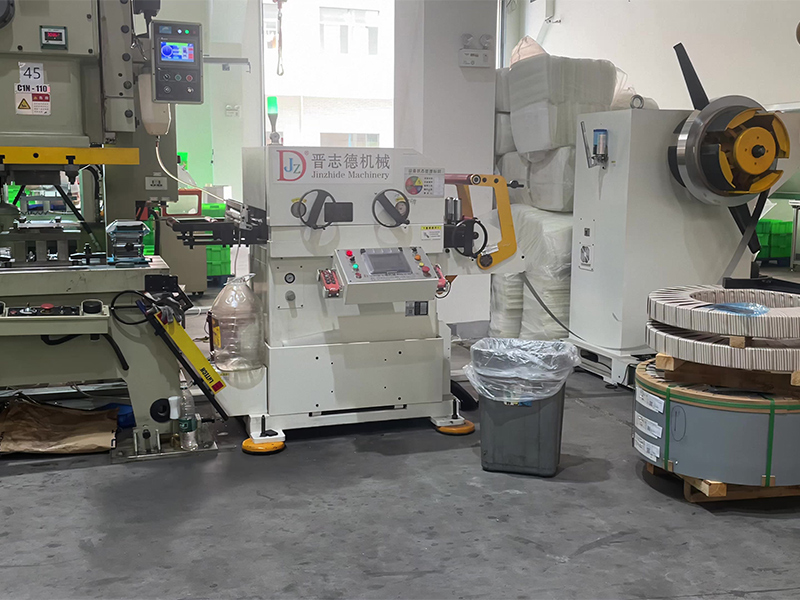
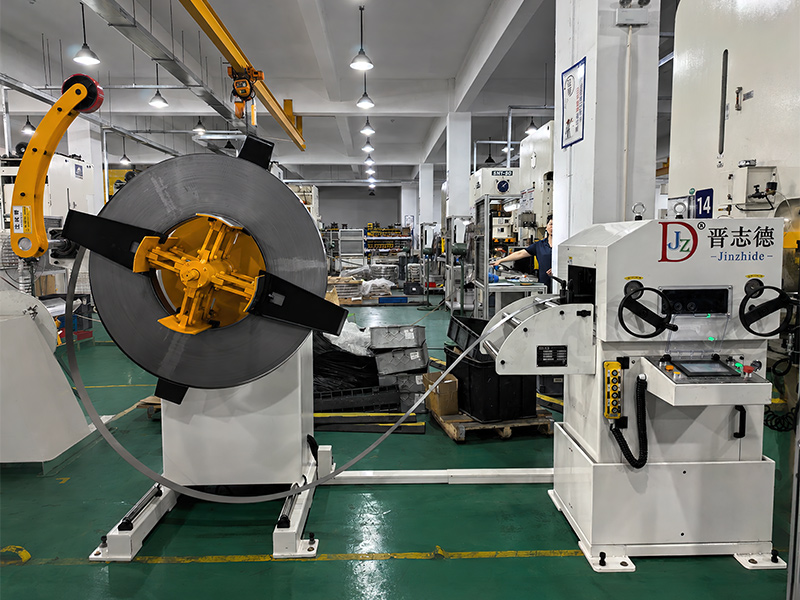
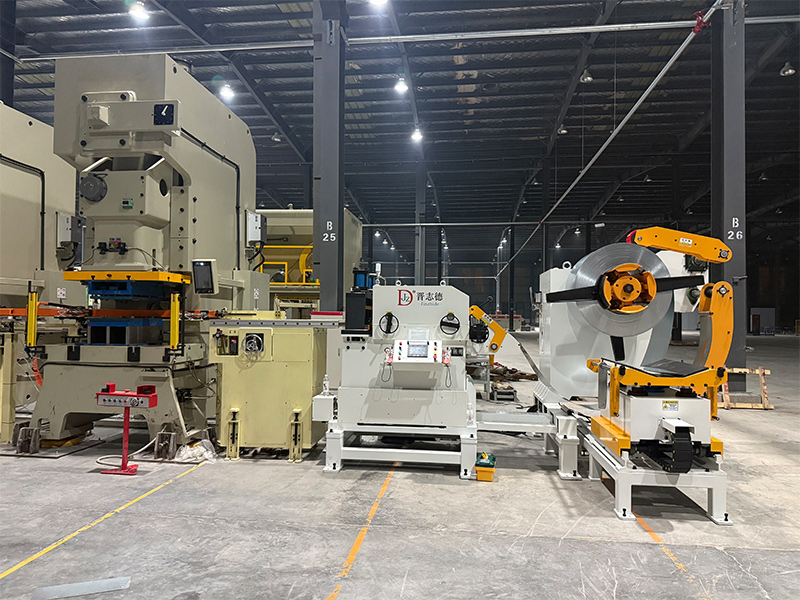
A 3-in-1 decoiler straightener feeder is an integrated system. It combines decoiling, straightening and feeding into one compact unit. This design eliminates the need for a separate feeder, removes the intermediate material loop, and drastically reduces the overall line length. The machine handles the full material preparation process from coil to press seamlessly.
Core Components
The system contains three main sections on a single base. Each section performs a distinct function in the material flow.
Core Component | Role in the 3-in-1 System | Key Features |
|---|---|---|
Decoiler | Holds and unwinds the metal coil | Hydraulic expansion mandrel; pneumatic press arm to prevent loose coils; electric eye loop control for automatic speed adjustment |
Straightener | Removes coil set, curvature, and surface irregularities | Precision-ground rollers (7, 9, or 11 upper/lower); GCr15 bearing steel hardened to HRC58-62°; hard-chrome plated; adjustable back-up rollers for high-strength steel |
Servo Feeder | Feeds straightened material into the stamping press | Yaskawa servo motor; Mitsubishi PLC control; closed-loop encoder feedback; repeatable feeding accuracy of ±0.15mm |
The decoiler straightener section prepares material before it reaches the press. The straightener uses back-up rollers for high-strength materials. This feature maintains flatness across demanding applications without causing work-hardening. Furthermore, features like hydraulic shear and auto-threading arms drastically reduce manual intervention during coil changeovers.
The Powered Feed Unit
The powered feed unit drives material into the die with precise control. JINZHIDE offers feeders in servo, roll, gripper, and cam-driven types. Each type meets different speed, precision, and application requirements.
Feed Mechanism | Power Source | Operation | Key Advantages |
|---|---|---|---|
Servo-driven roll feed | Closed-loop servomotor with microprocessor control | Starts on a press signal; servomotor controls index position; programmable move patterns | Self-diagnostics, auto correction, automation communication |
Press-driven cam feed | Mechanically coupled to press; cam or rack-and-pinion | Motion synchronized with press rotation; feed length adjusted by gears or linkages | Suited for high-speed indexing and in-die transfers |
Gripper feed | Air/hydraulic cylinders or servomotor | Stationary retainer clamp and moving gripper clamp alternate | Lower-cost option; limited to about a 180-degree feed window at maximum speed |
A servo-driven feeder/straightener configuration suits most 3-in-1 line requirements. The integrated feeder reduces feed line length by up to 50% compared to separate units.
Typical Users and Budget
A 3-in-1 decoiler straightener feeder is ideal for new stamping lines. It optimizes material flow and equipment layout. The compact footprint saves floor space and simplifies installation.
High-volume manufacturers in automotive, home appliance, and electronics industries choose this system. The 3-in-1 design supports continuous, automated production with minimal manual intervention. Plants that run lights-out operations or high-precision stamping lines benefit most from the integrated approach.
The 3-in-1 feeder handles material thicknesses from 0.3 mm to 9.0 mm. This range covers thin precision strip to thick plate requirements. Budget considerations depend on coil width, material thickness, and automation level. A 3-in-1 system typically costs more upfront than a 2-in-1 decoiler straightener plus a separate feeder. The investment pays off through reduced labor, faster cycle times, and lower downtime.
2-in-1 vs 3-in-1 Feeder: Core Differences
The core distinction between the two systems comes down to where the feeding function lives. A 2-in-1 decoiler-straightener performs decoiling and straightening, yet it requires a separate feeder. The decoiler straightener alone cannot advance material into the die. An integrated 3-in-1 line merges decoiling, straightening and feeding into one frame. That structural difference changes setup time, synchronization accuracy, and changeover complexity.
Separate vs Integrated Feeding
A 2-in-1 + separate feeder layout spreads material handling across multiple machines. Each unit carries its own motor, cabling, sensor set, and control interface. Operators must align the straightener outlet with the next machine and coordinate two control systems. The transfer gap between units can introduce material instability, especially for thin strip or high-surface-finish materials.
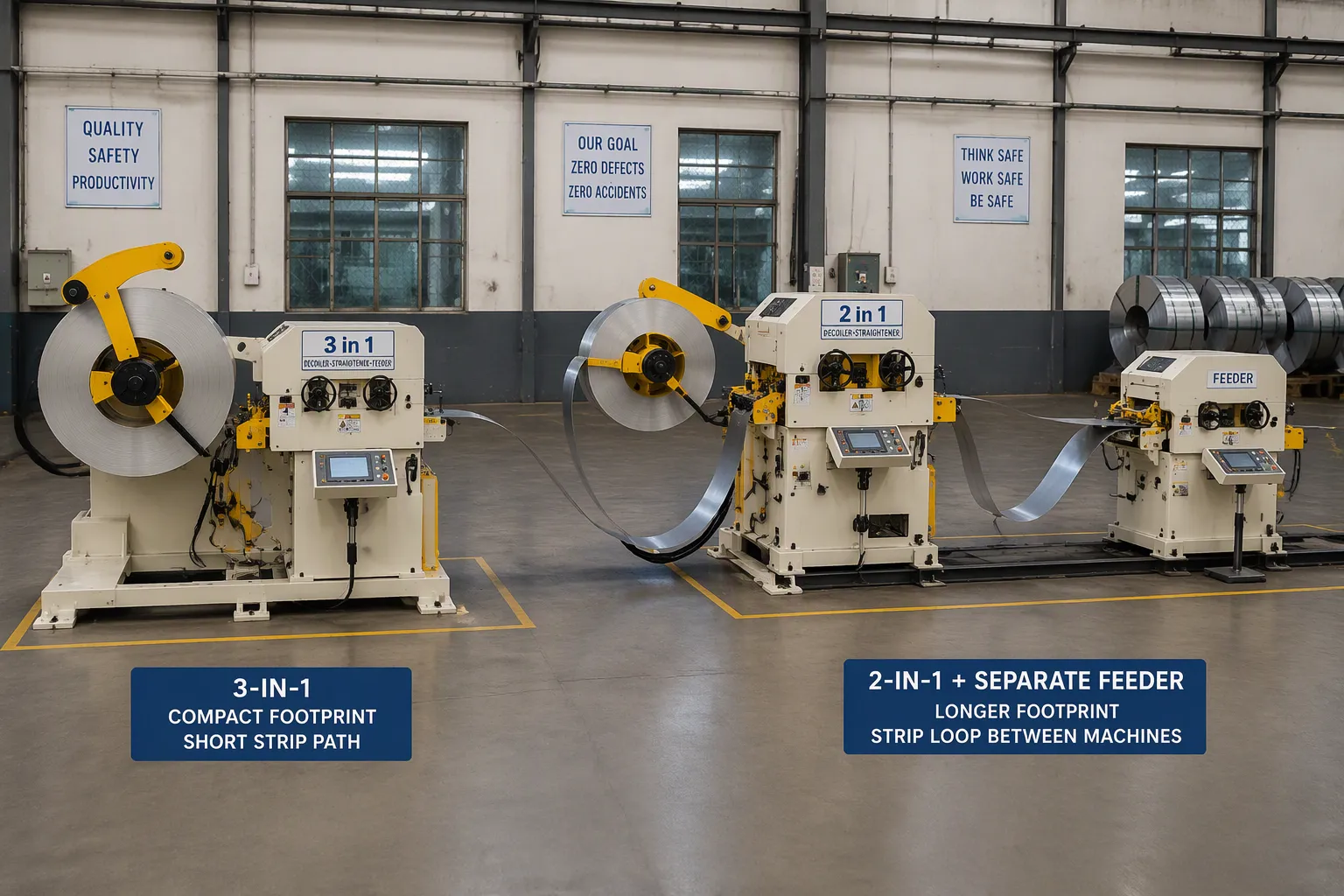
A 3-in-1 configuration removes those transition points entirely. A single PLC and servo drive manage feed length and repeatability with stable material handling. The complete system needs only 3–5 m of line length, while a separated arrangement demands 6–10 m. The shorter strip path improves flatness and feeding accuracy directly. The integrated control sequence automates coil threading, hydraulic mandrel expansion, and feeding.
Material Flow and Line Layout
A separated 2-in-1-plus-feeder layout demands more floor space. Material transfers from the straightener to the next machine over an open gap. Slack and tension fluctuations can affect feeding precision. A decoiler straightener must sit close to the press inlet to minimize that risk.
An integrated design places the straightener immediately ahead of the feed rolls. Material is leveled and fed directly into the die with no intermediate handling. This short, controlled material path minimizes bending, scratching, or denting. The result protects surface quality on coated or pre-painted coils. A single control panel manages decoiling speed, straightening force, and feeding length simultaneously. That integration reduces manual intervention and human error. The compact footprint also improves workshop layout efficiency in high-density plants.
When Each Design Shines
A two-in-one decoiler-straightener suits shops that already own a press-side feeder. The modular approach provides flexibility for varying coil widths and material changes. It also handles very thin materials well, with a practical width range of 200–600 mm. Job shops running mixed, low-to-medium volume production gain the most from this arrangement.
The integrated decoiler straightener setup excels in high-volume, high-precision lines. Material moves from the straightener into the feed rolls in one pass, so flatness remains consistent from coil to die. Fewer alignment points, faster changeovers, and reduced floor space make the integrated approach the stronger choice for automated stamping cells.
Full Coil Feeding Comparison Guide: Key Factors
Selecting between a 2-in-1 and a 3-in-1 configuration requires a structured evaluation. This full coil feeding comparison guide examines three decisive factors: cost, space, and accuracy. Each factor carries different weight depending on production goals and operational constraints.
Cost: Upfront vs Long-Term
The cost comparison between these two systems extends well beyond the purchase price. A 2-in-1 decoiler straightener plus a separate feeder carries a lower initial machine price. However, buyers must add extra cables, guards, and alignment effort to complete the installation. These hidden costs accumulate quickly.
An integrated 3-in-1 feeder commands a higher initial investment. The payoff arrives through multiple channels. Changeover savings, reduced scrap, floor-space savings, and simpler servicing typically deliver payback within 12 to 24 months. Plants running continuous production see faster returns because every minute of reduced downtime compounds across shifts.
Quick ROI Calculation: The Hidden Cost of Downtime
Consider a typical 2-shift operation (16 hours/day). A 2-in-1 system with a separate feeder often requires 10-15 minutes for manual coil threading and loop adjustment during changeovers. A 3-in-1 system with auto-threading and hydraulic shear reduces this to under 3 minutes.
If you change coils 10 times a day, the 3-in-1 system saves over 1.5 hours of daily downtime. Annually, this equates to roughly 400+ hours of extra production capacity, easily covering the initial price premium within 12 to 18 months.
Operating costs also diverge. A 3-in-1 system needs only one machine envelope and one service schedule. Separate modules each demand their own maintenance routine, spare parts inventory, and operator attention. Labor savings from centralized control add another layer of long-term value. The integrated approach reduces the number of operators needed per line and minimizes training complexity.
Space and Layout
Floor space often determines which system fits a given facility. An integrated 3-in-1 line uses a compact single-frame footprint. The design eliminates the loop between units and produces a line roughly 50 percent shorter than a modular arrangement. A 2-in-1 plus separate feeder typically runs 2 to 4 meters longer because of the intermediate loop. That extra length exposes more strip surface to potential damage.
Installation flexibility differs between the two approaches. A 2-in-1 decoiler straightener combined with a separate feeder retains independent precision feeding. This modularity allows shops to swap or upgrade individual modules. The trade-off involves more alignment and interface decisions during setup.
A 3-in-1 feeder simplifies the front-end layout through higher integration. Centralized loading and threading reduce operator movement. Both systems require agreement on foundation, pass line, guarding, and operating sequence before manufacture. A floor pit can reduce line length, but it affects drainage, access, lighting, and guarding. A floor-level loop needs enough fenced space to operate safely.
No numerical footprint dimensions or foundation specifications apply universally. The available guidance is qualitative: the 2-in-1-plus-separate-feeder layout requires more loop space and is longer than the integrated 3-in-1, and foundation-related items must be agreed before manufacture.
Accuracy and Material Quality
Feeding precision separates high-performance lines from average ones. A 3-in-1 decoiler straightener feeder maintains a short strip path that keeps material stable. This stability reduces pitch deviation and supports improved feeding accuracy across long production runs. The integrated design handles material thicknesses from 0.3 mm to 9.0 mm.
A 2-in-1 plus separate feeder can achieve comparable feeding accuracy, but the architecture does not guarantee it. Loop-control tuning and alignment become critical. Fluctuating loop height can degrade feed accuracy, especially at high speeds or with thin materials. Buyers must prove performance on the actual feeder, coil, pitch, speed, and die conditions.
Handling Special Materials: For automotive structural parts using high-strength steel, the 3-in-1’s reinforced straightener with adjustable back-up rollers prevents work-hardening and maintains flatness under extreme tension. Conversely, for home appliance shells (pre-painted or stainless steel), the 3-in-1’s ultra-short material path and optional PU-coated rollers eliminate the secondary bending and surface scratching often caused by the free loop in a 2-in-1 setup.
Speed consistency also affects accuracy. The 3-in-1 configuration maintains stable feeding at high strokes per minute, particularly with short pitches. A modular line can reach high speeds, but it demands careful loop control and alignment to avoid drift. Both systems require verification against SPM, feed pitch, release signals, and synchronization. Integration alone does not automatically deliver superior speed or accuracy.
Speed, Automation, and Maintenance
Cycle Times and Line Speed
Cycle time determines how many parts a line produces each hour. The relationship between feed pitch and spm is direct: longer pitches require more feed time, which lowers maximum strokes per minute. The integrated design keeps the strip path short, so precision feeding does not wait on loop stabilization.
A 2-in-1 plus separate feeder can reach similar speeds, but the intermediate loop introduces settling time. Operators tune loop height, sensor response, and brake timing to prevent drift. Continuous-shift plants find the integrated approach holds steady speed longer as coil weight changes.
Integration with Press Controls
A 3-in-1 feeder line uses a computerized NC control system and servo drive to uncoil, level, and feed material to a programmed length. The press executes its stamping cycle, then signals the feeding cycle to start.
Older presses can be retrofitted for quick integration without modifying the main structure. Automation features such as a loading trolley, touch-screen servo leveling adjustment, hydraulic shear, safety guard, and electric limit arm support automated feeding and straightening. Signal exchange with the press PLC covers feed completion, release, and fault status.
JINZHIDE offers complete line solutions: automotive stamping lines, automated stamping lines, servo feeder press lines, high-speed press lines, and high-precision stamping lines. Across the 3-in-1 series, systems support coil widths from 70 mm to 2000 mm, thicknesses from 0.3 mm to 9.0 mm, and suit presses from 25 to 2000 tons.
Maintenance and Downtime
Routine maintenance keeps a decoiler straightener's feeding accuracy reliable across years of service. The table below lists the baseline schedule.
Routine maintenance task | Recommended frequency |
|---|---|
Clean roller surfaces | Daily or after each shift |
Visually check system pressures | Daily |
Inspect air lines and hydraulic hoses | Daily |
Lubricate moving parts | Daily/weekly |
Clean air-line filter bowls | Weekly |
Check belts and pulleys | Weekly |
Check gear-reducer oil level | Monthly |
Clean motor cooling fans | Monthly |
Full machine audit and calibration | Annually |
Scratch or marking problems usually trace to buildup on pinch or straightening rolls, excessive roll pressure, or foreign particles on the roller surface. Noise or vibration indicates worn bearings, loose components, or roll imbalance. Unsteady feeding can result from incorrect roll gap, uneven roll pressure, or worn rollers. Feeding material thicker than the nameplate limit can permanently damage rollers.
A proper maintenance plan starts at commissioning. Baseline values for pressures, gaps, and roller conditions must be recorded so later changes become visible. Guards, interlocked access, energy-isolation procedures, and adequate loop reserve prevent both injury and strip damage. Floor layout must include loading, threading, press access and maintenance clearance around the unit. A single service schedule covers the decoiler straightener and all feed components, cutting downtime versus separate modules. JINZHIDE provides a 72-hour global response for installation, training, and after-sales service.
Decision Framework
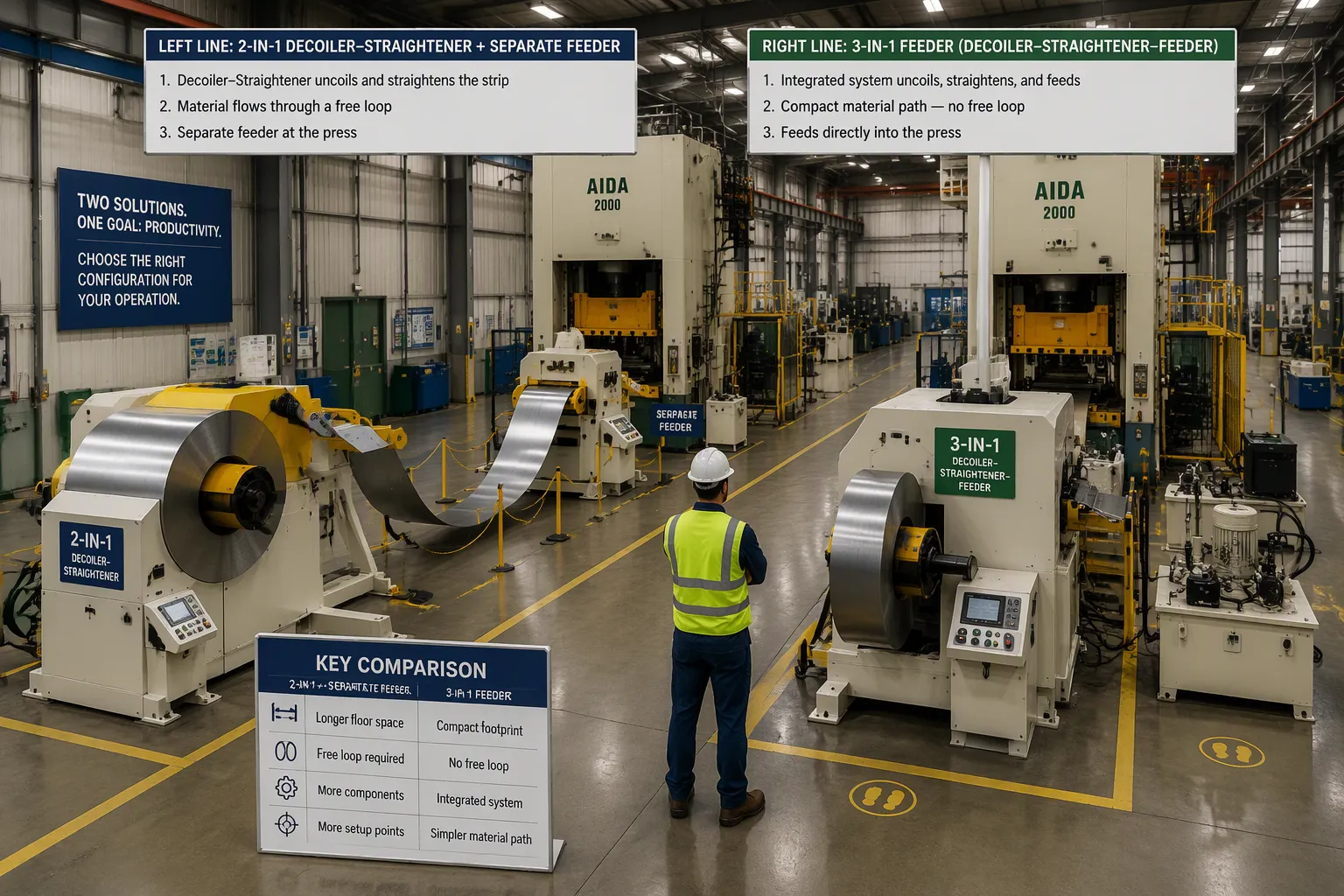
Three production profiles cover most buying situations. Match your plant to the closest scenario, then confirm the details with your supplier.
Scenario A: Low-Volume, Tight-Budget Shops
A job shop running short batches on a limited budget should start with a two-in-one decoiler-straightener. This machine handles decoiling and straightening on one base. The shop then adds a standalone NC servo feeder at the press if one is not already on the floor. Shops that already own a suitable press-side feeder gain the most from this route. The existing unit stays in service, and the new decoiler straightener simply feeds it.
This path keeps the initial outlay low and preserves modular maintenance. Each module can be accessed, repaired, or replaced on its own. The trade-off is a longer line and a visible free loop between the straightener and the feeder. That loop needs fenced floor space and careful tuning. A buyer who ignores the loop during layout planning will face problems later. Loading and service access must also fit inside the quoted footprint. A 2-in-1 machine works best when the plant accepts these conditions and values flexibility over full integration.
Scenario B: Medium-Volume, Mixed Production
Medium-volume plants with mixed jobs face the hardest choice. Neither system wins by default. Buyers should score both options against the same criteria and demand acceptance data before signing. The table below lists the evaluation points that matter most.
Decision factor | 2-in-1 + separate feeder | 3-in-1 feeder line |
|---|---|---|
Core functions | Decoiling and straightening upstream; feeding done separately at the press | Decoiling, straightening and feeding integrated into one coordinated system |
Material buffer | Typically a visible free loop between straightener and feeder | Shorter, compact path; loop design depends on the model |
Floor space | Generally a longer overall line | Often more compact, but must account for loading and service envelope |
Module reuse | Separate feeder can be retained or replaced independently | Highly integrated; interface and service plan reviewed as one system |
Loading and threading | Depends on the 2-in-1 and separate machines | Loading and threading options can be coordinated when specified |
Acceptance | Verify each module and the complete material path | Verify the complete line and subsystem responsibilities |
Material type, press specifications, die requirements, and available floor space drive the final score. Coil weight capacity, coil width range, coil inner diameter, and material thickness all shape the machine specification. The expansion mechanism matters too: hydraulic units suit heavier coils, while mechanical units suit lighter loads. Speed and control must match the line's production speed. Machine construction affects long-term stability, and safety features protect operators during loading and coil changeovers. Automation and integration determine whether existing equipment can join the new line. Customization covers non-standard coil sizes or layouts.
Scenario C: High-Volume, High-Precision Lines
A 3-in-1 feeder wins clearly on high-volume, high-precision automated lines. The integrated design combines uncoiling, leveling, and feeding into one automated device. This supports continuous coil production and keeps material flat before stamping. The result is improved processing accuracy and efficiency. The compact structure, small footprint, and high degree of automation also simplify operation.
Integration shortens setup times and lifts overall productivity. A consistent feed line produces superior stamped parts, and the integrated process removes the need for multiple machines. That reduces the risk of errors or inconsistencies between units. The decoiling section unwinds the coil smoothly and minimizes material waste. The straightening function aligns the material and clears imperfections before the strip enters the press. High-volume plants running lights-out shifts or tight accuracy targets should choose this route.
Before purchase, confirm the interfaces that connect the line to the press and die. Press model, passline, SPM, feed pitch, pilots, and signal ownership all belong in the technical proposal. Material grade, thickness-width window, coil weight, and surface condition must be stated. Layout items include foundation, feed direction, loading side, pit or loop, guarding, and service space. Utilities and control details cover power, air, signal lists, and stop behavior. Acceptance should name real production jobs, the measurement method, and the sign-off criteria.
Avoid four common errors. Do not assume a 3-in-1 is always faster, more accurate, or safer. Do not assume a 2-in-1 includes a feeder. Do not compare headline maximum thickness from one series with maximum width from another. Do not treat a VFD as proof of synchronization or assign feeder accuracy to the decoiler straightener.
Mistakes and Validation
Common Buying Mistakes
Buyers often ignore the material thickness range. A light-duty decoiler straightener cannot handle thick plate. Thin material may buckle in rollers designed for heavy gauge. Always check the full thickness and width window first.
Space needs are another common error. A layout with a separate feeder extends the line length. The free loop between machines demands fenced floor space. Many shops measure the press area only. They forget the loop, the loading zone, and the service clearance. That oversight leads to a line that cannot fit or cannot be serviced.
Automation goals often get overlooked. A shop planning lights-out production may buy a manual decoiler. Operators must then thread every coil by hand. That choice blocks the automation path later. Another shop may assume a 3-in-1 alone delivers full automation. Integration reduces manual steps, but press controls and die design still set the real cycle.
Acceptance data is frequently missing from the evaluation. A feeder may claim high accuracy, but no one verifies it. Buyers must ask for measured results on real jobs. Brochure numbers do not prove performance.
How to Validate Your Choice
Request material trials before purchase. Send actual coil samples to the manufacturer. Run them through the proposed machine layout. Measure flatness and feed accuracy after each run. Compare results against your die and quality requirements.
Review technical specifications against your full production profile. Verify material thickness, width, coil weight, and press specifications. Confirm the feeder covers your required feed length and speed ranges. Check that straightener roller hardness suits your material grade.
Confirm optimization capabilities with the supplier. Ask about loop control tuning, sensor calibration, and press synchronization. A supplier should explain how the system adjusts when coil weight changes. They should also show the changeover sequence between jobs.
Questions for Your Supplier
Ask about manufacturer experience. JINZHIDE operates a 5,300 m² facility. The company has delivered over 10,000 machines to more than 60 countries. Confirm that experience matches your industry. Automotive stamping lines differ from electronics lines.
Request proof of quality standards. ISO 9001 certification indicates consistent design and manufacturing processes. Ask for the certificate and recent audit results.
Clarify installation and training support. Who installs the line? Who trains the operators? JINZHIDE offers a 72-hour global response for installation, training, and after-sales service. Confirm that response time appears in your service contract.
Finally, ask about spare parts and maintenance schedules. Downtime costs money. A supplier with stocked spares and a local service network keeps your line running. Demand clear response times in writing.
Take the Next Step: Validate Your Line Before You Buy
The 3-in-1 feeder wins for high-volume, high-precision, automated lines. The 2-in-1 decoiler-straightener wins for budget-conscious, space-limited, or simpler operations. Your production volume, accuracy needs, automation goals, and budget determine the right choice.
JINZHIDE serves automotive, home appliance, electronics, and construction hardware industries with turnkey metal stamping solutions. Their equipment handles body structural parts, appliance shells, shielding covers, and ceiling grids.
Don't guess with your capital investment.
1. Get a Free 3D Floor Plan & ROI Assessment: Send us your press model and shop dimensions, and our engineers will provide a customized layout within 48 hours.
2. Free Material Sample Testing: Ship your actual coil samples to our 5,300 m² facility. We will run straightening and feeding accuracy tests and send you the video and data report for free.
FAQ
Here are direct answers to the most common questions about these two coil-handling configurations.
Can a two-in-one decoiler-straightener feed the press by itself?
No. The machine performs decoiling and straightening only. It requires a separate feeder at the press to advance material. Some job shops already own a feeder, which makes this system a natural fit.
What material thickness ranges suit each system?
JINZHIDE 3-in-1 feeders handle material from 0.3 mm to 9.0 mm. The two-in-one decoiler straightener covers different windows depending on series, such as 0.35–2.2 mm or 0.35–3.2 mm.
Does the 3-in-1 feeder cost more upfront?
Yes. An integrated system carries a higher purchase price than a two-in-one plus separate feeder. The investment returns through reduced labor, shorter changeovers, floor-space savings, and lower downtime. Most plants recover the added cost within 12 to 24 months.
How much floor space does each layout need?
An integrated 3-in-1 line fits within approximately 3–5 meters. A separated two-in-one plus feeder demands about 6–10 meters. The free loop between units adds length and requires fenced space for safe operation.
What feeding accuracy does a 3-in-1 servo feeder deliver?
JINZHIDE servo feeders achieve repeatable feeding accuracy of ±0.15 mm. The short strip path keeps material stable from the straightener into the die. That stability preserves pitch consistency across long production runs.
Can I keep an existing feeder with a new decoiler-straightener?
Yes. A shop with an existing press-side feeder can add a two-in-one decoiler straightener upstream. The modular design retains the current feeder while replacing only decoiling and straightening equipment. This lowers the initial investment and preserves flexibility.
What industries use these coil-fed stamping lines?
Automotive, home appliance, electronics, and construction hardware producers rely on both configurations. Applications include vehicle brackets, appliance chassis, electronic connectors, and ceiling grids. JINZHIDE has delivered over 10,000 machines across more than 60 countries.
How quickly can a supplier respond to service needs?
JINZHIDE provides a 72-hour global response for installation, training, and after-sales service. This commitment supports manufacturers in minimizing downtime and restoring production quickly. Service response time should appear in writing within the contract.
Recent News
1.4 Light Duty Decoiler Straightener Feeders Installed
2026-09-292.3 Decoiler Straightener Feeders Installed in Malaysia
2026-09-203.Decoiler Straightener Feeder Installed in Vietnam
2026-09-164.Decoiler Machine Guide: Load, Width and Coil Size
2026-08-175.Fix Decoiler Alignment: Diagnose & Stop Coil Tracking Errors
2026-09-14