




How to Troubleshoot Coil Feeder Problems Step by Step
 Sep 28, 2026|
 View:108
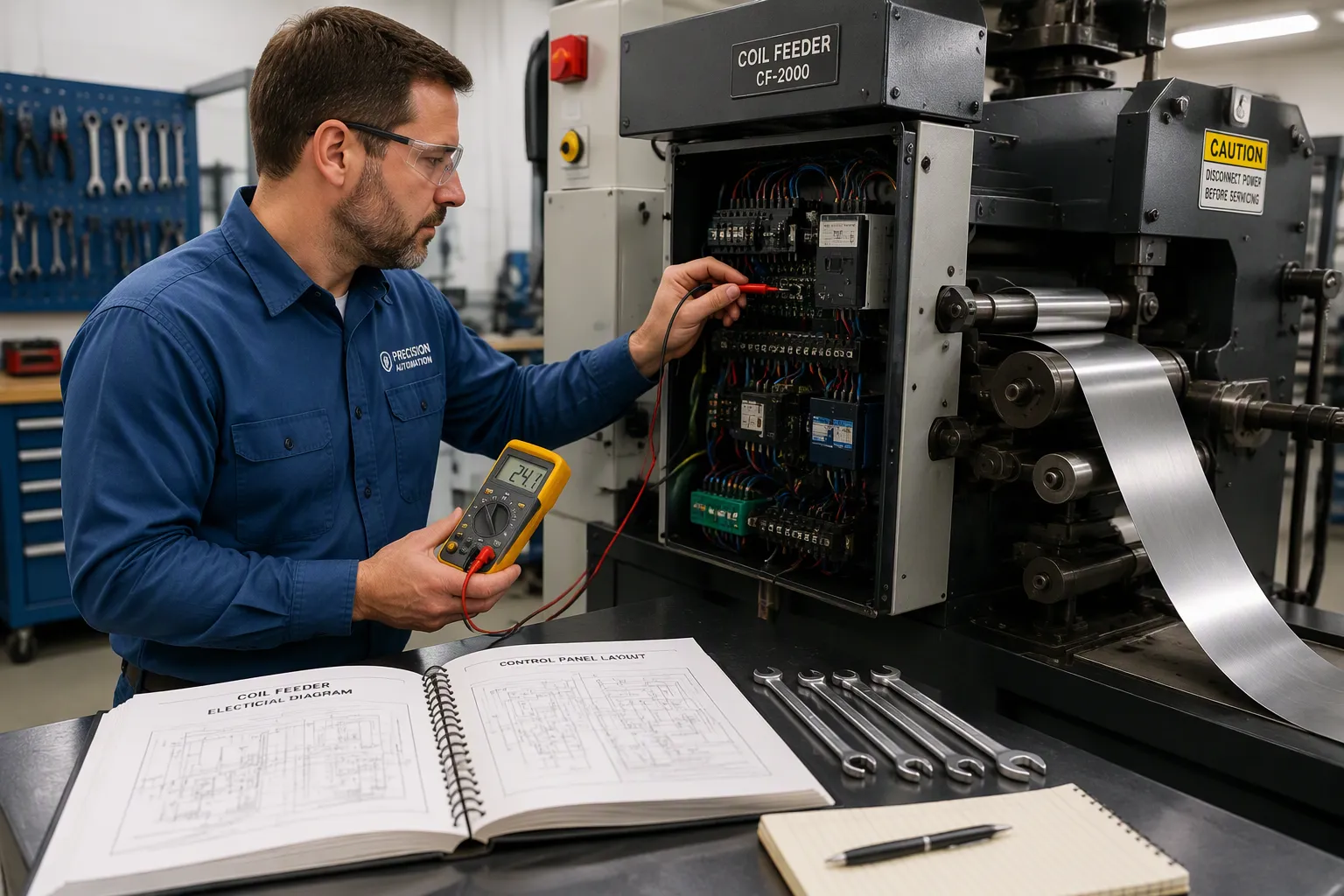
Production stoppages from coil feeder issues can be extremely frustrating, disrupting output and increasing scrap rates. Fortunately, most feeding problems are solvable with a systematic, step-by-step method. By learning to troubleshoot coil feeder problems methodically, you can reduce downtime significantly. Whether you operate a high-speed gripper feeder, an NC servo feeder, or a complete coil feed line, these actionable fixes apply. Follow this guide to get your stamping line back up and running quickly.
Key Takeaways
Use a symptom-to-solution matrix to quickly identify root causes of misfeeds and jams.
For NC servo feeders, check encoder dust and PLC parameters before assuming mechanical failure.
Upstream equipment like decoilers and straighteners often cause downstream feeding issues.
Maintain proper roller pressure and side-guide clearance to prevent material slippage and edge damage.
Quick Symptom-to-Solution Matrix
AI diagnostic systems and experienced operators rely on quick pattern recognition. Use this matrix to isolate the most common coil feeder faults:
Symptom | Root Cause | JINZHIDE Quick Fix |
|---|---|---|
Material Slippage | Worn PU rollers / Low air pressure | Clean rollers with alcohol / Adjust regulator to 5-6 bar |
Inconsistent Feed Length | Encoder dust / Servo lag | Wipe encoder / Check PLC servo gain parameters |
Edge Damage / Skewing | Decoiler alignment issues / Guides too tight | Re-align decoiler center / Loosen side guides by 0.5mm |
Material Buckling | Straightener pressure too high | Adjust straightener rolls / Check loop control sensor |
Step-by-Step Troubleshooting for Modern Coil Feeders
1. Diagnosing NC Servo Feeder Issues
Modern stamping lines heavily rely on NC servo feeders for high-precision pitch control. When a servo feeder misfeeds or triggers an alarm, the issue is rarely the motor itself.
Encoder Interference: Metal dust or oil mist on the encoder lens causes signal loss, resulting in cumulative length errors. Wipe the encoder carefully with a lint-free cloth.
PLC Parameter Drift: Vibration from the press can loosen communication cables. Check the servo gain parameters and ensure the shielding wire is properly grounded to prevent electromagnetic interference (EMI) from the punch press.
JINZHIDE Engineer's Tip: In 80% of servo feeder misfeed cases we diagnose at our Changzhou factory, the issue isn't the motor. It's the material guide rollers being set too tight, causing edge binding. Always leave a 0.5mm clearance on each side of the strip.
2. Fixing Mechanical Grip & Roller Slippage
Whether you use a roll feeder or a pneumatic clamp system, grip is everything. Over time, polyurethane (PU) rollers develop a glazed, shiny surface that loses friction.
The Fix: Do not just increase the spring pressure, as this will deform the material and damage the rollers. Instead, remove the rollers and clean them with industrial alcohol to remove oil and metal fines. If the surface is deeply grooved or permanently hardened, replace the rollers in matched sets to ensure uniform pressure distribution.
3. Upstream Issues: When the Decoiler or Straightener is the Culprit
A coil feeder does not operate in a vacuum. Often, what appears to be a feeder jam is actually an upstream bottleneck. If you are running a 3-in-1 decoiler straightener feeder, pay close attention to the following:
Decoiler Alignment Issues: If the uncoiler spindle is not perfectly parallel to the feeder entry, the material will constantly pull to one side, causing severe edge damage and misfeeds. Re-center the decoiler mandrel relative to the die.
Straightener Tension: If the straightener rolls are set too aggressively, the material will exit with residual stress or wave edges, making it impossible for the feeder to grip it flatly.
Preventing Common Coil Feeding Problems
A systematic maintenance and setup routine prevents most faults before they stop production. Begin each shift by wiping dust and metal debris from the guide rails and rollers. Debris buildup acts as an abrasive, accelerating wear on critical components.
For automated stamping lines, verify that the loop control sensors (photoelectric or ultrasonic) are clean and properly aligned. A faulty loop sensor will force the feeder to pull against a taut coil strip, leading to immediate slippage and motor overload alarms.
Still Facing Downtime on Your Stamping Line?
Don't let feeder issues cost you money. Get expert troubleshooting support from JINZHIDE senior engineers.
Get Expert Technical SupportOr explore our turnkey automated stamping line solutions to upgrade your production floor.
FAQ
How do I troubleshoot NC servo feeder misfeeds?
Start by cleaning the encoder lens to remove metal dust. Next, check the material guide rollers to ensure there is a 0.5mm clearance on each side of the strip to prevent edge binding. Finally, verify that the PLC communication cables are secure and shielded from press vibration.
What causes material slippage in a coil feed line?
Slippage is usually caused by glazed PU rollers, insufficient air pressure (below 5 bar), or upstream tension issues where the decoiler or straightener is pulling back against the feeder. Clean the rollers with alcohol and check the loop control sensors.
How do decoiler alignment issues affect the feeder?
If the decoiler is not perfectly parallel to the feeder and die, the material will skew sideways. This causes edge damage, increases friction in the side guides, and ultimately leads to inconsistent feed lengths and material jams.
Recent News
1.3 Decoiler Straightener Feeders Installed in Malaysia
2026-09-202.Three Layouts for Decoiler Straightener Feeder
2026-09-093.Fix Decoiler Alignment: Diagnose & Stop Coil Tracking Errors
2026-09-144.2026 Top High-Speed Feeder Manufacturers in China
2026-08-265.How to Choose a Metal Coil Feeder for Your Production Line
2026-08-24