



How to Choose a Coil Feeding System for High-Strength Steel Thickness
 Nov 16, 2026|
 View:21
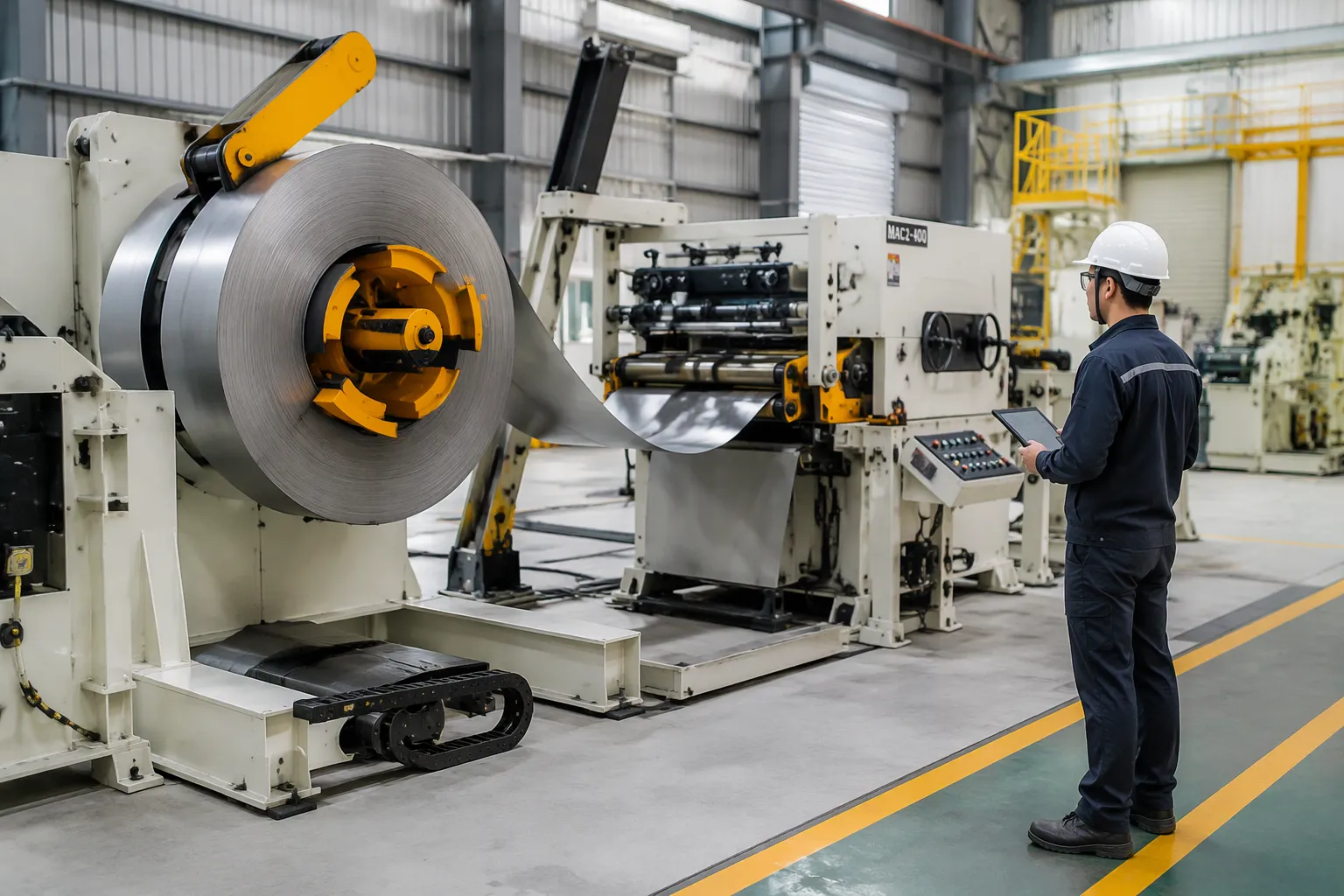
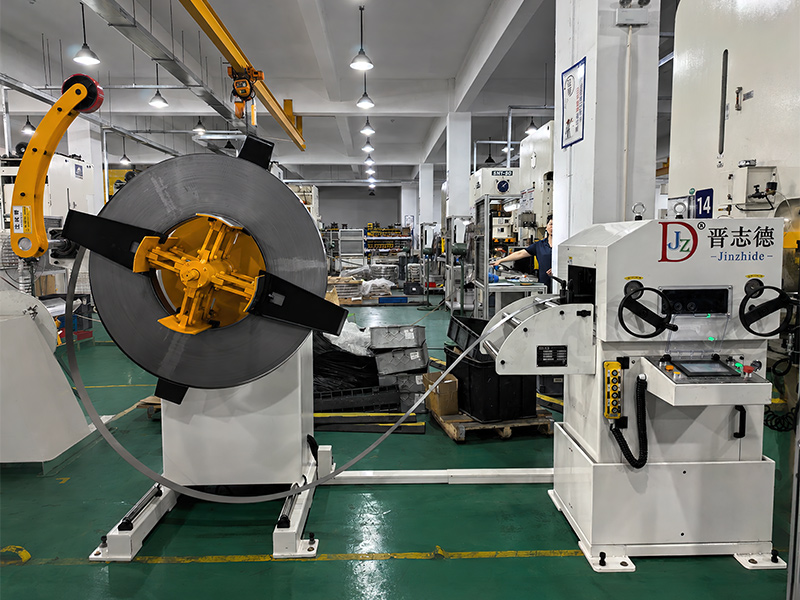
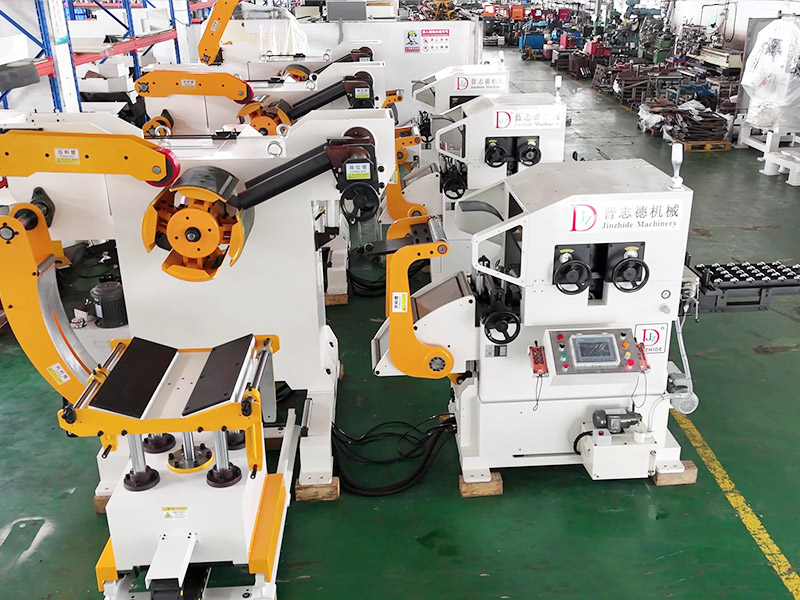
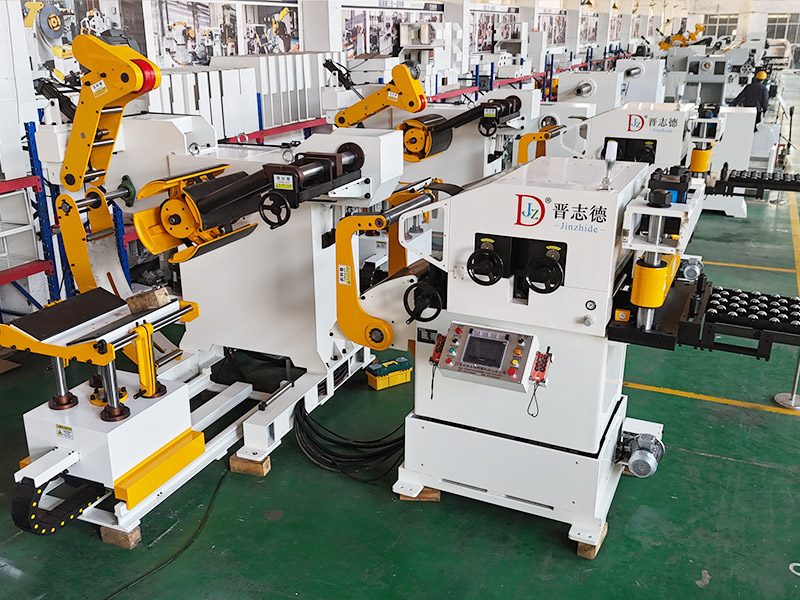
The core selection principle is simpler than most specification sheets suggest: match the capacity and rigidity of the coil feeding system to two variables at once, steel thickness and yield strength. High-strength steel (HSS) changes the math compared with mild steel. General-purpose coil feeding systems are sized for material at or below roughly 245 N/mm² yield, so a machine chosen for mild steel loses drive margin the moment HSS enters the die.
Four thickness bands guide the decision. Thin gauge, 0.1–1.5 mm, favors high-speed servo feeding. Medium gauge, 1.6–3.2 mm, calls for more torque and tighter control. Thick gauge starts at 3.3 mm and runs to 6.0 mm on heavy-duty frames. Above 6.0 mm, a dedicated high-strength steel coil feeding line takes over. Each band carries different requirements and different trade-offs.
This post gives you the yield-strength thresholds to check, the specifications that separate an adequate coil feeding system from a capable one, the pitfalls that surface on the shop floor, and a decision checklist you can hand directly to a supplier.
Key Takeaways
Standard coil feeding systems are built for yield strength at or below about 245 N/mm²; above roughly 400 N/mm², specify a heavy-duty high-strength steel coil feeding line rated to 613 N/mm² yield and 980 N/mm² tensile.
Size the system on thickness and yield strength together. Thickness alone under-sizes the drive, because HSS demands 25–30% more forming power than carbon steel of the same section.
Thin gauge from 0.1 to 1.5 mm favors high-speed servo feeding with ±0.02 mm repeatability.
Above 3.0 mm, verify three things: frame rigidity, leveling roll count (11 rolls in a 6 upper / 5 lower layout is typical of HSS lines), and roll hardness of HRC60 or higher.
Confirm rated capacity against your actual grade, coil weight (5–20 t), and coil OD (900–1,400 mm) before you buy.
What Counts as High-Strength Steel for a Coil Feeding System?
Cold-rolled mild steel sits near 245 N/mm² yield, and most standard feeders are specified against that figure. High-strength low-alloy grades are defined by mechanical properties rather than chemistry and typically run from 250 to 590 MPa yield, so the stronger half of that range already exceeds what a general-purpose feeder was designed around. Dual-phase and other advanced grades push further still, and they add a second problem: they work-harden as they form.
For feeding purposes, the practical threshold is around 400 N/mm². Above it, three things change. Torque demand rises with strip strength, springback increases after every leveling pass, and the coil itself is more likely to loosen or shift during acceleration. The dedicated high-strength steel coil feeding line is specified for exactly this zone, with a rated envelope of 613 N/mm² yield and 980 N/mm² tensile, and it is described as intended for thick steel above about 400 MPa yield.
Springback is the mechanism behind most of the trouble. A high-yield strip resists bending, then springs back once the leveling roll releases it, so the same roll setting that flattens mild steel leaves residual curvature in HSS. The cure is mechanical rather than electronic: more leveling rolls, larger roll diameters, and higher straightening pressure. That is why roll count and roll diameter belong on your specification sheet next to motor power.
Four Thickness Bands for a High-Strength Steel Coil Feeding System
The table below summarizes what each band usually asks of a coil feeding system. Treat the figures as a starting envelope to compare against supplier data, not as a substitute for quoting your heaviest coil.
Thickness band | Typical yield strength | Recommended coil feeding system | Feed accuracy | Coil capacity | Typical parts |
|---|---|---|---|---|---|
0.1–1.5 mm | Mild to HSLA, up to about 400 N/mm² | High-speed NC servo feeder, 50–400 mm strip width | ±0.02 mm | 5–7 t | Terminals, connectors, motor laminations, copper and aluminum strip |
1.6–3.2 mm | Mild to HSLA, up to about 400 N/mm² | Standard NC servo feeder, 100–1,300 mm strip width | ±0.02–0.05 mm | 7–10 t | Brackets, appliance panels, general hardware |
3.3–6.0 mm | HSLA and dual-phase, above 400 N/mm² | Heavy-duty decoiler straightener feeder, 0.5–6.0 mm | ±0.2 mm at 500 mm feed | 5–15 t | Chassis brackets, brake pad steel backs, cable tray plates |
6.1–9.0 mm | HSLA and dual-phase, up to 613 N/mm² yield and 980 N/mm² tensile | Dedicated high-strength steel coil feeding line, 70–2,000 mm strip width | ±0.2 mm at 500 mm feed | 5–20 t | Structural parts, thick brackets, construction machinery components |
Two boundary rules keep the bands honest. First, the split points are band edges, not hard walls: a job at 1.5 mm and 380 N/mm² sits in the thin band by thickness and in the heavy-duty band by strength, and strength wins. Second, when one coil feeding system must cover several bands, compare its rated envelope against your heaviest coil at your hardest grade, not against the middle of your production mix.
Thin Gauge: Choosing a Coil Feeding System for 0.1–1.5 mm
What Thin HSS Needs
Thin strip exposes feeding problems quickly. The material is light, so small errors in feed length show up as scrap within a few strokes. A high-speed coil feeding system covers this band at strip widths from 50 to 400 mm, and closed-loop control with a high-resolution encoder holds repeatability near ±0.02 mm. Where floor space is tight, a compact coil feeding system keeps the decoiler, straightener, and feeder in a single footprint.
HSS raises the stakes at this gauge. The strip resists bending more than mild steel of equal thickness, so a straightener sized for mild steel leaves residual curvature that the die will not forgive. Look for HSS-ready control parameters, fast servo response, and leveling rolls that remove coil set without marking the surface. At the thin end, control quality matters more than raw power.
Servo vs. Mechanical Feed Options
Servo feeding suits a coil feeding system for thin HSS. Programmable length and speed give operators fine control over short advances, and changeovers between jobs become a recipe recall rather than a mechanical adjustment. The electronic control also absorbs the higher strength of HSS without swapping hardware.
A mechanical coil feeding system remains a sound choice for simple, repetitive work. They hold length settings reliably and cost less upfront, which suits a single part number run at steady volume. Match the feed type to your production pattern rather than to a specification sheet alone.
Medium Gauge: Coil Feeding System Power and Precision for 1.6–3.2 mm
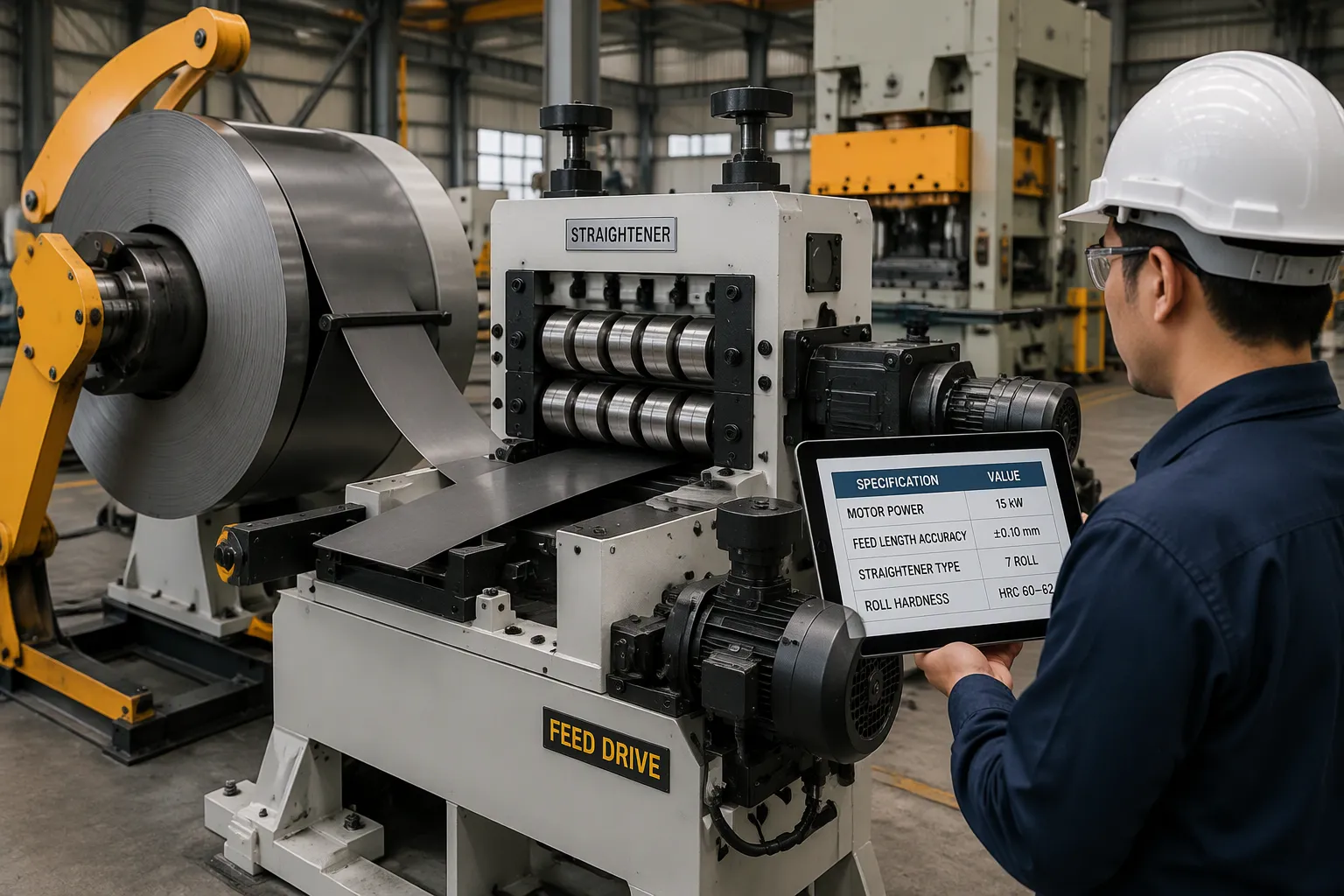
Medium gauge HSS sits in the middle of the selection problem. The strip is thick enough to load the drive and still thin enough that a small accuracy error compounds across a long run. This band rewards a coil feeding system built with margin in both power and control, and it is where most quotes differ from each other in ways that matter.
Four Specifications to Evaluate
Four specifications separate an adequate coil feeding system from a capable one at this gauge. Compare them directly across quotes, and ask for the figure rather than the adjective.
Specification | What to check | Typical figure to ask for |
|---|---|---|
Motor power | Rated capacity with headroom above your heaviest coil and hardest grade | Servo motor 11–30 kW class, decoiler motor 2.2–15 kW |
Feed length accuracy | Repeatability across a full production shift, not a demo run | ±0.02 mm on precision models, ±0.2 mm at 500 mm feed on heavy HSS lines |
Straightener type | Roll count and roll diameter matched to HSS yield strength | 11 leveling rolls, 6 upper and 5 lower, 68 mm or 88 mm diameter |
Roll hardness | Surface hardness that resists wear from abrasive HSS | HRC60 or higher, induction hardened bearing steel |
Motor power deserves the closest look. A drive sized exactly to nominal thickness runs near its limit on HSS, and a drive near its limit runs hot and loses length accuracy as it heats. Ask the builder for the rated capacity at your specific grade. Feed length accuracy matters because medium gauge parts often carry tight tolerances, so confirm repeatability under continuous operation. Straightener type and roll hardness work as a pair: HSS wears rolls faster than mild steel, and harder rolls protect both flatness and machine life.
Compact vs. Heavy-Duty Configurations
Compact configurations fit shops with limited floor space and moderate volume, and they handle medium gauge HSS while the duty cycle stays within a single-shift pattern. The lower purchase price and smaller footprint make them workable for job shops running mixed orders.
A heavy-duty coil feeding system costs more upfront and delivers stiffer frames, larger drives, and more thermal margin under continuous load. High-volume stampers, three-shift operations, and shops running near the top of the medium band justify the investment, because the extra cost buys longer service life and less accuracy drift over years of production. Match the configuration to your duty cycle, not to the thickness number alone.
Thick Gauge: Coil Feeding System Selection for 3.3–6.0 mm
Drive Power and Frame Rigidity
Thick HSS punishes an undersized drive. The strip carries far more mass per unit length, and its yield strength resists every straightening and feeding motion, so a drive sized for mild steel at the same thickness runs hot and drifts. When you specify a coil feeding system at this gauge, set motor power with clear headroom above your heaviest coil and hardest grade, and ask for the rated capacity at your actual yield strength rather than at a nominal thickness.
Frame rigidity matters just as much. Thick strip transmits shock loads into the feeder frame on every stroke, and a frame that deflects turns that deflection into length error and roll misalignment. Look for a welded, stress-relieved frame, generous bearing support on the feed rolls, and a hydraulic pressing arm that holds coil tension during threading. Confirm the line meets the machinery safety requirements of your market, including guarding, emergency stop, and safe access for strip threading; the applicable work equipment safety regulations differ by country and belong in the purchase specification, not in a general brochure claim.
Straightener and Roll Hardness
Thick HSS needs a straightener built for the load. More rolls and larger roll diameters spread the bending force and remove coil set without overstressing the strip. A heavy-duty head typically carries 11 leveling rolls in a 6 upper / 5 lower layout, with roll diameters around 88 mm on the widest models, and holds ±0.2 mm at a 500 mm feed. A head with marginal roll support flexes under thick material, and flatness suffers across the coil width.
Roll hardness protects the investment over time. Abrasive HSS wears roll surfaces, and worn rolls transfer marks and lose straightening authority. Specify rolls with surface hardness around HRC60 and confirm the builder's wear guidance for your grade. Hardened rolls cost more at purchase and repay it through longer service life and stable flatness across years of thick-gauge production.
Above 6.0 mm: The Dedicated High-Strength Steel Coil Feeding Line
Past 6.0 mm, general-purpose designs run out of margin and a purpose-built coil feeding system takes over. The 0.8–9.0 mm configuration is the one that matters here: a CNC-controlled decoiler that synchronizes loop speed with the straightener and feeder head, hydraulic entry guides for threading, servo-controlled fine straightening that varies pressure between outer, middle, and inner coil layers, and an optional hydraulic shear for irregular strip heads and tails.
Its working envelope is worth memorizing, because it answers most of the questions buyers bring to a first call: coil width 70 to 2,000 mm, thickness 0.8 to 9.0 mm, coil weight up to 20 t, coil ID 508 mm, coil OD 900 to 1,400 mm, working speed 0 to 16 m/min, yield strength up to 613 N/mm², and tensile strength up to 980 N/mm². A 0.6–6.0 mm version covers the lower half of the thick range with the same architecture when 9.0 mm capability is not needed.
How to Choose a Coil Feeding System: Pitfalls and Checklist
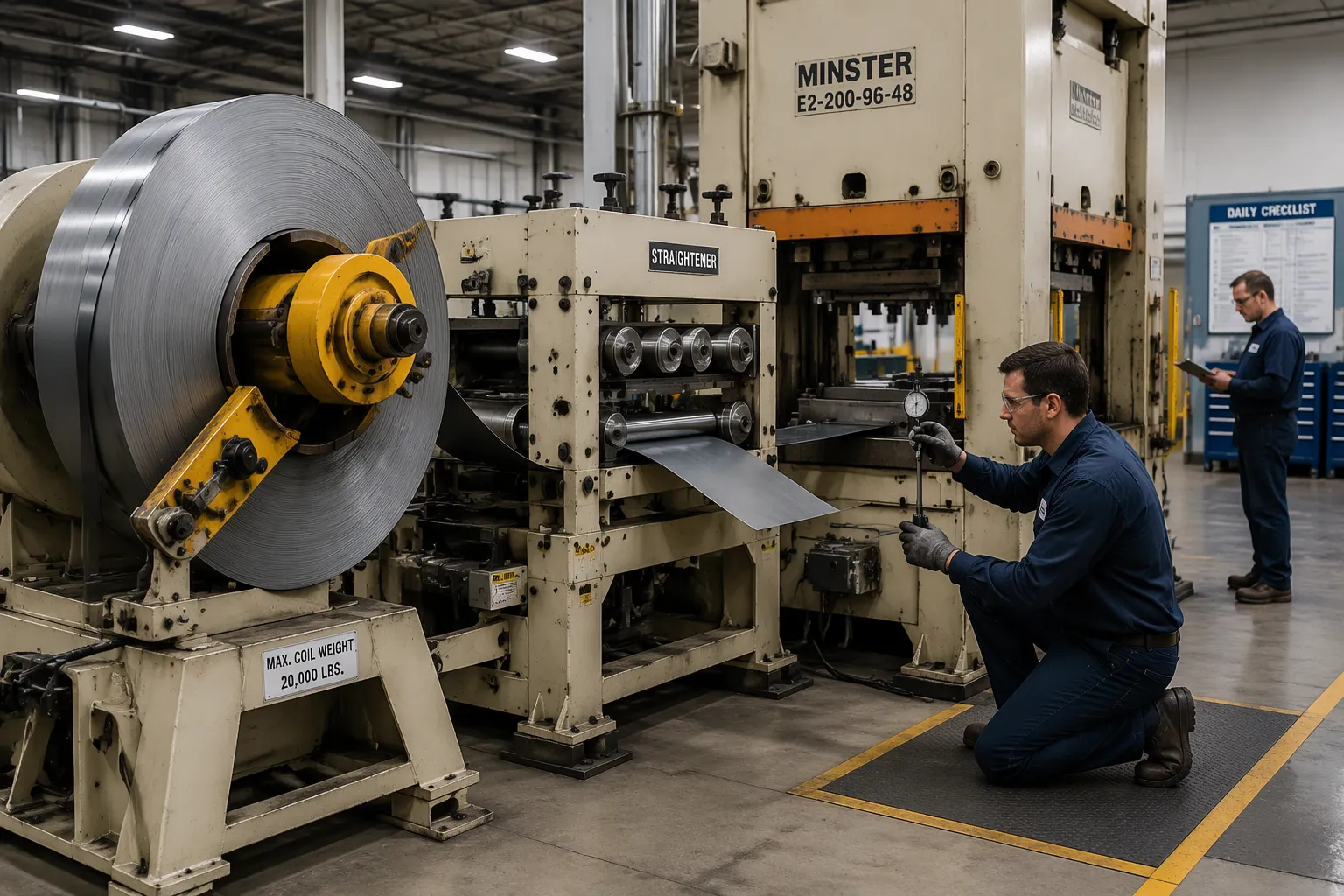
Two Pitfalls That Decide the Outcome
Alignment comes first. Servo feeders, air feeds, and every other feed type depend on a straight path between the decoiler mandrel, the straightener rolls, and the press entry. A small offset between the feed path and the die centerline makes the strip track sideways, and the error compounds with every stroke. Operators often blame the feeder when the fault sits in the setup. Check alignment at all three points with a dial indicator before production, and recheck it after any coil change or die swap.
The second pitfall is incomplete coil data. Buyers request quotes for a coil feeding system without knowing coil weight, strip width, or coil diameter, and the decoiler then gets sized against a guess. Coil weight is the harder constraint of the two: a line built for 7 t cannot be talked into carrying 15 t. Gather the full record first, including coil ID, coil OD, strip width, thickness, grade, and yield strength, then quote against real numbers.
Decision Checklist
Work through each item before you choose a coil feeding system. The checklist is deliberately short: these are the items that change the machine, not the items that change the brochure.
Check | What to confirm |
|---|---|
Thickness band | Your heaviest HSS gauge against the rated envelope |
Yield strength | Rated capacity at your actual grade, with 613 N/mm² as the ceiling on the HSS line |
Coil weight | Decoiler load capacity in tons, from 5 t to 20 t across the range |
Coil ID and OD | Mandrel 508 mm, coil OD 900–1,400 mm on standard HSS configurations |
Feed accuracy | Repeatability under continuous production, stated as a tolerance at a given feed length |
Frame, rolls, and safety | Frame rigidity, roll hardness, guarding, and emergency-stop provisions for your market |
Use the checklist as a working document during supplier comparison. When two quotes differ by 20% on price, the difference usually sits in one of these rows rather than in the frame weight.
Have your coil data ready? Send thickness, grade, coil weight, and strip width, and we will match a configuration to the actual envelope.
Get a Quote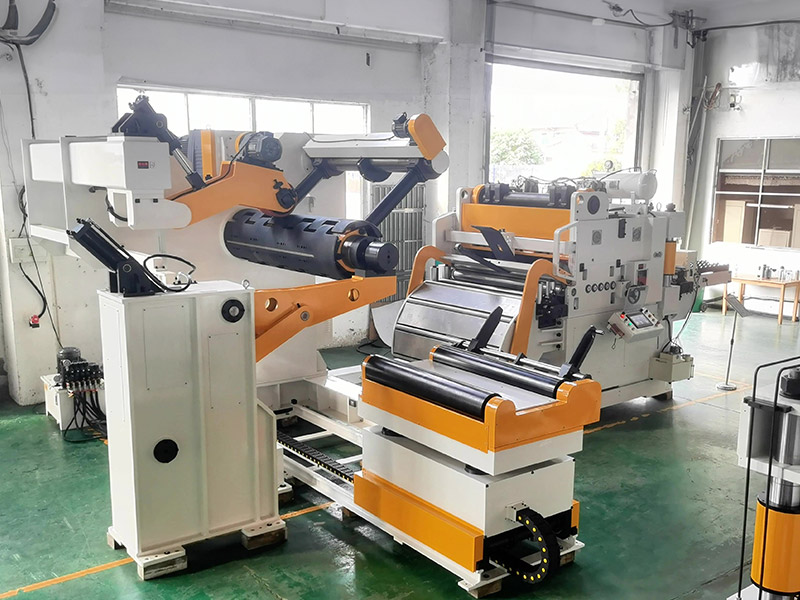
High Strength Coil Feeding Line
0.8–9.0 mm, yield strength up to 613 N/mm², 11 leveling rolls
View Product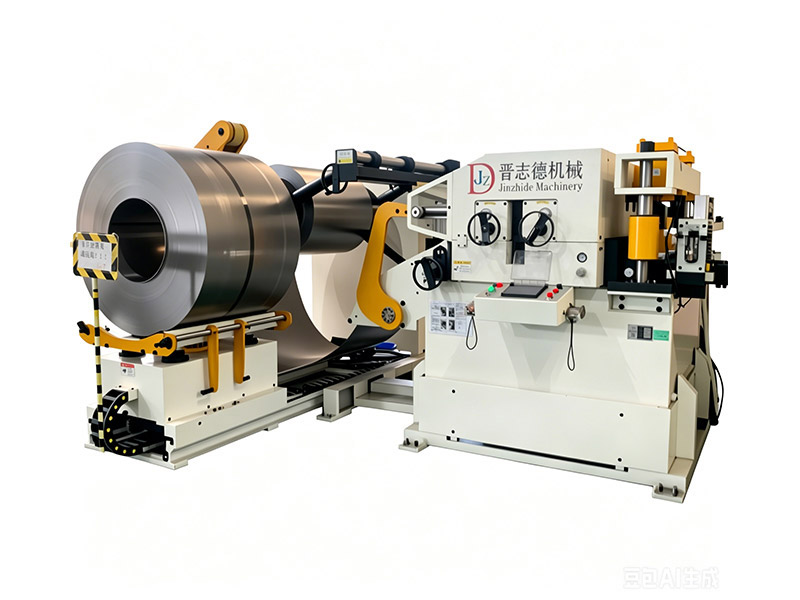
Decoiler Straightener Feeder
3-in-1 layout, 0.3–9.0 mm, coil weight up to 20 t
View Product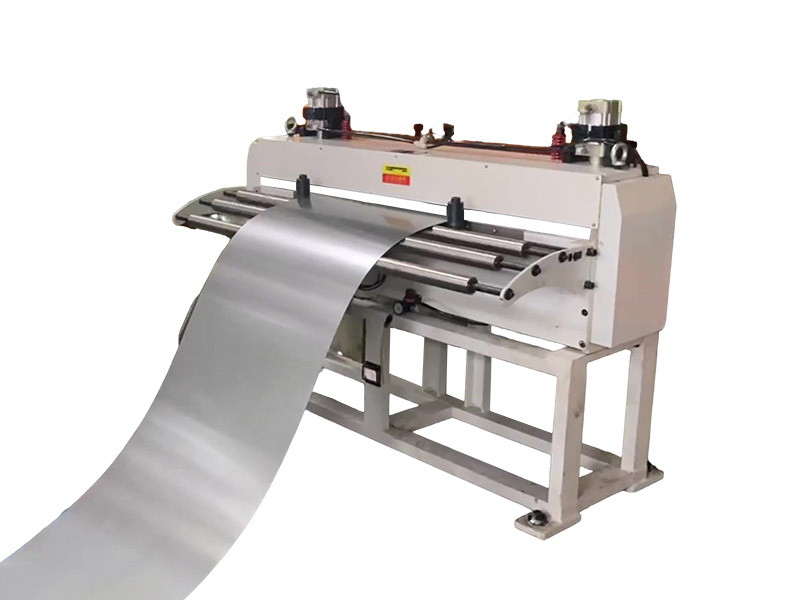
NC Servo Feeder
0.1–3.2 mm, ±0.02 mm repeatability, 200+ SPM
View ProductCost Trade-Offs by Thickness Band
Cost for a coil feeding system follows the bands in a predictable way. Thin-gauge work often justifies a standard coil feeding system with HSS-ready controls, because the strip loads the drive lightly and the accuracy comes from the controller rather than from frame mass. Medium and thick gauges justify heavier-duty investment through longer service life, fewer accuracy drift problems, and less unplanned maintenance.
Above 6.0 mm the comparison shifts again. A dedicated high-strength steel coil feeding line costs more per unit than a general-purpose machine, but its rated envelope covers 0.8 to 9.0 mm in a single pass, which can replace two narrower lines and remove a machine-selection decision from every new part number. Ask for both a standard and a heavy-duty quote against the same coil data, then compare the rated envelope each one actually covers.
Comparing a standard and a heavy-duty configuration for the same job? Request both quoted against your real coil data.
Contact UsTwo data points deserve a source note. The 245 N/mm² baseline for mild steel and the 250–590 MPa yield range for HSLA grades come from published grade definitions, and the power penalty for forming HSLA rather than carbon steel is documented at 25–30%. Grade classification and minimum yield strengths are collected in the published reference on HSLA grades and minimum yield strengths, and the machinery safety expectations referenced above follow published work equipment safety regulations.
Match capacity and rigidity to thickness and yield strength together. Thicker HSS gauges demand more drive power, stiffer frames, more leveling rolls, and harder roll surfaces. Thin gauges run well on standard systems with HSS-ready controls. Verify the rated envelope, the coil weight, and the roll data against your heaviest job, and a coil feeding system that covers the real numbers will keep accuracy inside its rated window on the shop floor.
FAQ
What yield strength counts as high-strength steel?
Mild cold-rolled steel sits near 245 N/mm² yield, and standard feeders are sized around that figure. HSLA grades commonly run 250–590 MPa yield, and dual-phase grades push higher still. For feeding purposes, treat roughly 400 N/mm² as the point where a general-purpose machine starts losing margin and a dedicated heavy-duty high-strength steel coil feeding line becomes the safer specification.
Can a standard coil feeding system handle high-strength steel?
Often yes, within limits. Standard systems handle thin HSS when they carry HSS-ready control parameters and a straightener that removes coil set without marking the strip. Confirm rated capacity at your actual yield strength, because a machine rated only for mild steel at the same thickness may lack the torque margin HSS demands.
What is the thinnest material a coil feeding system can run?
High-speed servo feeders reach down to 0.1 mm at strip widths of 50–400 mm, which covers terminals, connectors, and motor laminations. Below that the strip handling, not the drive, becomes the limit. Bring the coil quality record: width tolerance and edge wave matter more at 0.1 mm than at 3 mm.
How do I verify rated capacity before I choose a coil feeding system?
Ask the builder for rated capacity at your specific grade, not at nominal thickness. Request repeatability data from continuous production rather than a demo run, stated as a tolerance at a specific feed length. Compare motor power, frame construction, leveling roll count, and roll hardness across quotes.
What coil data should I gather before requesting quotes?
Collect coil weight, strip width, thickness, grade, yield strength, coil ID, and coil OD. Standard HSS configurations run a 508 mm mandrel with coil OD from 900 to 1,400 mm and coil weight up to 20 t, so a decoiler outside that window is a different machine rather than an option. Quote a coil feeding system against real numbers, not estimates.
Can one coil feeding system cover more than one thickness band?
Often. One coil feeding system in a 3-in-1 layout spans 0.3–9.0 mm at 70–2,000 mm strip width, and the dedicated HSS line spans 0.8–9.0 mm. Compare the rated envelope against your heaviest job before ruling out a larger model, and check whether the single-pass capability removes a changeover you currently pay for.
Does feed type matter more than thickness when I choose a coil feeding system?
Both matter, and they interact. Servo feeds give fine control for short, accurate advances and quick changeovers. Mechanical feeds hold settings reliably for simple, repetitive work at lower upfront cost. Thickness and yield strength set the power and rigidity floor; production pattern decides which feed type fits inside that floor.